Horses, CBGB, Mapplethorpe’s cover
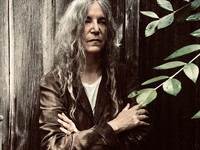
The first line of Horses does not ask permission. In November 1975 Patti Smith released a debut that sounds like a poetry reading that learned to bite. Born in Chicago on 30 December 1946 and raised in southern New Jersey, she had come to New York to write beside Robert Mapplethorpe while both were still broke. His photograph on the cover shows white shirt, black jacket, a stare that dares you to look away. John Cale produced. CBGB was the room where the band learned to play as loud as the language.
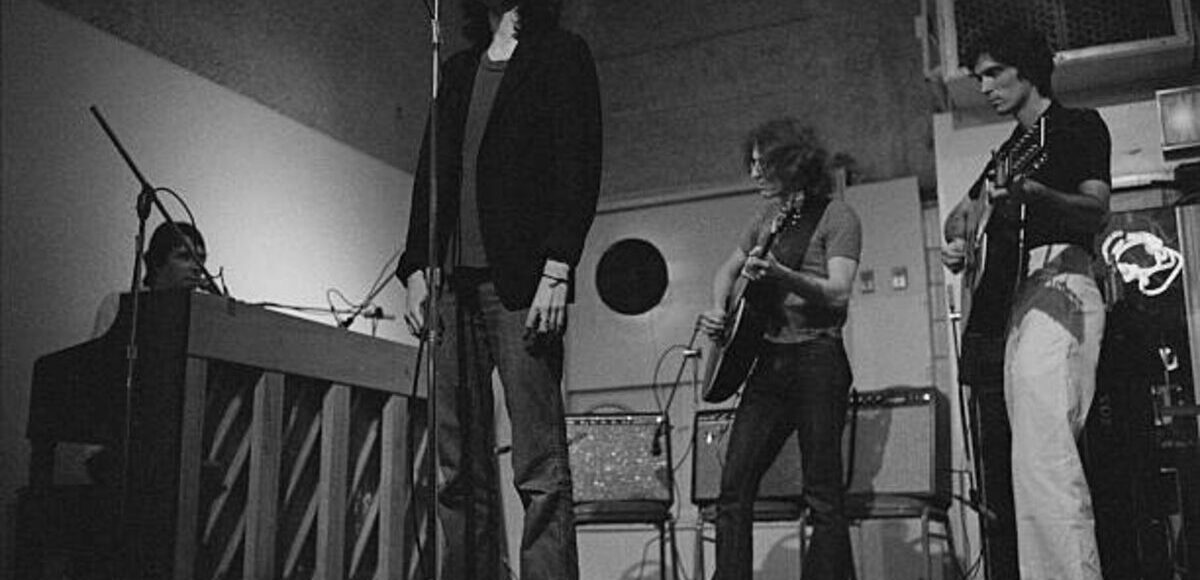
Before the band there were books and readings. At St. Mark’s Church in the Bowery in the early seventies she stood with Lenny Kaye and treated a poetry night as rehearsal for music that did not exist yet. Seventh Heaven and Witt put a woman’s name in the same sentence as Rimbaud and the French poets she had been quoting in public. Rock did not invent her voice. It gave it volume. That order still defines the work: literature first, then guitars when the lines needed more weight.
Horses rebuilds other people’s songs and stretches her own until the form nearly breaks. “Gloria” takes Van Morrison’s hymn and turns it into possession. “Birdland” and “Land” extend until Kaye’s guitar must decide whether it is accompanying a poem or becoming one. “Free Money” almost behaves like pop, which makes the longer pieces stranger. The downtown scene around Television, Richard Hell, and the Ramones was arguing about speed and sneer. She argued about Rimbaud, then snarled anyway.
Radio Ethiopia (1976) is harsher and less loved, a document of a band pushing past the debut’s legend. Easter (1978) brings “Because the Night,” written with Bruce Springsteen, a chorus big enough for radio with verses that stay unmistakably hers. Wave (1979) closes the first chapter. She married Fred “Sonic” Smith, moved toward Detroit, and stepped off the circuit for years that were life, not a marketing pause. Dream of Life (1988), recorded with Fred, includes “People Have the Power,” a song that behaves like a leaflet and a hymn at once.
Personal loss brought her back in a different key. Fred died in 1994. Her brother Todd died weeks later. Gone Again (1996) records those facts without a comeback campaign. “About a Boy,” written for Kurt Cobain, sits beside songs that refuse to hurry grief. She kept publishing. Just Kids, the 2010 memoir of the Mapplethorpe years, won the National Book Award and sent new readers back to the white shirt on Horses. The prose shares the singing habit: name what you love, then do not flinch.
Influences are readable on the surface: French symbolist poetry, Dylan’s talk-sing, the Velvet Underground’s downtown report with John Cale behind the board, Van Morrison and garage rock when she covers or collides with them. What she kept is a literary spine inside rock volume, not punk’s anti-intellectual default and not academic poetry’s distance from a crowd.
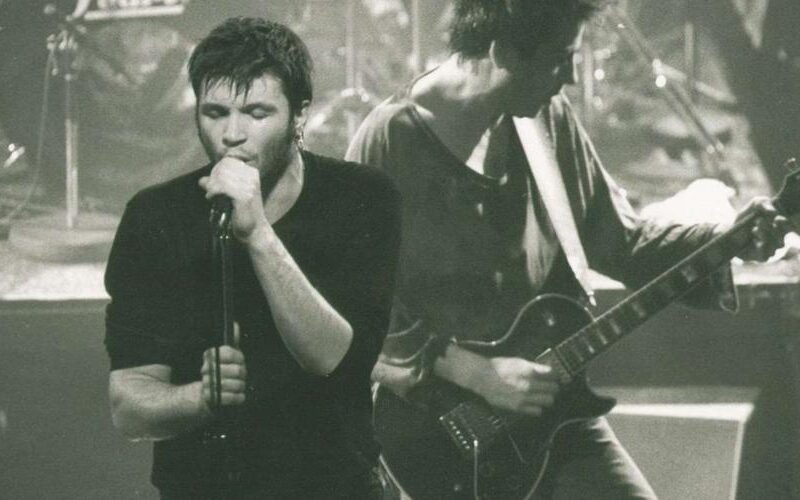
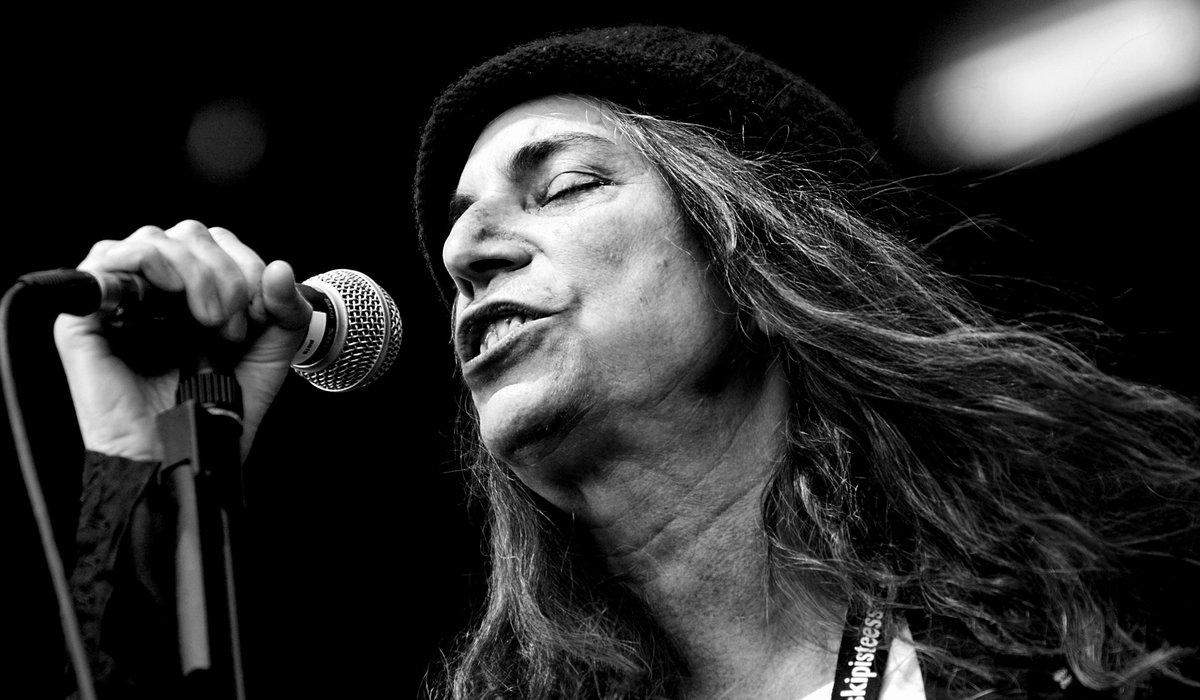
On stage in recent decades the voice has roughened and the set lists still open doors. She can read a poem, then kick a band into “Rock n Roll Nigger” or a long “Gloria,” and the room treats both gestures as one practice. When she fell from a stage in Tampa in 1977 and broke vertebrae in her neck, the interruption was physical, not conceptual. She returned to the same job: language at a volume that could fill CBGB and much larger rooms without becoming a slogan.
Listen for Kaye’s ringing guitar, Cale’s raw mix, vocals that declaim then snap into melody, and long pieces that reward patience. The production on Horses feels close, as if the studio door stayed open. That is an ethic: the song should sound like the room where it was lived.
Entry points are clear. Horses for the opening shock. Easter for the Springsteen co-write and slightly cleaner songs. Gone Again for grief rendered without soft focus. Add “Because the Night,” “Dancing Barefoot,” and “People Have the Power” and you hear three decades of the same method at different temperatures.
Beside the Ramones’ three-chord sprint or Television’s twin-guitar precision, she sounds like a writer who chose amplification. Beside later singer-poets, she remains the reference for how to keep Rimbaud in the same set as a bar-band rave-up. She deserves attention because the opening line of Horses still clears space in any playlist, and because the books and late records prove the snarl was never a costume.