

August 1983: distorted Linn first, then Collins laughs like The Message
A harsh drum-machine pattern opens the room before Tony Banks’s minor-key synth lines and Phil Collins’s reverb-heavy vocal arrive. Mama was the first single from Genesis’s 1983 self-titled album, released 22 August 1983 on Virgin / Atlantic / Vertigo, recorded at The Farm in Surrey with Hugh Padgham co-producing. The album version runs near seven minutes; radio and video edits cut closer to five. The theme orbits a young man’s fixation on a sex worker, steam and heat that Collins later linked to Cuban brothel imagery the band pictured while writing. From the first bars you hear why this opened the campaign: nothing polite about it, and that was the point.
Mike Rutherford programmed the Linn LM-1 part, not Collins. The pattern went through gated reverb (AMS RMX-16) and a heavily distorted guitar amp, then blended with a dry feed so the machine still had punch. Banks layered Synclavier, ARP Quadra, Emulator, and Prophet-10, including a low E drone and a koto sample that happened to be in the studio. Collins’s manic laugh lifted the breathy ha-ha from Melle Mel on Grandmaster Flash and the Furious Five’s The Message (1982), a debt the band and Padgham later confirmed on The Genesis Songbook. Real drums finally smash in after minutes of machine tension, the same gated aesthetic that marked Collins’s early-80s sound.
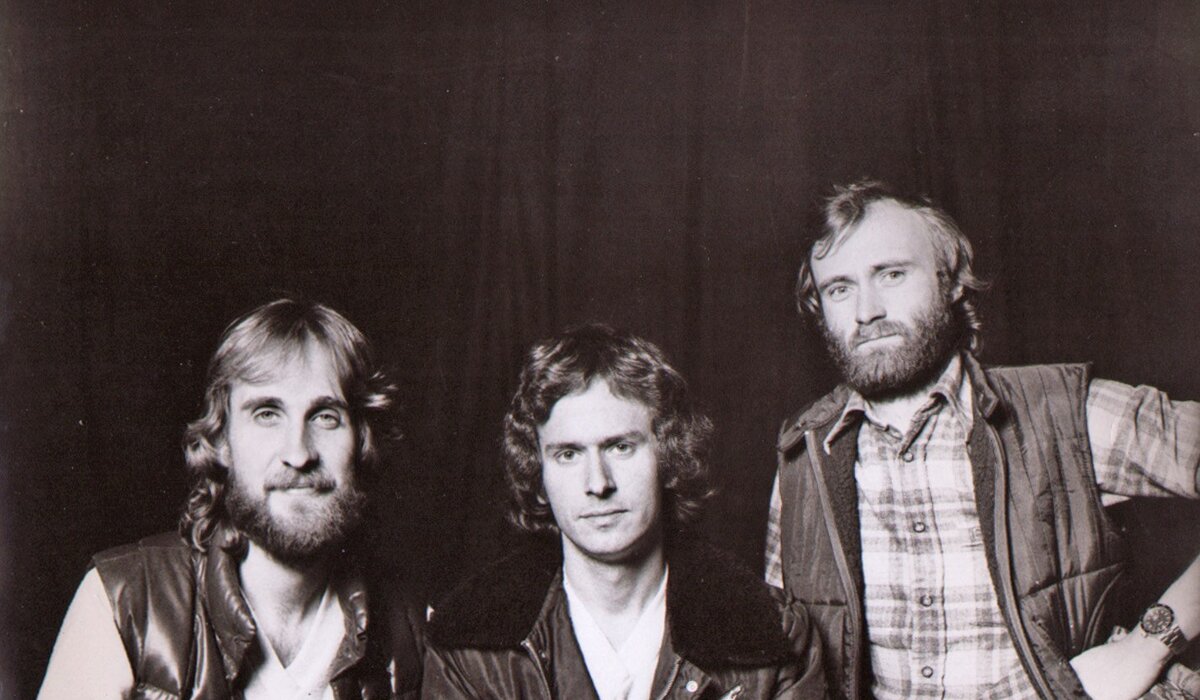
Stuart Orme directed the sepia-to-colour video with Collins facing a mysterious woman while Banks and Rutherford play behind him. Live, the song anchored the Mama Tour and later Wembley and European runs, documented on The Way We Walk and subsequent live releases. Commercially it remains Genesis’s highest UK singles peak at number four, with further top-ten runs across Europe and a weaker US Hot 100 showing at 73. A 1992 reissue later climbed the German charts. For a trio already shifting from long-form prog toward sharper pop structures, Mama proved the dark, machine-led single could still fill arenas.
Every song was different. For example, in the past when we wrote, Phil would do a little drum machine loop… Then a song called Mama comes along and the entire drum program, the stilted drum machine, is me. So, you can swap hats.
(Mike Rutherford on programming Mama, Songfacts interview)
Play the intro again and the Linn still sounds wrong in the best way: industrial, impatient, nothing like a polite 1983 soft-rock open. That wrongness is why the track outlived the edit labels and still defines the self-titled album’s first face. Press play for the machine pattern alone, then stay for the laugh that stole its breath from The Message and somehow made Genesis radio stranger, not safer.