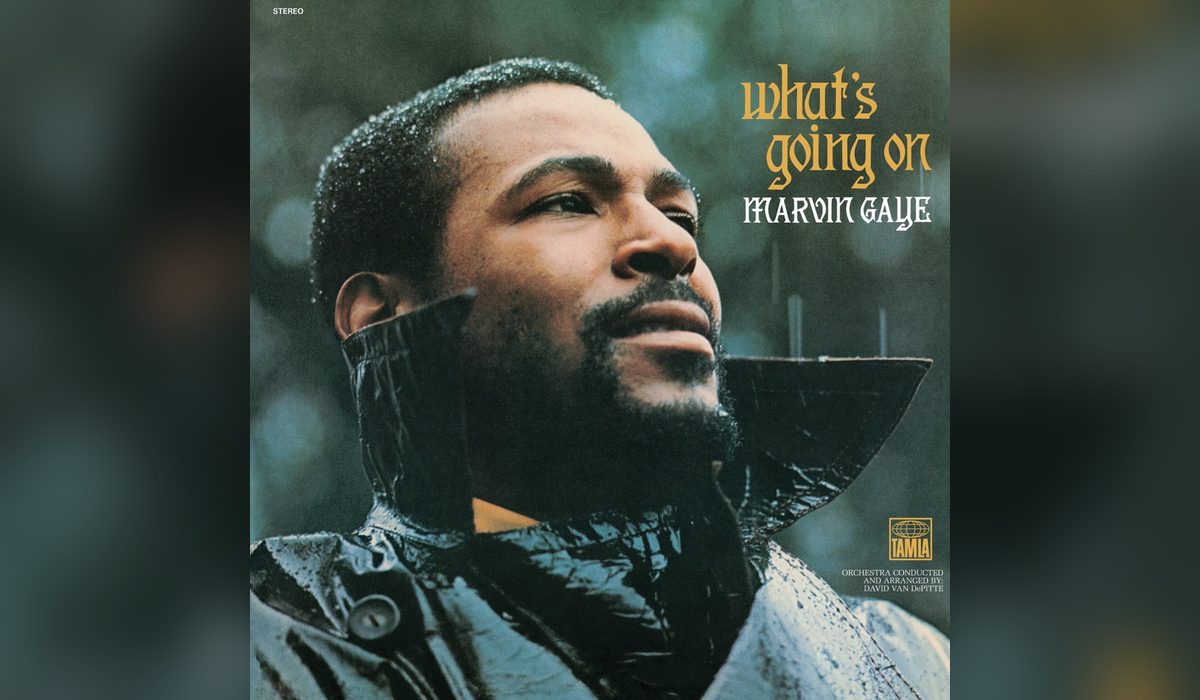
A party in the vocal booth
The voices at the start are not a sound effect. They are people in a room, greeting one another, and the saxophone that follows sounds like a man warming up who has already said the true thing by accident. Marvin Gaye sings as if he had walked in from the street and found the band already mourning. What’s Going On, the 1971 single and the door of the album, does not accuse in a shout. It asks, which is harder to refuse. Brother, brother. The harmony answers him like a congregation that has decided to stay gentle.
The song came to him through Renaldo Benson of the Four Tops and Al Cleveland, after Benson had seen police violence at a protest in Berkeley. Gaye, already finished with the loverman brief Motown preferred, took the idea and made it his. He produced it himself, in Detroit, with the Funk Brothers under him and David Van De Pitte arranging. Eli Fontaine’s alto, a run the player thought was only a warmup, was kept because Gaye heard the record in it. Berry Gordy did not want the single. It was too political, too far from the kisses that had paid for the building. Gaye refused to record anything else until it came out. It came out. It was a hit. The album was allowed to exist.
What the track holds, under the question, is a list: mothers crying, brothers dying, pickets, police, a father who will not talk. The party noise never leaves. That is the genius and the wound. Life is still happening in the booth while the lyric counts the dead. On stage in the years after, he could make it a sermon or a cry. The studio version is the conversation, multi-tracked so that he argues with himself and loses, politely. Motown’s machine had been built to avoid this subject. One singer jammed the gears by being too successful to fire.
With the world exploding around me, how am I supposed to keep singing love songs?
(Marvin Gaye, circa 1971, as told in David Ritz, Divided Soul)
The album that followed is now treated as a monument, which can make the single sound inevitable. It was not. A company flinched. A saxophonist thought he had not started. A singer who had buried Tammi Terrell and watched the country tear decided that love songs were a kind of lying if they were the only songs. The question in the title is still unanswered, which is why it still plays. Ask it in a new decade and the street provides fresh nouns.
What remains is the warmth of that opening room. What’s Going On could have been a speech. It is a gathering. The Funk Brothers keep the pocket soft enough to dance and grave enough to stop you. Gaye never raises his voice to win. He keeps it at the level of a man who expects you to come closer, and then he tells you what the closer looks like.