
From Abbey Road leftovers to All Things Must Pass and the Concert for Bangladesh
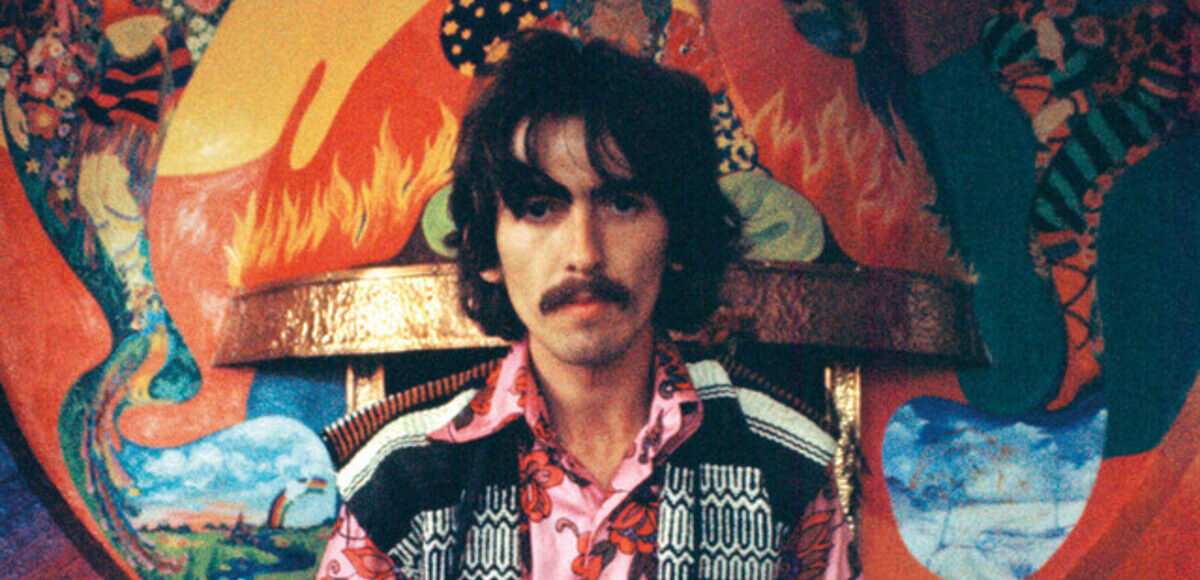
George Harrison was born on February 25, 1943, in Wavertree, Liverpool. He was the youngest Beatle, brought in by Paul McCartney as a guitarist when the group was still the Quarrymen; John Lennon initially resisted, thinking Harrison too young. He overcame that by playing «Raunchy» with precision on the top deck of a bus. The guitar playing was always the argument he made with his hands when words were unavailable.
Inside the Beatles, Harrison was structurally disadvantaged. Lennon and McCartney had a writing partnership and a shared claim to the group’s identity; Harrison was the lead guitarist who contributed songs when the partnership allowed. His first solo composition, «Don’t Bother Me» (1963), appeared on With the Beatles. «If I Needed Someone» (1965), «Taxman» (1966), «Here Comes the Sun» and «Something» (1969) arrived at longer intervals but at a consistent level. «Something» was the first Harrison song released as a Beatles A-side, and it outperformed most of Lennon-McCartney’s concurrent singles.
He encountered Ravi Shankar in 1966 and began studying sitar in earnest. Indian classical music entered his playing not as decoration but as structural thinking: the idea of notes as sustain rather than attack, the use of drone, the patience of a raga that unfolds over time. He brought this into «Within You Without You» and «Love You To,» tracks the rest of the group rarely played on. The connection to Shankar lasted until Shankar’s death in 2012.
All Things Must Pass (1970) was the first solo statement after the Beatles dissolved. Phil Spector produced it in collaboration with Harrison, applying the Wall of Sound approach to material Harrison had been accumulating for years. «My Sweet Lord,» «What Is Life,» «Isn’t It a Pity,» «Beware of Darkness,» «All Things Must Pass» itself: the triple-album held so much material that the implicit argument was clear. The band had been a constraint. A plagiarism suit over «My Sweet Lord» and «He’s So Fine» dragged through the courts for years and was eventually settled against him; Harrison maintained he had not consciously copied the Chiffons’ melody.
The Concert for Bangladesh (1971) was the first major benefit concert of the rock era. Harrison organized it at Ravi Shankar’s request, following the Liberation War of Bangladesh, and assembled a lineup at Madison Square Garden that included Bob Dylan, Eric Clapton, Leon Russell, Ringo Starr, and Billy Preston. The live album and film documented the event; the event itself established a template that Live Aid and subsequent benefit concerts would follow.
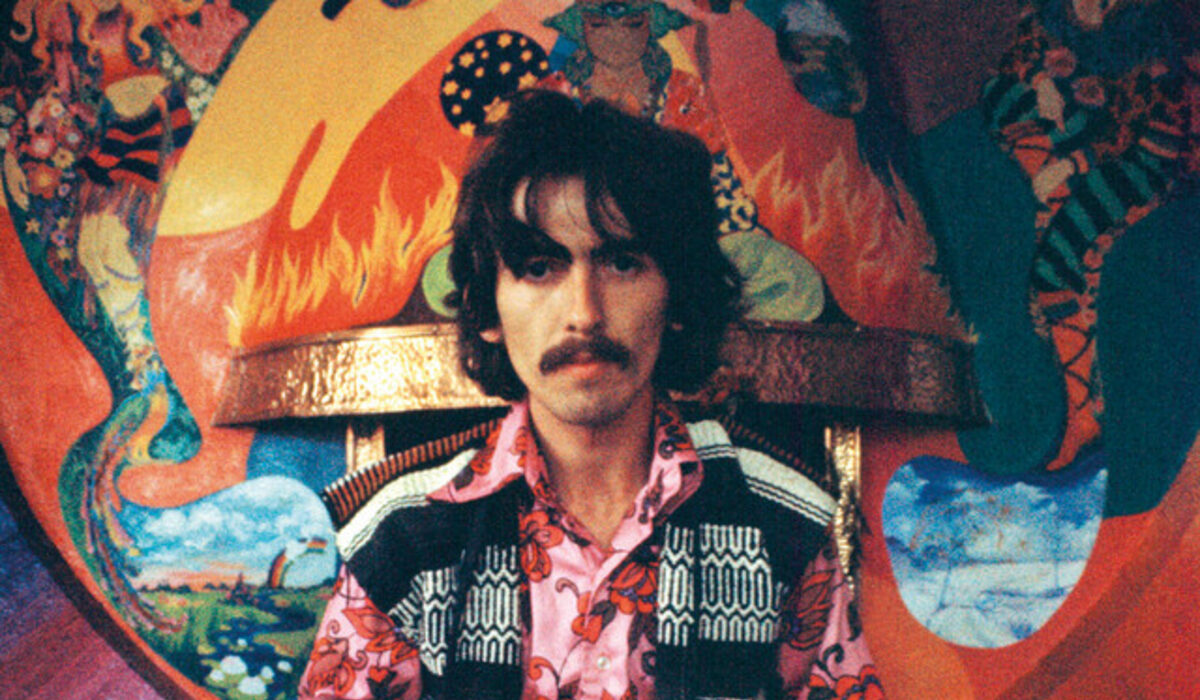
Later solo records were less culturally dominant but consistently worth attention. Living in the Material World (1973) continued the spiritual focus. Extra Texture (1975) was more personal. Cloud Nine (1987), produced by Jeff Lynne, returned him to the charts with «Got My Mind Set on You» and «When We Was Fab.» The Traveling Wilburys project with Dylan, Lynne, Tom Petty, and Roy Orbison (1988-1990) was a genuine collaboration, not a celebrity exercise.
His guitar style distinguishes itself from virtually every lead player of his generation through restraint. Where Clapton built phrases that demanded attention, Harrison built phrases that served the song and then stepped back. The slide playing was particularly distinctive: not the Mississippi Delta raw-blues slide of Duane Allman, but a cleaner melodic approach that treated the slide as a second voice alongside the sung melody. «My Sweet Lord» demonstrates it clearly; so does his guitar on «While My Guitar Gently Weeps,» where Clapton played the original lead and Harrison stood back.
Start with All Things Must Pass for the full release of what had accumulated. The Concert for Bangladesh for the live performance and its context. «Something» and «Here Comes the Sun» remain the Beatles contributions that belong to Harrison specifically, and both reward attention to the production details: the string arrangement, the guitar line, the space between notes. Cloud Nine for the accessible 80s return. What Harrison built across a constrained Beatles period and a solo career was a body of work whose patience proved more durable than the urgency of some of his contemporaries.