Havana, 1961: a family return, then a new run of Cuban records
In July 1960, Celia Cruz leaves Cuba with La Sonora Matancera for engagements in Mexico. Seven months later, a message about her mother’s failing health brings her back to Havana while the orchestra continues fulfilling dates abroad.
Cruz returns on a Cubana flight carrying two stage dresses and a folder of arrangements. At customs, one official recognizes her voice before her passport. She is released after hours of questions and reaches her mother’s home after dark, where neighbors have gathered without music or banners.
The airport reunion is private and tense. Officials question her contract abroad, relatives carry her suitcases and Cruz tells reporters only that she has come to see her family and sing if the conditions are honest.
Her decision to remain is not announced at a podium. It takes shape over several weeks as travel permissions, family visits and rehearsals replace the Mexican schedule. Rogelio Martínez sends cables from abroad asking whether she can rejoin the orchestra; her answers become shorter as the possibility recedes.
Radio Progreso offers La Sonora Matancera a controlled studio session. On 14 March, Cruz records La Ventana Abierta, a guaracha about neighbors passing news across a courtyard, with no political slogan in the lyric.
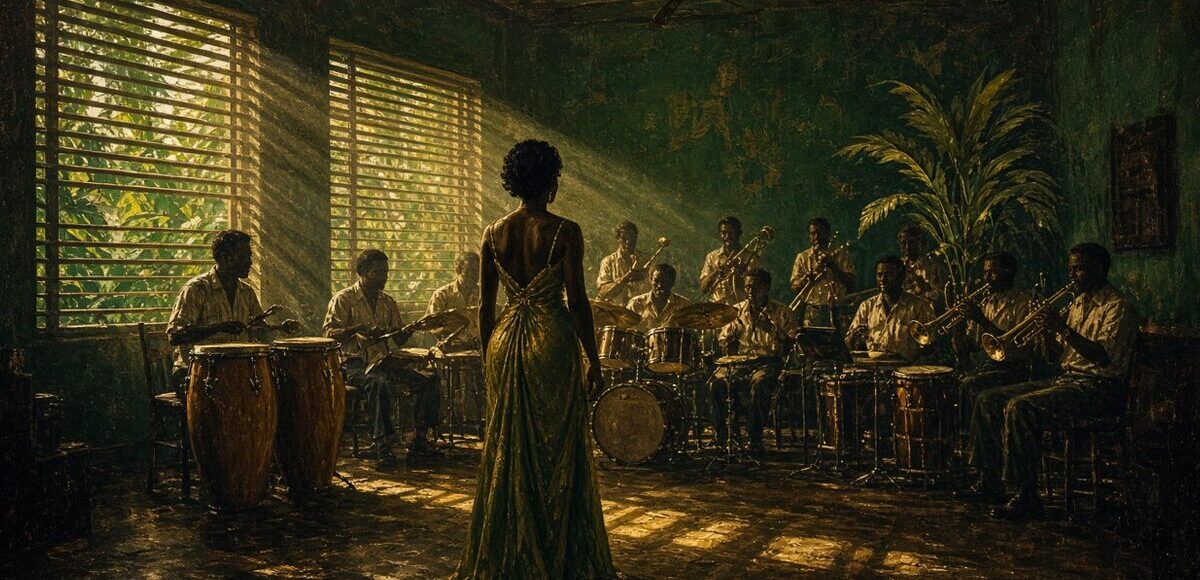
The Radio Progreso room has one large microphone for Cruz and smaller ones placed around the brass. During La Ventana Abierta, she changes the final coro to include the names of Havana neighborhoods. The engineer keeps the take because the chorus answers without hesitation.
The recording is broadcast repeatedly because the singing is direct and the subject is ordinary. Cruz’s voice rises above the trumpets and the hand percussion, the way Cuban listeners already know it.
Listeners request the song by telephone and handwritten note. Its domestic subject allows it to circulate without carrying an official message, and the requests continue after Cruz’s return. She declines invitations to explain herself and asks producers to discuss keys, tempos and musicians instead.
The rest of La Sonora Matancera remains abroad after its contracts expire. Cruz chooses to stay near her mother and forms a Havana ensemble with pianist Lili Martínez, younger conservatory players and veteran percussionists.
The new group has to be put together in rehearsal. Some former colleagues are abroad, others have new institutional posts and younger players know her records better than her rehearsal signals. She stops the first session repeatedly until the trumpets leave room for the words.
Her first Cuban album of the new period, Patio de Colores, appears in 1962 through EGREM. Boleros share space with son, guaracha and one slow Afro-Cuban piece arranged around voice and batá drums.
Lili Martínez gives Patio de Colores its shape. His piano keeps the son tradition clear while the new rhythm section adds tighter bass figures. Cruz records boleros in the morning to protect her voice and saves the faster guarachas for late afternoon when the room has warmed.
Touring becomes possible through cultural exchanges rather than commercial circuits. She sings in Prague, Accra, Algiers and Moscow, always insisting that the set include dance music and not only solemn material selected by hosts.
EGREM presses fewer copies than demand requires. Families share records between houses and radio engineers make working tapes. In Santiago, a dance orchestra learns Techo de zinc from a broadcast captured through static and accidentally creates a different bridge.
In New York, the musicians who will shape salsa still build their scene. Tito Puente records with other singers, Johnny Pacheco looks toward new voices and the Fania roster grows without the partnership that Cruz would have brought.
Foreign tours arrive through cultural delegations with rigid schedules. Cruz negotiates for her own band, decent rehearsal time and fabric allowances for costumes. In Moscow, she removes two formal songs from the program after soundcheck and opens with a guaracha that brings the interpreters to the side of the stage.
Cuban records reach that scene indirectly through Mexico, Spain and sailors carrying tapes. Young bandleaders copy Cruz’s phrasing from poor recordings and sometimes credit songs to the wrong orchestra.
In New York her records arrive slowly, and the bands keep working without her. Fania develops around other singers and Pacheco finds different partners. Cuban musicians there speak of Cruz as a working singer whose new records are difficult to obtain.
In 1967, Cruz leads a large revue at the Teatro Nacional titled Ritmos de la Isla. She protects room in the program for rural son groups and demands equal rehearsal time for dancers, singers and percussionists.
Tapes cross the Florida Straits in both directions through families and merchant crews. Cruz hears rough copies of New York salsa and admires the brass attack. For Puentes, she asks arranger Rafael Somavilla to answer that sound without copying it, using violins against congas and electric bass.
Her public position remains carefully musical, but negotiations are constant. She refuses rewritten lyrics, accepts limits on foreign fees and uses her popularity to secure recording time for three women singers who lack institutional support.
The result causes arguments in Havana. Traditionalists dislike the bass guitar, younger dancers ask for the longest track twice and officials worry that the album’s title will be read in too many ways. Cruz says it refers to musical bridges and returns to rehearsal before anyone can improve the answer.
The 1970 album Puentes uses electric bass, violins from a state orchestra and street percussion recorded in a large radio room. It travels widely in Latin America and gives Cuban dance music a new reference point.
She uses her standing carefully. A rejected lyric stays rejected because she can refuse it in private. A younger singer receives studio time after Cruz gives up one of her own mornings. The restrictions around her stay in place. In the same rooms, the rejected lyric and the morning she gave away change the working day.
A 1978 meeting with a New York salsa orchestra finally occurs at a festival in Madrid. Contract terms allow one shared concert but no commercial album, so musicians exchange handwritten arrangements backstage and play an extended Quimbara known only from Cuban broadcasts.
At Madrid in 1978, the Cuban and New York orchestras meet during an afternoon soundcheck. Pacheco and Martínez compare charts at the piano. Cruz corrects the key of Quimbara, laughs at the bootleg arrangement and sings the first coro before the organizers have decided whether the collaboration is permitted.
In 1989, Cruz marks forty years on radio with a free concert beside Havana harbor. She closes with La Ventana Abierta. Balconies answer the chorus from block to block, in the neighborhood where she finished the 1961 session.
By 1989, Cruz has become a teacher as well as a star. For the harbor concert she places two young singers in the opening set and joins them for the final chorus. When La Ventana Abierta begins, the arrangement returns to the 1961 brass figure and the balconies supply the names she once improvised.
The concert is recorded by Spanish radio. Copies travel widely. Listeners hear the Cuban band and the New York players in the same concert. No studio sequel follows, so the performance keeps circulating as a tape passed from hand to hand.