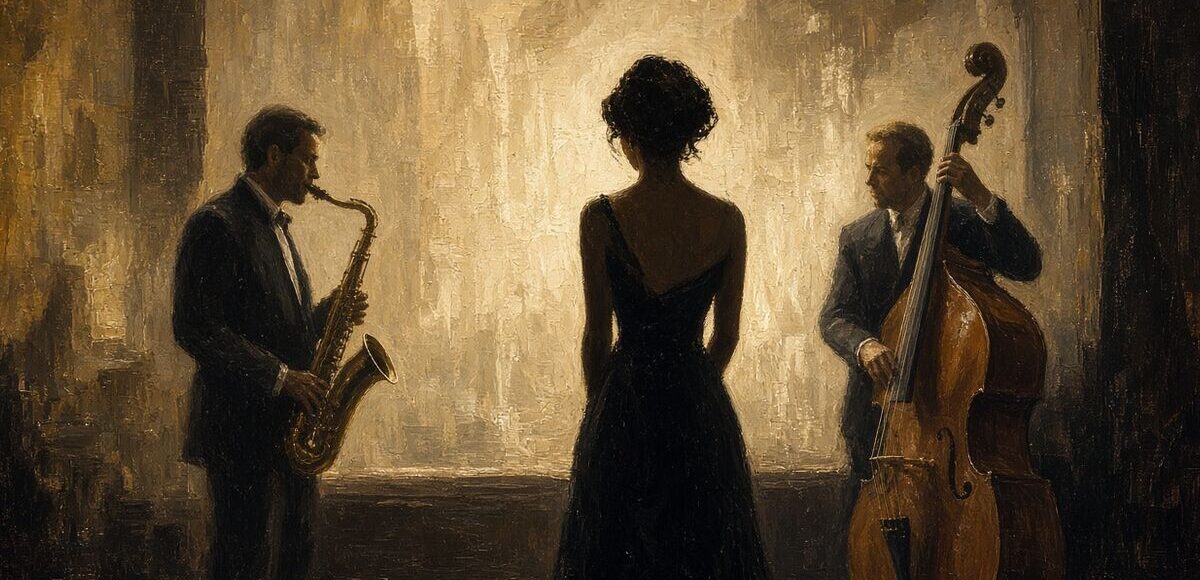
Three London albums turn Sade’s long 1990s silence into a working rhythm
At the end of the 1993 tour, Sade Adu invites Stuart Matthewman, Andrew Hale and Paul Spencer Denman to dinner in a private room above a Soho restaurant. Everyone expects a courteous farewell before several years apart. Matthewman brings a cassette anyway. When the staff begins stacking chairs downstairs, Sade asks for the tape to be played again.
The unfinished song has no chorus, only Denman’s descending bass line and six notes from Matthewman’s saxophone. Sade takes a paper napkin and writes while the others argue about the bridge. Before they leave, she tells the band to keep January free. Nobody uses the word album because that would make the promise feel heavier than it is.
They meet at Deliverance Studios in London after New Year. Love Deluxe has sold steadily without requiring its singer to become a public character, and Epic would happily wait for another carefully managed return. Sade dislikes the assumption that patience must always mean absence. She asks engineer Mike Pela to roll tape before the room has properly warmed.
The first weeks are deliberately ordinary. Hale arrives with chords written on index cards, Denman brings a small amplifier and Matthewman moves between guitar and saxophone. Sade records guide vocals while facing the musicians instead of standing in an isolated booth. A song called Borrowed Weather emerges from the Soho cassette and keeps the sound of fingers sliding on strings.
Epic hears five tracks in March 1994 and asks where the larger single is. The band answers by completing Harbour Lights, a compact record about hotel rooms, departures and the strange politeness of exhausted couples. Pela leaves breaths and chair noises in the quiet passages. The four of them leave space between the vocal and the bass.
Harbour Lights appears in October. British radio chooses Borrowed Weather, while American stations prefer the warmer Another Key. Sade agrees to one video, shot at dawn beside the Thames with no story and no costume changes. By breakfast she is gone, leaving the director with forty minutes of grey river and exactly the close-up he needed.
The tour avoids arenas. In Manchester, Paris and Rotterdam, the band plays theatres where Matthewman’s saxophone can fall almost to a whisper. Audiences expecting the polished scale of the previous tour instead hear arrangements being altered from night to night. No Ordinary Love grows darker beside the new songs.
Success creates a problem none of them expected. Epic assumes the quick return was an exception, but Sade has already proposed another session for early 1996. She wants to record outside England before routine hardens into a system. Pela secures time at Compass Point in Nassau, where the studio still carries memories of Grace Jones, Talking Heads and the records made under its low ceiling.
The heat changes their hours. They sleep through part of the afternoon, begin after sunset and work until fishing boats move in the bay. Hale uses fewer keyboards because the room itself supplies a soft echo. Percussionist Karl Vanden Bossche joins for two nights and stays for three weeks, building rhythms from congas, shakers and a wooden chair struck with the palm.
A young Maxwell visits while passing through the island. He and Sade sing a loose harmony on Open Window, then decide that the conversation sounds better when neither voice dominates. The duet is never advertised as an event. Listeners discover his name in the booklet and begin calling radio stations before the label has chosen a second single.
Released in September 1996, Open Window is brighter than Love Deluxe without becoming careless. The title track moves on hand percussion and Denman’s patient bass. Small Hours gives Sade only an acoustic guitar and a distant organ. Reviewers who had treated the 1994 album as a surprising interruption now have to admit that the band has established a pace.
That pace alters the R&B landscape around them. Younger singers no longer cite Sade only as a monument from the previous decade; she is suddenly a contemporary with a new record in shops. D’Angelo attends a New York concert and spends half an hour afterward discussing bass sound with Denman. Sade listens, smiles and declines every attempt to turn the meeting into a photograph.
By 1997 the schedule begins to cost them. Denman wants more time with his family, Matthewman has production work and Sade refuses to write in hotel rooms merely to protect a release date. They agree on one rule: the next album will arrive in 1998 only if the songs justify it. Epic receives the decision as both reassurance and warning.
The first 1998 sessions go badly. Six arrangements sound elegant and dead, their surfaces polished before the lyrics have found a pulse. Sade stops a playback midway through the third song and sends most of the equipment back to storage. The following morning she, Matthewman and a drum machine record Low Flame in one pass, with Denman adding bass after lunch.
That performance becomes the measure for the rest of the record. Hale plays upright piano rather than layers of synthesizers. Matthewman leaves his saxophone in its case for days and concentrates on clipped guitar figures. When it finally returns on Crossing Home, one long note carries more weight than a full arrangement would have done.
The album is also shaped by life outside the studio. Sade’s lyrics speak of school runs, unanswered telephones and adults learning that privacy is not the same as escape. There are no grand confessions. Details arrive through a cup left beside a sink or a coat still hanging near the door, and the band gives those objects enough room to remain ordinary.
Low Flame comes out in November 1998. Its quiet, guitar-led sound anticipates the direction that Lovers Rock would have taken in another history, but here it completes a trilogy rather than ending an eight-year wait. The press tries to name a Sade revival. The 1994, 1996 and 1998 albums are already in the shops.
The three tours change too. Instead of treating every return as a ceremonial occasion, the band can play new songs beside recent ones and let weaker pieces disappear. In Madrid, Sade removes a planned encore because the final note of Crossing Home has silenced the room. The house lights rise before the audience realizes the concert is over.
At the decade’s end, Epic requests a fourth album on the same schedule. This time Sade says no without drama. The group announces a pause with a beginning, a purpose and no invented deadline. Fans have the 1994, 1996 and 1998 albums, and the pause has a stated start.
When the musicians reconvene years later, the rehearsal room contains songs from a decade that once would have held only Love Deluxe. They play the title tracks in order: the harbour, the open window, the low flame. Sade closes her lyric book and says the band was right to stop when it did. The difference is the three albums recorded between 1994 and 1998.