Dublin 1976 to The Joshua Tree: delay guitar, open chords, and the stadium scale
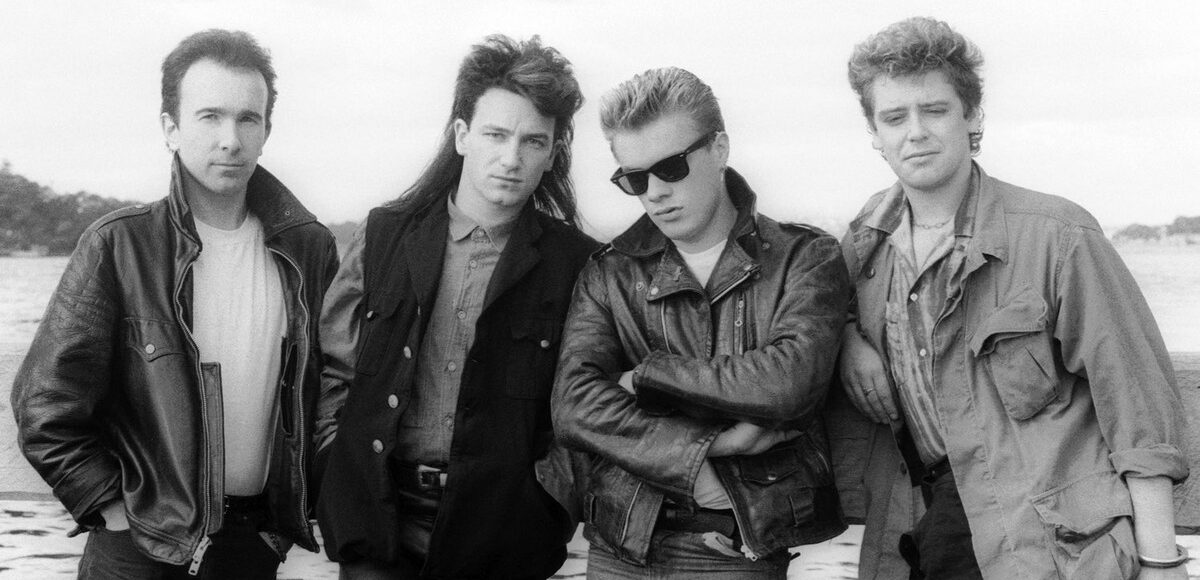
U2 formed in Dublin in 1976 after Larry Mullen Jr. pinned a school notice asking for musicians. Paul Hewson (Bono), David Evans (the Edge), Adam Clayton, and Mullen locked the lineup early and kept it. Island Records signed them. Boy (1980) and October (1981) put the Edge’s delay and chiming chords in front of a young rhythm section that still sounded local and hungry. Even then the songs assumed a room would eventually grow around them.
War (1983) pushed politics into the singles. « Sunday Bloody Sunday » and « New Year’s Day » made the band a live draw beyond Ireland. Producer Steve Lillywhite kept the drums hard and the guitars bright. The Unforgettable Fire (1984), with Brian Eno and Daniel Lanois, opened the mix: longer atmospheres, softer edges, and Bono leaning into melodic lines rather than punk volume alone.
The Joshua Tree (1987) was the commercial leap. Recorded partly in Ireland and finished with Eno and Lanois, it delivered « With or Without You, » « I Still Haven’t Found What I’m Looking For, » and « Where the Streets Have No Name. » The Edge’s delay figures filled arenas. Clayton’s bass stayed simple and central. Mullen’s drums hit like a parade. The album topped charts in the US and UK and turned the four-piece into a global touring machine.
Rattle and Hum (1988) mixed studio cuts with American roots detours and a loud live document. Then Achtung Baby (1991), cut largely in Berlin with Eno and Flood, rebuilt the sound: industrial textures, irony, and « One, » « Mysterious Ways, » and « The Fly. » Zoo TV put screens, satire, and character work on the road. Zooropa (1993) and Pop (1997) kept the experiment running, with uneven returns but a clear refusal to freeze the Joshua Tree template.
All That You Can’t Leave Behind (2000) recentered melody and radio reach. « Beautiful Day » brought another cycle of stadiums and awards. How to Dismantle an Atomic Bomb (2004) and No Line on the Horizon (2009) kept the core writing team intact. Later albums and anniversary tours of The Joshua Tree showed how tightly the catalogue still maps to large rooms.
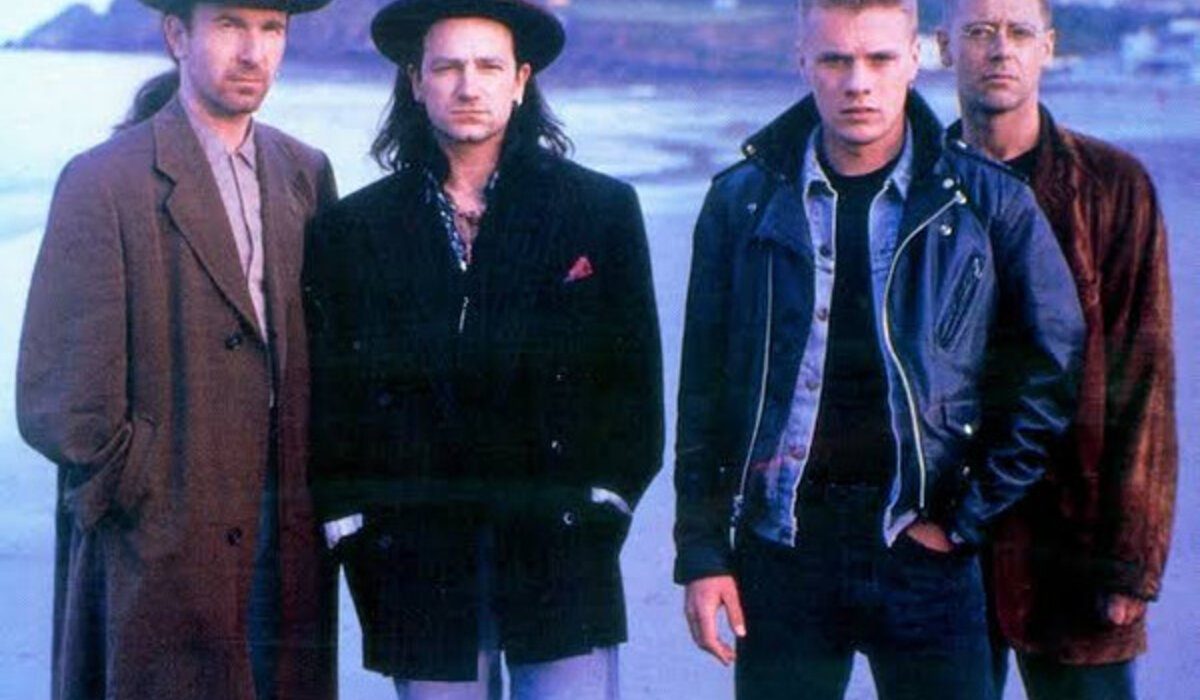
Live, U2 treat the PA as part of the arrangement. The Edge’s delay needs space. Bono’s vocal rides over open chords rather than dense metal riffs. Clayton and Mullen hold a mid-tempo pocket that lets choruses land without rush. That balance, more than any slogan, is why the same songs work in clubs, festivals, and football grounds.
Influences run through post-punk urgency, American gospel and blues on Rattle and Hum, and the Eno/Lanois habit of treating the studio as an instrument. The Edge cites bands like The Buzzcocks and Television for guitar attitude, but the dotted-eighth delay became a signature others copied for arena rock for decades.
The practical legacy is audible in later bands that borrow delay-soaked guitar and earnest choruses. Tribute sets still open with « Where the Streets Have No Name » or « Pride (In the Name of Love). » Guitar magazines still diagram the Edge’s settings. Festival bills still book the name because the live engine, rebuilt across eras, still fills the air.
Entry points: The Joshua Tree for the sharpest mass-market statement. Achtung Baby for the Berlin rebuild. War and Boy show the early muscle. « One » works as a standalone ballad entry. Next to Coldplay’s smoother anthem craft or Radiohead’s art-rock detours, U2’s lane is four players, big rooms, and a guitar sound built to travel.
What remains is a method more than a myth: keep the lineup, rebuild the production when fashion shifts, and write choruses that assume a crowd is already in the room. Put on The Joshua Tree in sequence and the stadium scale makes sense before the first kick drum fades. The delay, the open chords, and Bono’s lift still teach arena rock how to breathe.