

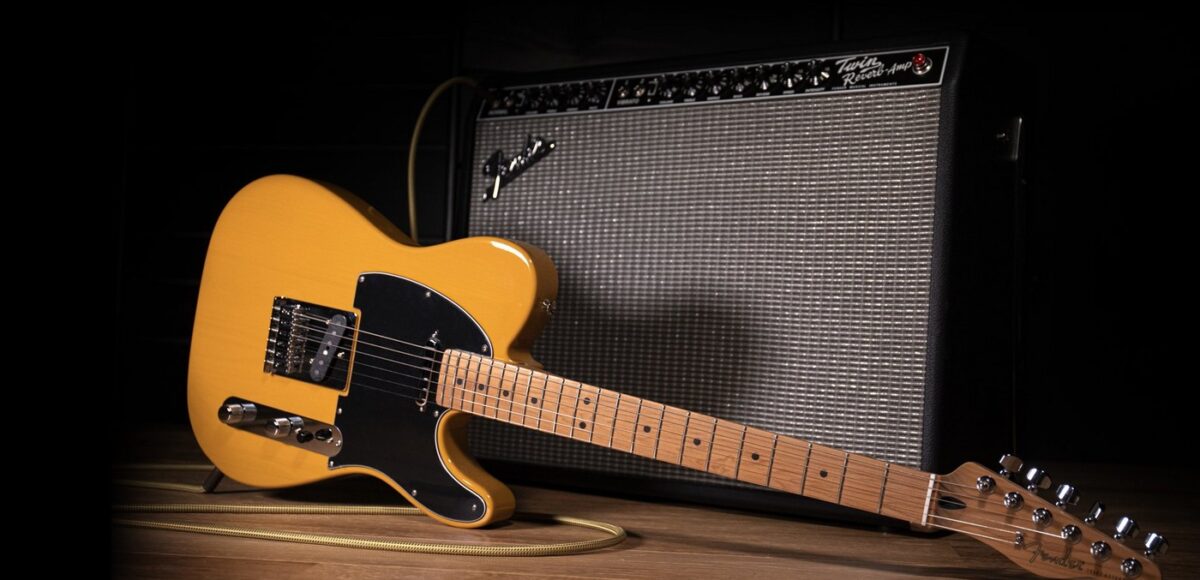
Leo Fender’s 1950 solid-body: bolt-on neck, twang, and road proof
In a Fullerton, California workshop in the late 1940s, radio repairman Leo Fender designed an electric guitar meant to be mass-produced, easy to service, and tough on the road. He was not a guitarist chasing mystique. The Broadcaster appeared in 1950; after a naming clash with Gretsch it became the Telecaster. Ash body, bolt-on maple neck, two single-coil pickups, simple control plate. No carved curves for show. The point was a clear, cutting tone players could hear on stage and fix with a screwdriver.
It was among the first solid-body electrics to sell widely because it worked across scenes. Country pickers liked the snap; blues players used the bite; rock players used the midrange punch. James Burton played it behind Ricky Nelson and later Elvis. Muddy Waters used Fenders in Chicago. Buck Owens and Don Rich made the Bakersfield sound sparkle on Teles. Keith Richards built riffs such as “Start Me Up” around that attack; Bruce Springsteen and Joe Strummer treated the plank as a working tool, not a luxury object.

The Telecaster is stiff in the hand compared with a Stratocaster. The bridge pickup is bright and unforgiving; mistakes stay audible. That honesty is why session players and punk rhythm guitarists keep returning to it for country, reggae, indie, and lean rock. While other designs added humbuckers and softer contours, the Tele stayed close to the original plank layout and switch logic. You still see it on small club stages and stadium risers from Nashville to Brixton because the design never needed a nostalgia reboot. It was built for repairability and clarity the first time, and that remains its claim.