
It arrived while he waited for tea
Rick Davies went home and the song turned up while the tea was on. He has told it plainly. His parents did not own a piano, so as a boy in Swindon he learned on the one next door. The neighbour made tea. He played while he waited. Years later he went back, sat at that same piano, and Goodbye Stranger arrived in one go. He had not written for a while. He did not yet know the lyric was about leaving in the morning.
The words landed on Breakfast in America, recorded through 1978 at the Village Recorder in Los Angeles, with the band and Peter Henderson producing. Davies sings. He plays Wurlitzer electric piano and Hammond organ. Dougie Thomson plays bass, Bob Siebenberg drums. John Helliwell adds harmony vocals and a whistle that threads the middle of the track. Roger Hodgson does not take the lead vocal. He stacks the high “goodbye”, the near-falsetto Billboard picked out, and then, late, an electric guitar solo. Hodgson has said that when Davies brought a song, he was usually the one who heard the extra colours. This is that deal in one track: Davies’s piano and story, Hodgson’s guitar as the exit that will not sit down.
The lyric is a man who liked the stay and is leaving anyway. It must be so. He has to have things his own way. Davies later agreed the song was about a one-night stand, drawn from life on the road, and that he had not seen that when he wrote it. The music does not mope. The tempo sits in the middle, the Wurlitzer is bouncy, the whistle is almost cheerful. Billboard called it a fluid midtempo number, highlighted by near-falsetto vocals, dominant keyboards and a strong melody. The bite is in the refusal, not in a minor key.
I just went back to visit one time, and for some reason I came up with this song. I hadn’t written for a while. It just all came up at once.
(Rick Davies, on writing Goodbye Stranger)
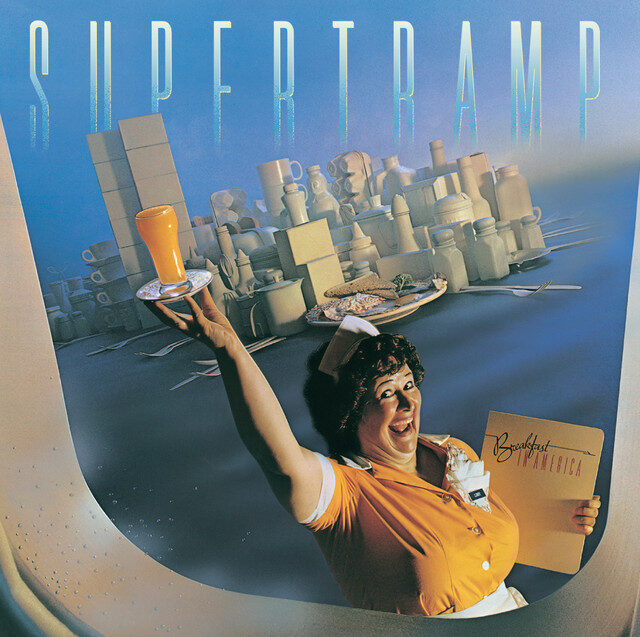
A&M released the single in the summer of 1979, after The Logical Song had already made the album hard to avoid. Goodbye Stranger entered the Billboard Hot 100 at number 78 in early July and peaked at number 15 in the week of 8 September. Canada took it to number 6. Britain was cooler: number 57. That split fits the record. Breakfast in America was a much bigger American event than a British one, even with an English band and a title that winks at the country they had left. The guitar solo at the end is the part that kept the song in arguments about Supertramp’s best playing. It is not long. It is melodic, and it belongs to the singer who did not write the lyric. You hear the partnership without a speech about it.
If you only know The Logical Song, start here for the other writer. The Wurlitzer states the mood before the vocal does. The whistle is Helliwell having a good time in the arrangement. The last guitar is the sound of a band that could hand a song across the stage and still make it one record. Davies’s half of Supertramp is piano first, a wry exit, no plea to stay. Hodgson’s solo does not argue with that. It waves.