A last-minute song, and the harmonica won
The album was already being built when this one showed up. Peter Henderson has said that by the time the Burbank eight-track demos were finished, Take the Long Way Home was not among them. Hodgson wrote it in Topanga, in the stretch when a song of his usually arrived in pieces over two or three weeks. He called it a last-minute surprise. The lyric looks, at first, like a man delaying the driveway. So you think you’re a Romeo, playing a part in a picture show. At home he is part of the furniture. On the road he still gets a few minutes alone with the version of himself that feels like a star.
Hodgson has always insisted on a second floor under that joke. Not wanting to go home is the surface. Under it he was asking where home actually is, the same question that runs through The Logical Song, asked this time from the driver’s seat. The band cut the song at the Village Recorder in 1978, Studio B, co-produced with Peter Henderson, for Breakfast in America, released on A&M in March 1979. Hodgson sings. He plays keyboards and guitar. Thomson and Siebenberg keep the rhythm from rushing the delay.
The intro is the decision you hear first. Hodgson remembers trying instruments and rejecting the obvious one. Saxophone, he thought, would have been too ordinary, which is a funny line in a band that has John Helliwell. They gave the hook to Rick Davies’s harmonica. Helliwell answers later on clarinet. That exchange, a bouncy keyboard line beside it, is what the song is known for once the lyric has done its work. The thought is of driving past your own exit. The tempo lets you tap a foot while you do it.
I’m talking about not wanting to go home to the wife, take the long way home to the wife because she treats you like part of the furniture, but there’s a deeper level to the song, too.
(Roger Hodgson)
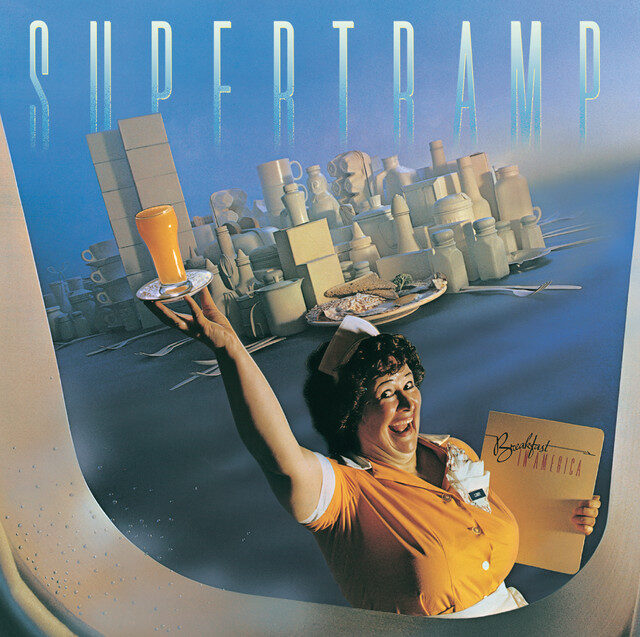
A&M released it as a US single in October 1979, with Rudy on the B-side. On 9 December it peaked at number 10 on the Billboard Hot 100 and stayed on that chart for 15 weeks. Canada took it to number 4. It was the third Breakfast in America hit in America that year, after The Logical Song and Goodbye Stranger, and it did not need Britain to cosign it. A shorter edit for radio ran just over four minutes. The album cut is 5:08, long enough for the harmonica to come back and for the long way to feel like distance, not a slogan.
On the Paris shows of 1979, later released as the live album Paris, the song opens the same way: Davies’s harmonica, then the band. That intro was a trial, not a concept memo. If the drive home is the subject, the first sound should not be a speech. It should be the instrument that makes you take the other road. Supertramp picked the harmonica. The door could wait.