




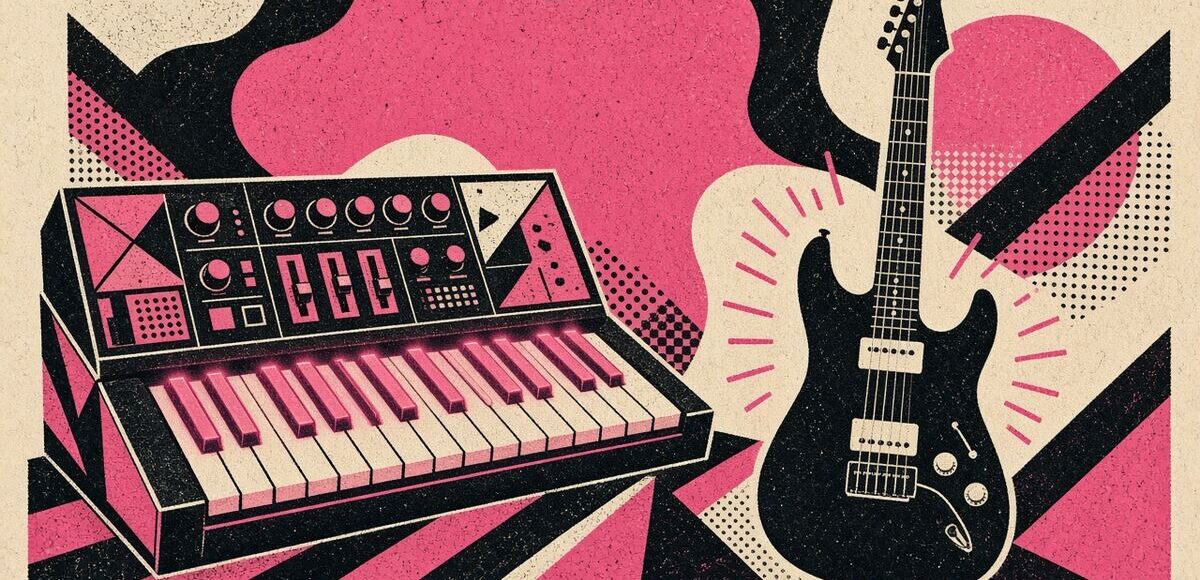
Neon keys versus amplified strings: which instrument stamped the sound of the 1980s?
Open a playlist tagged “80s” and you will hear both: gated drums and bright synth lines on one side, chorus pedals and arena riffs on the other. The decade sold new digital keyboards and kept the electric guitar at the centre of rock radio. Marketing loved the split — new wave versus hard rock — but listeners still argue which tool wrote the decade’s signature.
The synth case is technology and pop architecture. Affordable polysynths, sequencers and drum machines let small teams build hits that sounded huge: Soft Cell, Depeche Mode, early Madonna productions, a lot of electro and freestyle. Film and TV themes rode the same wave. For this camp, the 1980s are the first decade where the keyboard, not the guitar, set the default colour of mainstream pop.
The guitar case is continuity and volume. Metal, hard rock and much of college rock still spoke through six strings — Van Halen’s flash, The Edge’s delay landscapes, thrash’s speed, indie’s jangle. Live, the guitar remained the silhouette on the poster. Fans in this camp hear the decade as a guitar story that simply learned new effects.
Cross-pollination muddies the scoreboard: Prince, The Police, U2 and countless studio players mixed both. Still, when people mimic “the 80s” in a bar or a film, they often reach either for a synth stab or a chorus-drenched chord — rarely a neutral third option.
What defines the decade in your ears: the synthesizer’s new palette, or the guitar’s upgraded roar? Choose a side and name one track that proves it.
Ian Mc. | 8 September 2026
|
UK charts leaned synth. US rock radio leaned guitar. Geography skewed the “winner.”
Nina K. | 10 September 2026
|
synth pop healed my commute. hair metal guitars healed nothing but they were fun
Léa M. | 18 September 2026
|
Prince used both like toys in the same box. That’s my answer dressed as a person.
Yuna S. | 20 September 2026
|
Blue Monday vs Sweet Child. Different planets, same decade. Stop making instruments fight.
Kai M. | 23 September 2026
|
DX7 presets everywhere, some lazy, some great. A Les Paul through a Marshall also said a lot.
Chris O. | 25 September 2026
|
My students hear 80s as aesthetic first. Digging into the gear later is the fun part.
Aisha B. | 28 September 2026
|
Synths named the decade on the radio. Guitars still owned the arenas. Both logos on the same T-shirt for me.
Diego R. | 30 September 2026
|
I chased chorus pedals because of The Police AND Fairlights because of Peter Gabriel. 80s brain is dual-boot.
Inés | 9 October 2026
|
Both. No: synth. I had to choose like the article asked.
Sam W. | 10 October 2026
|
Soft Cell yes, but Don’t Stop Believin’ is also 81 energy. Guitar still in the room.
Mike B. | 11 October 2026
|
Freestyle and electro don’t care about your Les Paul. Synth decade.
Ben | 12 October 2026
|
Jangle and college stations saved my teenage nights. Guitar.
Lina | 12 October 2026
|
Affordable polysynths democratised hugeness. Tech argument for synth.
Jules M. | 13 October 2026
|
I’m a metalhead. Decade = guitar. Not even a question.
Carmen | 13 October 2026
|
Hard rock kids will scream. Fine. Soft Cell still sounds like 1981 to me.
Emma | 13 October 2026
|
My mum’s aerobics VHS had more synth than rock radio. Pop reality = keys.
Bruno | 13 October 2026
|
If you mime ‘the 80s’ in a movie, you reach for a stab of synth first. Honestly.
Zoé | 13 October 2026
|
U2 blurred it. Still, when Bono lifts the guitar, that’s the poster. Guitar.
Chloé | 14 October 2026
|
Film themes went synth-crazy. That’s cultural signature. Keys.
Aria | 14 October 2026
|
Prince used both and laughed at this debate. Forced pick: his guitar face. Guitar.
Chris | 14 October 2026
|
College rock kept chorus pedals alive while radio chased digital. Guitar underground mattered.
Harold | 14 October 2026
|
My first keyboard was a Casio. I thought I invented pop. Synth kid forever.
Amy | 15 October 2026
|
Thrash and hair metal were loud proof the guitar never surrendered.
Priya | 15 October 2026
|
New wave changed how choruses move. That’s synth grammar.
Bea | 15 October 2026
|
Arena riffs paid the bills. Synths got the magazine covers. I vote what filled stadiums: guitar.
Paulo | 15 October 2026
|
Depeche Mode taught me emotion without a solo. Keys win.
Rita | 15 October 2026
|
Gated drums + neon keys = the decade in my head. Synth.
François | 15 October 2026
|
The Edge’s delays are guitar but they sound huge and spacey. Still guitar camp.
Ivan | 15 October 2026
|
Guitar didn’t leave. Van Halen flash still defines my 80s. Six strings.
Kofi | 16 October 2026
|
Synth. Soft Cell to early Madonna productions. That was the new colour.