Reykjavík, 1992: The Sugarcubes choose a fourth album
In October 1992, The Sugarcubes finish the touring cycle for Stick Around for Joy and prepare to separate. Björk has already begun gathering songs that could become Debut. At the final Reykjavík meeting, Einar Örn asks for one more rehearsal rather than one more argument. The next afternoon, the six musicians play for three hours and decide to make a fourth Sugarcubes album.
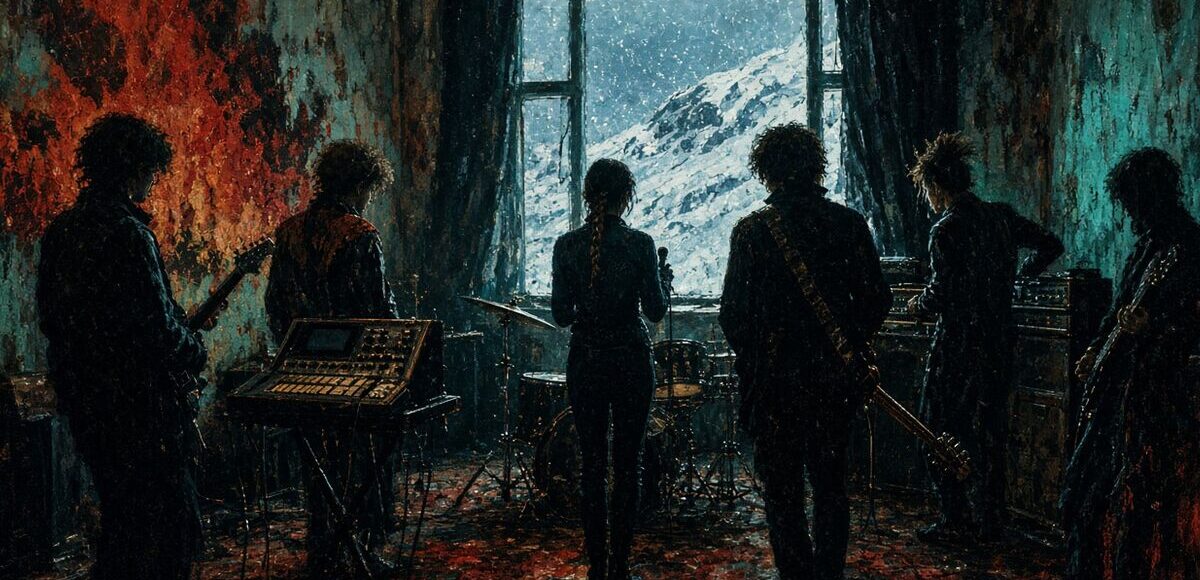
November 1992. The agreement gives every member six months for outside work. Björk brings Human Behaviour to rehearsal, where Bragi Ólafsson turns its low pulse into a live bass line. At Syrland in Reykjavík, the six members arrange themselves as a band rather than a singer with witnesses. Þór Eldon cuts bright guitar holes around Björk’s melody, Bragi Ólafsson makes the bass unusually patient and Sigtryggur Baldursson refuses a programmed snare that sounds better alone than with people.
January 1993. Producer Nellee Hooper visits Reykjavík expecting a solo session. He stays to work with the band after hearing guitar, brass and a cheap sampler collide on Big Time Sensuality. Einar Örn’s interruptions become negotiated events. Keyboard player Margrét Örnólfsdóttir holds up a red card when he crosses Björk’s final verse, and guitarist Einar Melax times the silence after his last word. The system looks ridiculous, works immediately and is photographed for the sleeve.
March 1993. Einar writes spoken interruptions that Björk cuts with a kitchen timer. The rule gives him forty seconds per song unless the whole group votes for more. One Little Indian wants Björk’s face larger on the campaign. The band sends an image of six winter coats hanging in a school corridor and lists the members in alphabetical order. British shops still place the record under B, while Reykjavík clerks file it where they have always filed the Sugarcubes.
June 1993. The album Weather Inside combines seven new group songs with four pieces transformed from Björk’s notebook. It is less smooth than Debut would have been and more open than the earlier records. The electronic equipment changes the band’s travel habits. Samplers ride in padded fishing boxes, voltage converters disappear at airports and soundchecks take an hour longer. When a machine fails, Baldursson starts an acoustic beat and Björk reshapes the melody before the technician has found the correct cable.
August 1993. Human Behaviour becomes the first single under the Sugarcubes name. Its video still uses animal scale and handmade strangeness, but all six members appear in the final forest scene. Each new idea still has to pass six sets of hands, objections and jokes before release. Some ideas emerge rougher, others become unexpectedly simple, and Einar occasionally improves a song by missing the meeting where it is arranged.
Autumn 1993. British reviews praise Björk and repeatedly predict the band’s collapse. She answers by sending one photograph of the rehearsal calendar with the next six months fully booked. Michel Gondry arrives to discuss the Human Behaviour film and finds the band voting on the size of a cardboard moth. Björk wants it to fill the frame, Einar wants to ride it and Þór asks whether it can survive Icelandic rain. The finished forest includes all three ideas for less than the cost of one polished studio set.
1994. The tour places electronic equipment beside the drums rather than behind a curtain. When a sequencer fails in Chicago, Sigtryggur Baldursson counts a faster version and the band follows. At Brixton Academy, the sampler loses Björk’s opening rhythm for Big Time Sensuality. Baldursson strikes the floor tom, Bragi doubles him and the audience supplies claps in the wrong place. The band keeps that crooked pulse for the rest of the song, then labels the repair London Version on the set list.
1995. Björk’s songs for the next album grow larger and less guitar-led. The group invites string players and programmers, turning Army of Me into a blunt ensemble piece. For Common Volcano, string arranger Eumir Deodato sends a neat score that leaves no place for Einar. He records three whispers in a stairwell; Björk chooses the shortest and positions it before the cellos enter. Deodato laughs when he hears the mix and writes the whisper into the conductor’s copy.
1996. Common Volcano divides listeners. Einar appears less often, the arrangements change shape mid-song and Björk refuses to identify which ideas began as solo material. The orchestral EP under Björk’s name is recorded at a Reykjavík school during winter break. Margrét plays harmonium on one track, Bragi carries chairs and Einar appears only in the thank-you list. The modest release prevents the solo question from becoming a crisis and lets the next Sugarcubes meeting begin on time.
1997. A planned break allows Björk to record an orchestral EP under her own name. It is presented as one room in the same house, not an exit, and the band plays on one track. On Map of Mouths, Þór sets aside electric guitar for a pump organ found in a church storeroom. Its bellows wheeze between Björk’s phrases, so the engineer tries to remove the noise. She restores it, arguing that an instrument should be allowed to breathe badly if the singers are.
1999. The Sugarcubes build Map of Mouths from voices, strings, accordion and almost no conventional rock guitar. Elektra worries; Reykjavík audiences hear a continuation of local experiments.
2001. The members create a rule for long tours: families travel for selected weeks and no interview may ask only Björk why she remains. Several magazines lose their appointments.
2004. A vocal album uses all six members as performers, even when their instruments are absent. Einar provides rhythm syllables, while Björk arranges a choir from five countries.
2012. For the twentieth anniversary of the meeting, the band returns to the original rehearsal room. The kitchen timer still works, and Einar demands his unused minutes back.
The twentieth-anniversary gathering is planned as a rehearsal with no audience, but word reaches Reykjavík before lunch. By evening, people are standing outside the old room with children who know Human Behaviour from the later live record. The band opens the windows rather than move to a larger venue. Bragi runs a cable to a borrowed speaker in the courtyard, Margrét serves coffee from the rehearsal kettle and Gondry’s cardboard moth is hung above the door with new tape. Inside, Björk tries a melody built from three rising notes. Þór answers with a guitar scrape, Baldursson finds a beat and Einar starts speaking exactly when the timer rings. Nobody stops him. The first complete performance of the new song reaches the street through an open window and ends under the sound of a city bus changing gear.
At the 2012 rehearsal, Einar demands the minutes once denied by the kitchen timer. Björk grants him forty seconds, the band enters on the forty-first and a new song begins before he can protest. The Sugarcubes keep playing. The new song continues after Einar’s forty seconds.