





1976 debut single: Hey! Ho! Let’s go!, Sire, under two and a half minutes
Blitzkrieg Bop opens the Ramones’ self-titled debut album and served as their first single in February 1976 on Sire Records (marketed with ABC in the US). The song runs about two minutes twelve seconds. Joey Ramone sings; Johnny Ramone plays bar-chord guitar; Dee Dee Ramone plays bass; Tommy Ramone plays drums. Tommy wrote the music and most of the lyric; Dee Dee supplied the title (the working name had been Animal Hop) and changed one line. Producer Craig Leon kept the take lean, with Tommy credited as associate producer. Sessions ran in January 1976 at Plaza Sound, above Radio City Music Hall in New York, in about a week for roughly $6,400. Engineer Rob Freeman and assistant Don Hünerberg sat the board. Seymour Stein’s Sire bet on a Queens band that already owned CBGB nights.
The track begins with a chant anyone can learn in one hearing: Hey! Ho! Let’s go! Against mid-1970s rock built on long solos and stage spectacle, this was a wall of short parts. Few chords, a fast even beat, almost no decoration. No harmony break, no guitar solo, no drum showcase. Johnny’s downstrokes stay hard and plain. Dee Dee’s bass stays simple, set forward, and Tommy’s drums hit even and fast. The lyric mixes cheerleader nonsense with a joke about “blitzkrieg” tactics reframed as rock ’n’ roll absurdity: kids lining up for a show, losing their minds, shouting from the back. It is satire and street chant more than a plotted story.
John Rockwell, writing in the New York Times in 1976, heard a nonstop set of short, brisk, intense songs that threw conventional ideas of pace and variety aside. That description still fits the opener. The B-side was Havana Affair. The album arrived on 23 April 1976 . Other bands worldwide copied its speed and its short songs. College radio, club floors, and later stadium crowds all learned the chant. Film soundtracks and sports arenas kept it in circulation long after the early Bowery nights. Phil Spector would later produce the band and bring his own drama into the studio; this first single already proved they did not need walls of echo to land a hook.
Tommy later said the original idea was kids going to a concert and having a good time. Dee Dee’s title and the “shoot ’em in the back now” tweak pushed the image toward comic menace without turning the song into a history lecture. The method stayed the same on every early cut: black leather, bad haircuts, pop hooks played loud and fast. CBGB crowds already knew the chant before the record; the studio take froze that club method for Sire vinyl.
What the Ramones do is deliver a nonstop set of short, brisk, monochromatically intense songs. (…) conventional considerations of pace and variety are thrown calculatedly to the winds. The ingredients are simplicity itself.
(John Rockwell, New York Times, 1976)
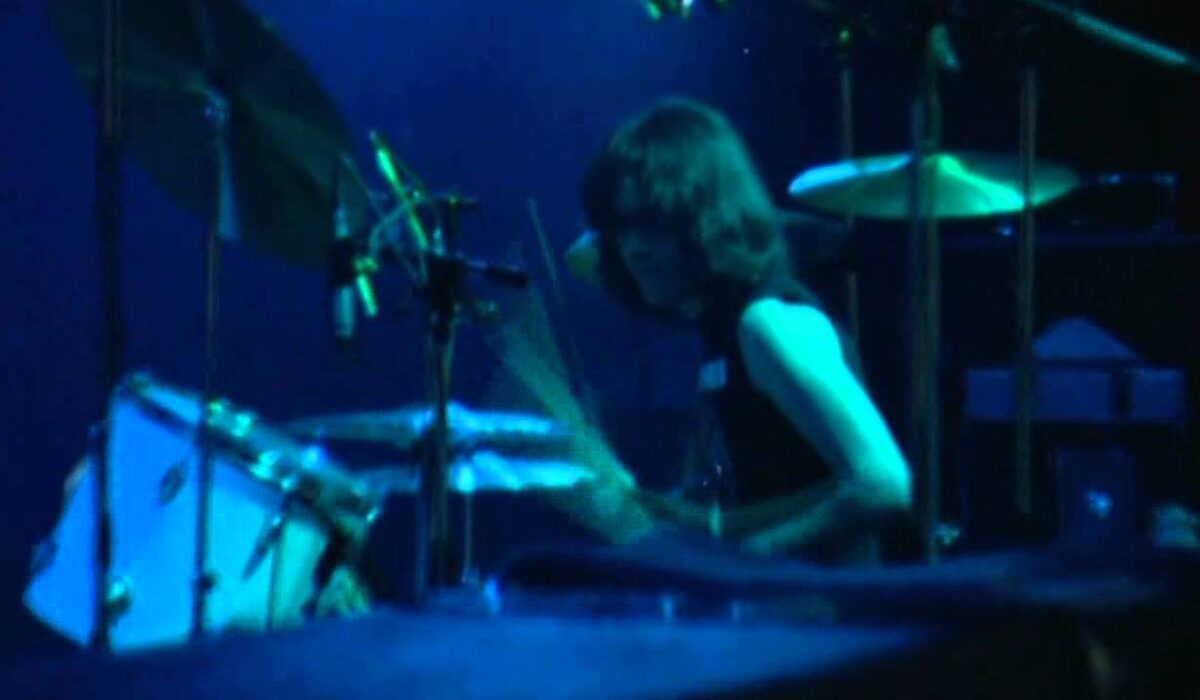
The track does not stop to explain the chant. Three chords, a shout, a short runtime: that is the whole offer. Later players picked up guitars because this record made a first band feel possible. Lists and sports arenas kept the chant in circulation after the early Bowery nights. The original still runs on that motion. No extra message was stuck on at the end.
The chant, Johnny’s downstrokes and Joey’s voice are already the debut single. Two and a half minutes hold the method: short parts, no solo, the same shout from the first bar to the last.
Greg | 8 October 2026
|
Radio killed Blitzkrieg Bop for me for years. Came back last month. Instant regret for waiting.
Lina | 8 October 2026
|
Short take: the groove on Blitzkrieg Bop still feels unfair. I told my coworker and they shrugged. Their loss.
Théo | 9 October 2026
|
bass line on Blitzkrieg Bop is the whole argument. Rest is decoration. Good piece.
Mateo | 9 October 2026
|
The production notes here made me replay Blitzkrieg Bop twice. Nice catch. Might be recency bias but I do not care today.
Marie-Claire | 10 October 2026
|
Ok but who else puts Blitzkrieg Bop on at 1am and feels seen?
Jackie | 10 October 2026
|
Kinda basic of me but Blitzkrieg Bop is still top 5 Ramones for me. Anyway.
Bruno | 11 October 2026
|
Not my usual lane but Blitzkrieg Bop got me. Fair enough. More of this please.
Anne | 12 October 2026
|
I argued with my brother about Blitzkrieg Bop for years. This is my exhibit A. I told my coworker and they shrugged. Their loss. Good piece.
Bea | 12 October 2026
|
I show Blitzkrieg Bop to friends who say they hate that era. Works every time. Sharing this in the group chat. Expect chaos.
Carmen | 13 October 2026
|
Cool. Now I want the deep cuts around Blitzkrieg Bop too.
Rita | 14 October 2026
|
Read this, then put Blitzkrieg Bop on loud. That was the move. Coffee got cold while I finished the article. Acceptable. Ok bye.
Diego | 14 October 2026
|
Simple song, big feeling. Blitzkrieg Bop still does that. Ok bye.
Ivan | 15 October 2026
|
This is the track I put on to test new speakers. Ramones never lies. Good piece.