




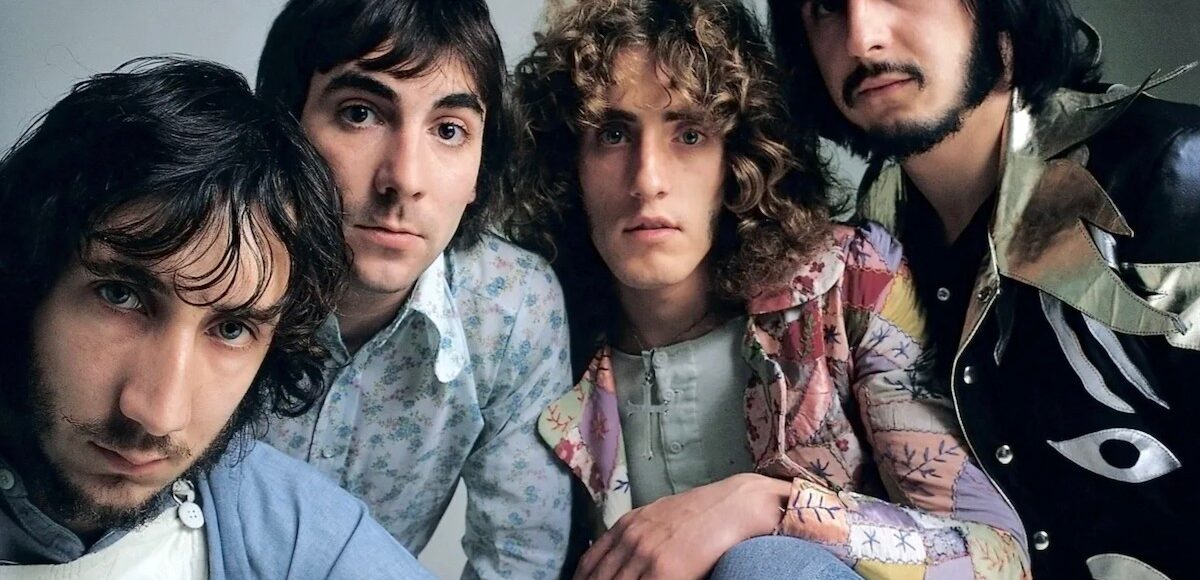
Mods, Marshall stacks, and rock opera from Shepherd’s Bush
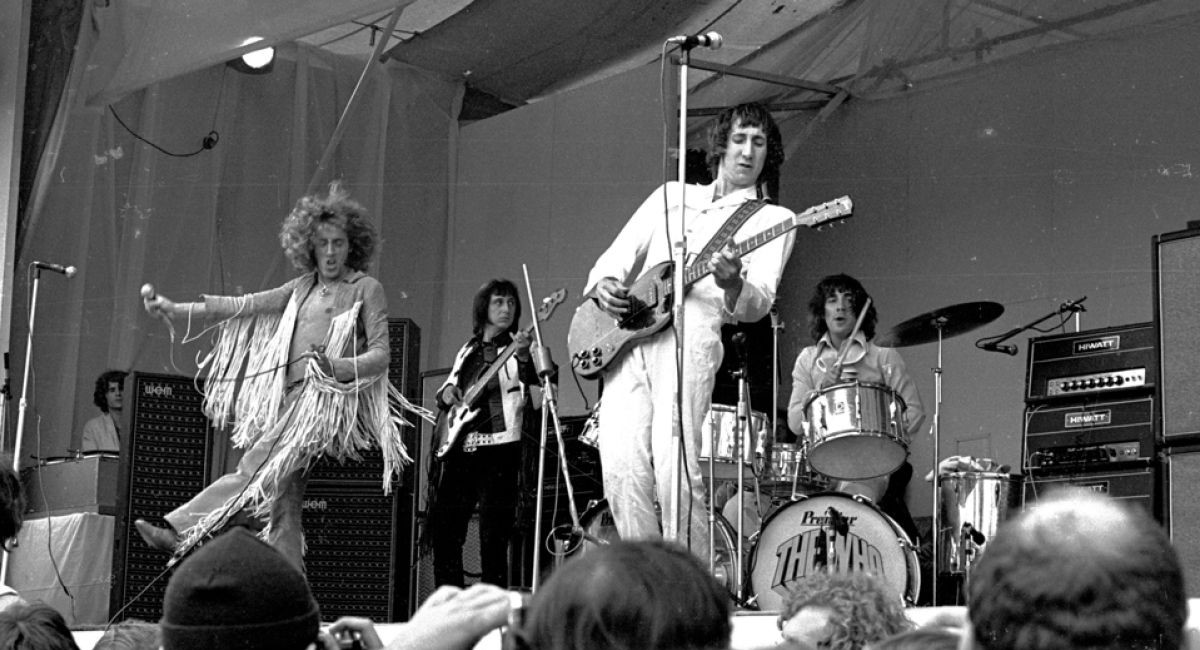
The Who began as The Detours in west London pubs, then locked the classic lineup: Pete Townshend on guitar, Roger Daltrey on vocals, John Entwistle on bass, Keith Moon on drums. Early gigs were too loud for the rooms. Townshend’s smashed guitars started as frustration as much as theater. Moon hit the kit hard and rarely sat in a simple backbeat. Suits and cufflinks met Mod fashion and volume that frightened landlords. By the mid-60s they were a London live problem other bands had to answer, not a polite beat group in matching jackets.
Townshend grew up in Shepherd’s Bush with rock and roll records and a need to make noise mean something. Entwistle’s bass lines moved like lead guitar; Moon learned from jazz kits and then refused to sit still. Daltrey started as a Mod sharp dresser and hardened into the band’s front-of-house bark. The Rolling Stones’ toughness and the Kinks’ satire were in the air; The Who added feedback and self-destruction as part of the show.
“My Generation” (1965) put the stutter and the feedback on record for Brunswick and then the world. Townshend’s windmill chords and the lyric’s refusal to ask permission made it a youth anthem without soft edges. The band’s auto-destructive stage act (smashed Rickenbackers, kicked drums) became as famous as the singles. Later, A Quick One hinted at long-form writing with “A Quick One, While He’s Away.” Tommy (1969) pushed further: a narrative double album about a deaf, dumb, and blind boy, layered guitars, and Daltrey singing the title role onstage night after night.
Live at Leeds (1970) captured the band at peak violence and precision: blues covers boiled hard, “Summertime Blues” turned brutal, no safety-net overdubs. Who’s Next (1971) raised the studio bar after the aborted Lifehouse project. “Baba O’Riley” opened on a Lowrey organ loop processed like a sequencer under Townshend’s power chords. “Behind Blue Eyes” framed confession as a hard-rock ballad with a sudden loud middle. “Won’t Get Fooled Again” ended on Daltrey’s famous scream, still a festival cue decades later.
Quadrophenia (1973) remains their most detailed human document: Jimmy the Mod, Brighton beach fights, scooters, rain, and synthesizer colors under Townshend’s writing. The lyric sheet keeps the Brighton details and the teenage fury as Townshend wrote them. Moon’s death in 1978 tore a hole in the rhythm section; Kenney Jones later filled the chair onstage, but the chemistry never fully returned. Entwistle kept the low end growling until his death in 2002.
Daltrey’s voice hardened into a steel bark; Townshend kept writing, producing, and reuniting the brand for arena tours. Songs like “The Kids Are Alright” and “Love Reign O’er Me” gained elegiac weight in later setlists without losing their original punch when the PA hit. They shaped British hard rock’s volume and ambition from union halls to stadiums, and they sold that volume without hiding the damage.
What sets The Who apart from Cream’s blues virtuosity or Led Zeppelin’s mystic heavy blues is Townshend’s narrative ambition and the Mod reportage in the lyrics. The volume was shared with peers; the rock opera and the teenage sociology were theirs.
Start with The Who Sell Out for the singles run, Who’s Next for the studio peak, Quadrophenia for the story album, and Live at Leeds when you want the room on tape. “My Generation,” “Pinball Wizard,” and “Won’t Get Fooled Again” cover three decades in three choruses.
Survivors Daltrey and Townshend still carry that catalog onstage with hired rhythm sections when needed. The windmill arrives slower now, but the songs still land as played pieces, with parts you can point to on a record.
The catalog does not line up as a neat arc. The pieces are specific: stuttering mid-60s singles, smashed guitars on Ready Steady Go footage, Leeds on tape, Tommy in theaters, Who’s Next on classic-rock radio, Quadrophenia as a Mod time capsule. The durable part is those records, films, and cover versions.

Léa | 9 October 2026
|
Underrated catalog honestly. People only quote the obvious singles. Also the comments section on old forums was wild about this.
Lina | 10 October 2026
|
Gateway band for a lot of friends. Me too, not ashamed. Sharing this in the group chat. Expect chaos.
Harold | 10 October 2026
|
The Who taught me to listen for the rhythm section first. Sharing this in the group chat. Expect chaos.
Mike B. | 10 October 2026
|
Short take: The Who still sounds like a band, not a brand. Anyway.
Fatima | 11 October 2026
|
Still one of the few bands where every era of The Who has a door in.
Olivier | 11 October 2026
|
Gateway band for a lot of friends. Me too, not ashamed.
Hélène | 12 October 2026
|
The lineup changes make more sense after reading this.
Amy | 13 October 2026
|
Not perfect live every night, but when it clicks… yeah.
Ray | 14 October 2026
|
Put on a random The Who deep cut after this. Paid off. Might be recency bias but I do not care today. Good piece.
Jacques | 15 October 2026
|
This made me pull three albums in a row. Productive evening. Also the comments section on old forums was wild about this.