
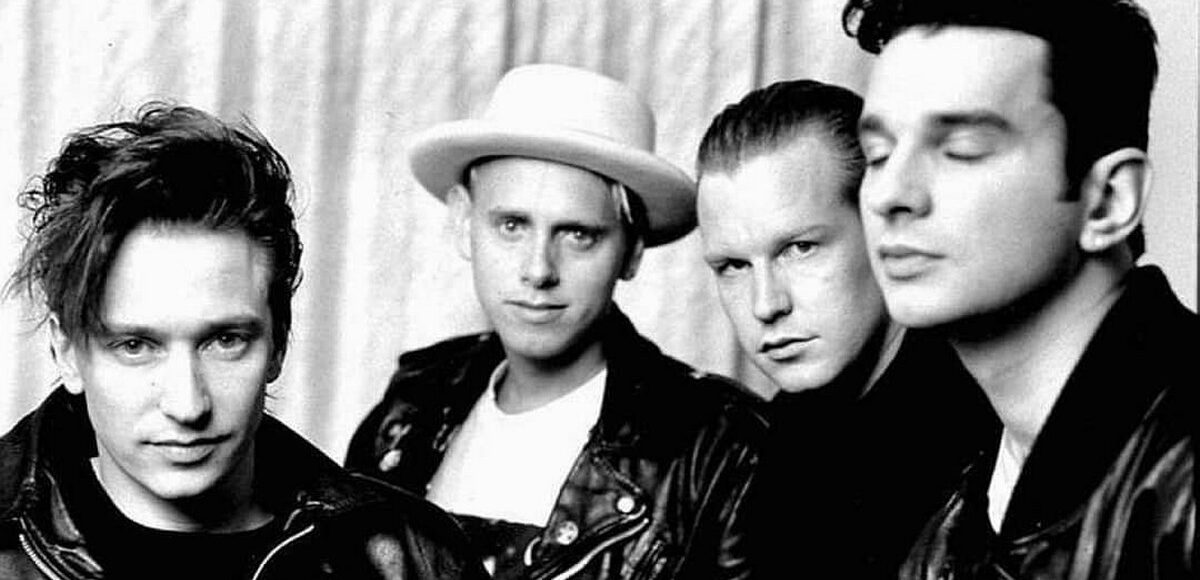
Basildon synthpop to stadium black: Clarke, Gore, Gahan, Wilder
Basildon, Essex, 1980: cheap synthesizers, suburban rooms, Thatcher’s England outside the window. Vince Clarke wrote bright hooks. Dave Gahan brought a deep voice and leather-stage presence. Martin Gore and Andy Fletcher completed the early unit that became Depeche Mode. Just Can’t Get Enough spread through UK clubs as sugar-coated early synthpop, immediate and addictive, the kind of 12-inch that made fluorescent kitchens twitch.
After Clarke left for new projects, Gore took over songwriting and the color temperature dropped. Singles like See You, Leave in Silence, and Everything Counts mixed metallic rhythm with quieter emotion. Albums Construction Time Again and Some Great Reward pulled in industrial samples, found-sound bangs, and themes of control, money, and desire. Alan Wilder joined and shaped arrangement detail until the music felt colder and more physical onstage and on tape.
Black Celebration and Music for the Masses pushed tension and ritual further. Gahan’s voice grew heavier. Gore’s lyrics grew more exposed. The touring machine scaled toward arenas. Violator (1990) made them inescapable on both sides of the Atlantic: Personal Jesus, Enjoy the Silence, Policy of Truth. Cleaner hooks, still dark subject matter, mega-sales and MTV saturation without sanding the band into bubblegum.
Songs of Faith and Devotion followed with more live-band grit and gospel-tinged drama as personal excess mounted in public. Wilder left in 1995 after shaping much of the classic sonic architecture. The remaining core carried Ultra and later records through recovery narratives, electronic updates, and a refusal to become a nostalgia act only. Andy Fletcher’s death in 2022 marked absence inside continuation. Gahan and Gore still sell out tours with a hardened live band.
Influences run from Kraftwerk’s machine pop and Yorkshire industrial noise to New Order’s dance floor and gothic rock’s minor-key drama. Compared with Pet Shop Boys’ ironic distance, Depeche Mode keeps confession close to the skin. Compared with Nine Inch Nails’ industrial rage, they prefer melody you can sing in a stadium dressed in black.
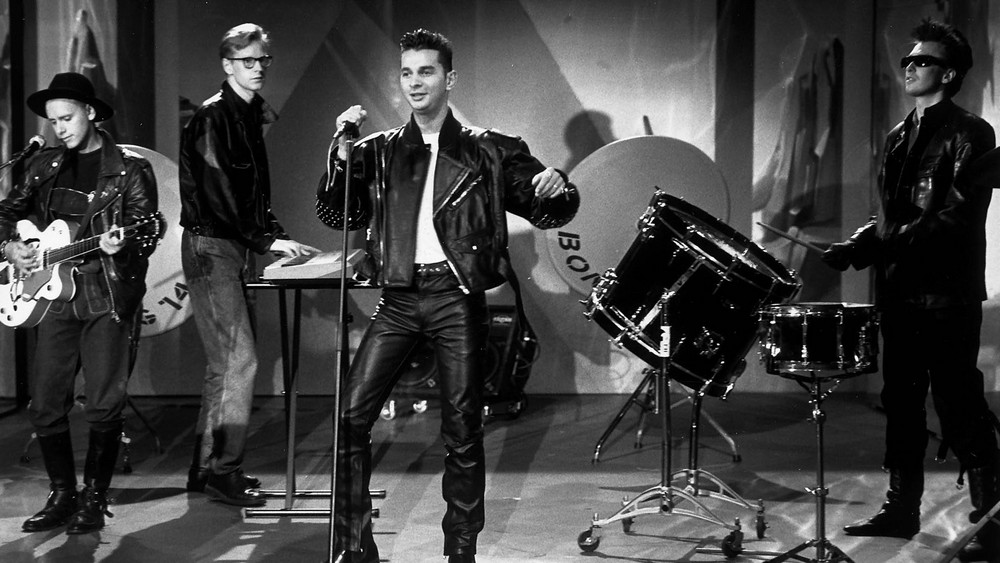
Mute Records packaging, Anton Corbijn imagery, and the black-clad audience became part of the product without replacing the songs. Early Clarke-era innocence and later Gore-era confession share synthesizers but not emotional weather. Listening chronologically makes the break obvious after Speak & Spell.
Sonically, listen for sequenced bass, gated reverb drums when Wilder is steering, choir pads, guitar stabs on later albums, and Gahan’s baritone treating Gore’s lines like private scripture shouted in public. Headphone study rewards you on Black Celebration through Songs of Faith and Devotion: rooms that feel both empty and crowded.
North American breakthrough stories often start with People Are People and culminate in Violator’s ubiquity. European faithfulness never needed that late permission. Post-Wilder albums divided fans, yet arena grosses and sync licenses kept the brand solvent. Fletcher’s role as organizer and onstage presence became clearer in obituaries that said aloud what touring crews already knew.
Entry points are easy to map. Speak & Spell for Clarke brightness. Some Great Reward for industrial pop maturity. Violator for the global peak. Add Enjoy the Silence, Everything Counts, and Personal Jesus and you carry three decades of the same silhouette.
What remains measurable is influence across industrial, alternative dance, goth-pop, and mainstream ballads that steal the quiet-loud synth trick. Clubs still open peak hours with Violator cuts. They shaped generations of producers while rarely begging for elder-statesman award-show credit. From supermarket-bright Clarke tunes to Gore’s confessional machinery and Gahan’s recovered roar, the arc is concrete: lineup changes, chart peaks, addictions, recoveries, and a touring business that still works on multiple continents.
Beside New Order’s dance-floor optimism or The Cure’s gothic romance, Depeche Mode keeps a baritone lead and synth beds that feel like confession booths wired for subwoofers. The machine-and-confession tension in their reputation is not poetry. It is how Gore writes, how Gahan delivers under lights, and why a global audience still dresses in black to sing choruses they learned from Mute 12-inches.