
Southside Glasgow to White on Blonde
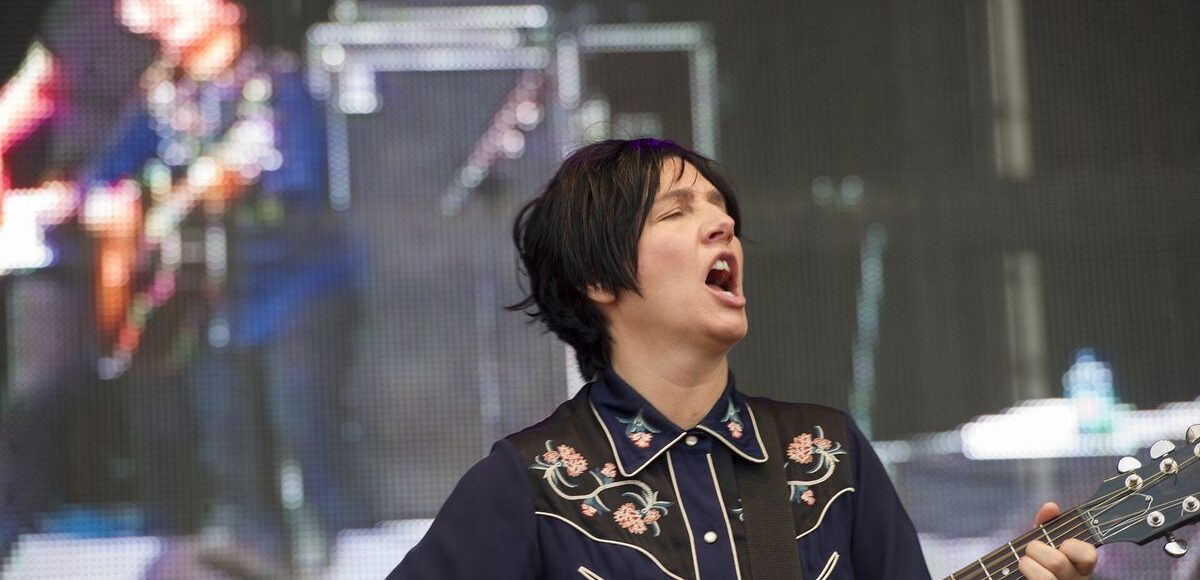
Texas formed in Glasgow in 1986, the project of bassist and songwriter Johnny McElhone, who had already worked with Altered Images and Hipsway before deciding he wanted something longer-lasting. He found Sharleen Spiteri singing in a pub in the south of the city and recruited her on the spot. The name came from Wim Wenders’ film Paris, Texas rather than from any American geography in the music, and that distance was deliberate: Texas was always a Glasgow band that borrowed American soul sounds and wore them with Scottish composure.
McElhone’s background gave the band a structural backbone that many British guitar acts were missing. He understood the patience of a song that refuses to rush its payoff. Spiteri brought the other half: a voice that sits in the mid-range between cool and warm, neither a soul belter nor an indie whisper. Clean guitar lines, dry rhythm sections, and choruses that arrived without announcement made their early sound feel deliberate and unhurried.
Southside (1989), released on Mercury, put “I Don’t Want a Lover” on European radio and established Texas as adult pop with more craft than the chart average. The track borrowed a Motown spine and fitted it to a melody that worked in a bar or on a drive at night equally well. Motown’s precision, country pop’s open sound, and a native Scottish directness produced a combination that felt familiar but not quite like anything already on the market. The album sold steadily across continental Europe long after British radio had moved on.
Mothers Heaven (1992) and Ricks Road (1993) extended the run through the Britpop years without joining them. Texas held their own rhythm, building a loyal touring base across Britain and Europe while the charts oscillated between grunge reaction and Union Jack swagger. The songs were getting tighter, Spiteri more assured, and McElhone’s songwriting more focused on the kind of chorus that ages rather than dates.
White on Blonde (1997) was the payoff. Produced with a sharp but unfussy sheen, it put “Say What You Want”, “Halo”, and “Black Eyed Boy” into the UK top ten in quick succession. The album topped the chart and eventually sold over four million copies worldwide. The production gave Spiteri’s voice room to stretch, and the arrangements, always clean and disciplined, met a moment in British radio that rewarded exactly that kind of cool. The record became a benchmark for late-nineties UK pop, one of those albums that sold on quality as well as timing.

The Hush (1999) followed with “In Our Lifetime” and “Summer Son”, both charting high and reinforcing the impression that the band could sustain a singles run without burning through goodwill. Spiteri was the recognisable face on the covers, but McElhone stayed the structural architect behind the records. Touring arenas at this point felt like a natural consequence rather than a promotion: Texas had built the size of the room over ten years, one single at a time.
Later records came with longer gaps and quieter commercial expectations. Red Book (2005) moved closer to gospel and organic soul. The Conversation (2013) worked the same vein with more confidence. Jump on Board (2017) became their first UK number one album since The Hush, built on “Let’s Work It Out” and the straightforward pleasure of hearing Spiteri front a well-made pop song. Hi (2021) kept the same pace. Each Texas album sounds like the same band at a different point of the same road, which is not a limitation but a kind of loyalty to the project.
Texas fits into a Scottish pop tradition that includes Simple Minds, Aztec Camera, and Wet Wet Wet, but they found their own lane by leaning into American soul rather than guitar ambition or acoustic introspection. They were cooler and more consistent than many British pop acts who reached similar chart positions in the late nineties, and more commercially durable than the indie acts who claimed the same reference points. American soul grammar, Glasgow practicality, and a knack for writing a chorus that holds its nerve.
The way in is White on Blonde for the peak version, Southside for the origin, The Hush for the singles run. “I Don’t Want a Lover”, “Say What You Want”, and “Summer Son” cover three different eras and make the same argument: this band knew how to write a pop song that does not overstay its welcome. For a single track introduction, “Say What You Want” still demonstrates everything Texas built their name on: a vocal that keeps its cool, and a hook that keeps its word.