A Leslie cabinet and a sack of loops
The drum does not swing. It sits, flat and enormous, a single idea repeated until the idea becomes a room. John Lennon’s voice arrives from far off, as if the singer had been placed on a hill and the microphone left in the valley. Tomorrow Never Knows, the last track on Revolver and the first one recorded for it, does not behave like a Beatles song that has agreed to be popular. It behaves like an instruction. Turn off your mind. The band obeys more strictly than the listener can.
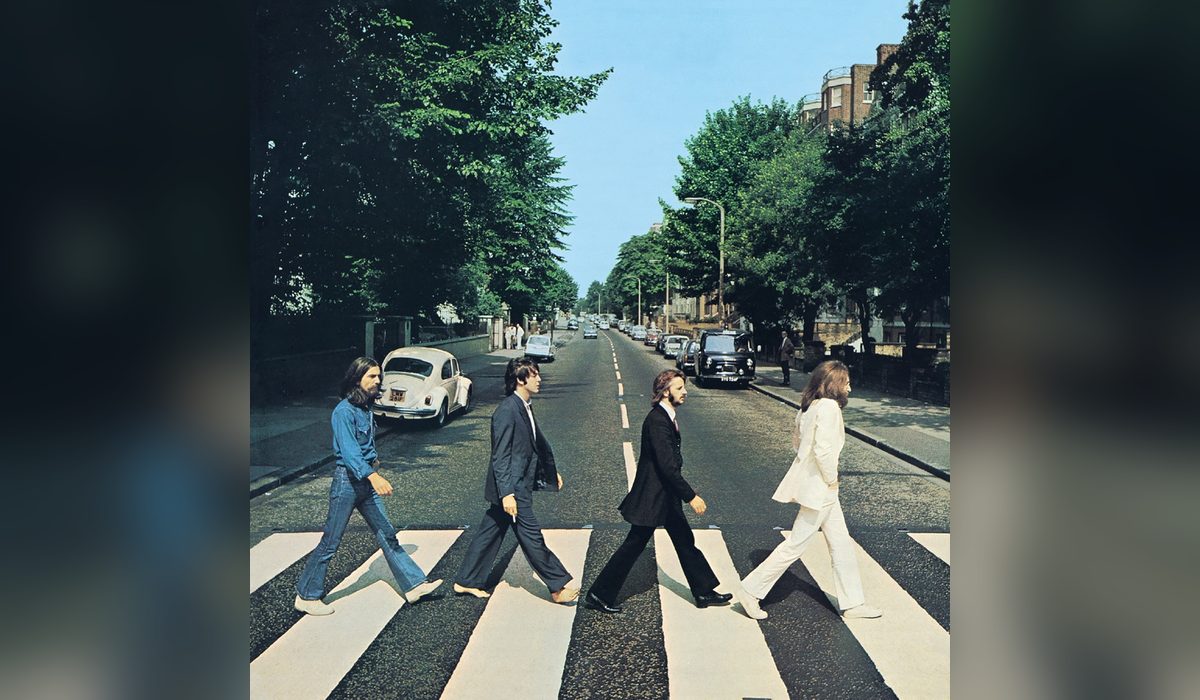
They cut it on 6 April 1966 in Studio Three at EMI, Abbey Road, George Martin producing, Geoff Emerick engineering a session that kept inventing tools because the brief would not fit the old ones. Lennon wanted to sound like the Dalai Lama chanting from a mountaintop, a thousand monks in one throat. Emerick fed the vocal through a Leslie speaker, the rotating cabinet that usually lived on an organ, and the distance appeared. Paul McCartney arrived with tape loops made at home, seagulls, laughter, an orchestra in fragments, and the team flew them across the faders in real time. Ringo Starr’s pattern is the still point. McCartney’s bass drones rather than walks. George Harrison’s sitar and guitar are weather, not solos. There is no chorus to come home to. The fade is the only mercy.
The words lean on The Psychedelic Experience, Timothy Leary’s version of the Tibetan Book of the Dead, which Lennon treated as a manual rather than a poem. He was not interested in a love story that week. He was interested in a state. The title, a Ringo-ism rescued from the bin of studio jokes, keeps the rite from sounding like a lecture. Tomorrow never knows. The sentence is lighter than the music, and the lightness is necessary. Without it the track would be a ceremony with no door.
I want to sound like the Dalai Lama chanting from a mountaintop.
(John Lennon to George Martin, 1966, as recalled by Geoff Emerick)
Revolver came out in August 1966 and this song sat at the end like a warning about everything they would try next. It was not a single. It did not need to be. Musicians heard the loops and the Leslie and quietly changed their jobs. On the rare occasions they approached it live in later years, the technology had caught up and the shock had not. The 1966 take remains the one that sounds like a studio discovering it can be an instrument.
What remains is that flat drum and a voice that will not come closer no matter how you turn the dial. Tomorrow Never Knows is a pop group, at the height of their fame, agreeing to vanish inside a process. The monks were a metaphor. The Leslie was not. You can still hear the cabinet turning, and the century turning with it.