
A council flat answers a rich misery
The guitars do not sneak in. They arrive already convinced, a wall of open chords and a solo that believes the sky is a practical destination. Liam Gallagher sings as if the promise in the title were a fact he had checked that morning. Live Forever is not subtle about hope. Subtlety was the thing it was written against. In a season of famous unhappiness, the song is a rude, bright refusal to apologise for wanting tomorrow.
Noel Gallagher wrote it before he had properly joined his brother’s band, around 1991, in the years when he was still the one with the songs and the council-flat arithmetic. The released recording sits on Definitely Maybe, out on 29 August 1994 on Creation, produced by Owen Morris after earlier sessions had been rejected as not loud enough, not them enough. The single preceded the album by weeks and did the convincing. Noel has tied the lyric, more than once, to hearing Nirvana’s I Hate Myself and Want to Die and deciding he was not having it: a man who seemed to have everything, miserable, while a Manchester band with nothing still thought morning was a gift. The line is not a letter to Cobain so much as a door slammed on a mood.
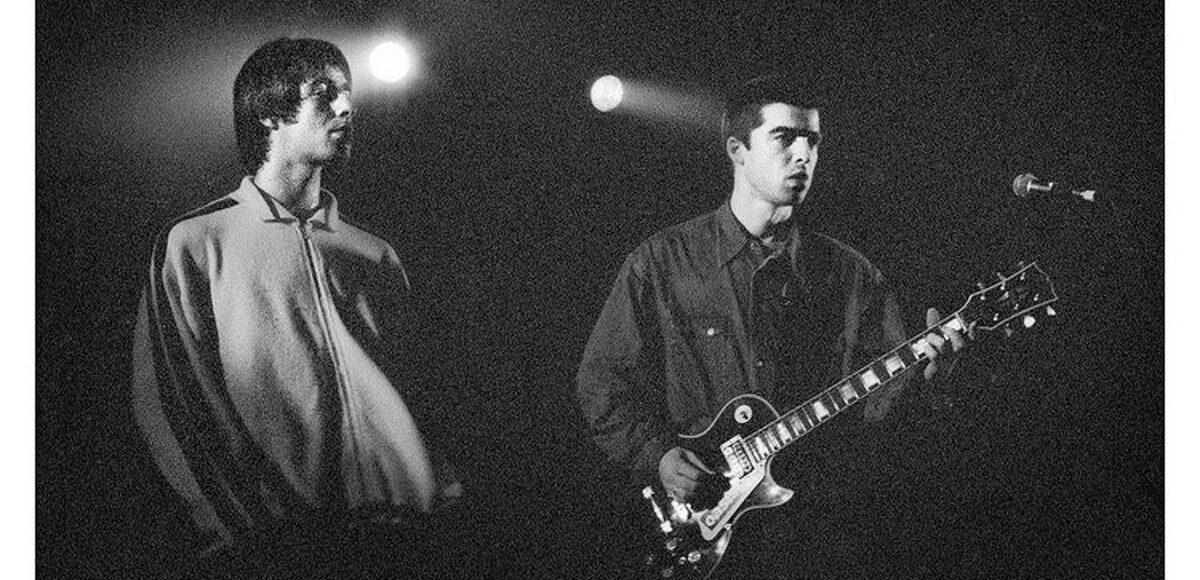
Live, the song became the moment the room agreed to be enormous. Liam, hands behind his back, let the chorus do the swagger he did not need to add. Noel’s solo, often extended, is less a display than a delay of the ending, because the ending would mean the feeling had to stop. Festivals turned it into a national anthem for people who would deny the nation. The song does not mind. It was written to be sung by more than one mouth.
I remember Nirvana had a tune called I Hate Myself and I Want to Die, to which I was like, I’m not having that.
(Noel Gallagher, Lock the Box, 2006)
The Britpop story later buried the song under lager and flags. Under that costume it is still a melody of unusual lift, the chords moving like a hymn that has wandered into a rehearsal room with cheap carpets. Morris’s mix keeps the guitars huge and the vocal dry enough to sound like a person, not a poster. That balance is why the track survived the decade that claimed it. You can take the parka off. The promise remains slightly embarrassing, which is how you know it is sincere.
What remains is the insistence that having very little is not the same as wanting to die. It is a young man’s philosophy, and it has the limits of one. It also has the melody. Live Forever still sounds like a window opened in a flat where the heating does not work. Outside is not beautiful. The song says go anyway, and it says it loud enough that arguing feels like bad manners.