
A bassline that refused the door
New Year’s Eve, 1977, the door of Studio 54. Nile Rodgers and Bernard Edwards are on the list, invited by Grace Jones, and the list has not reached the man with the rope. They are turned away. On the way home the insult becomes a chant, and the chant, cleaned up just enough to be a record, becomes Le Freak. The story is almost too neat, which is how Chic often works: a social fact, a bassline, a guitar that refuses to sweat, and a song that enters the culture wearing a suit. Atlantic releases it in 1978 on C’est Chic. It is number one. The door that would not open has been replaced by a groove that will not close.
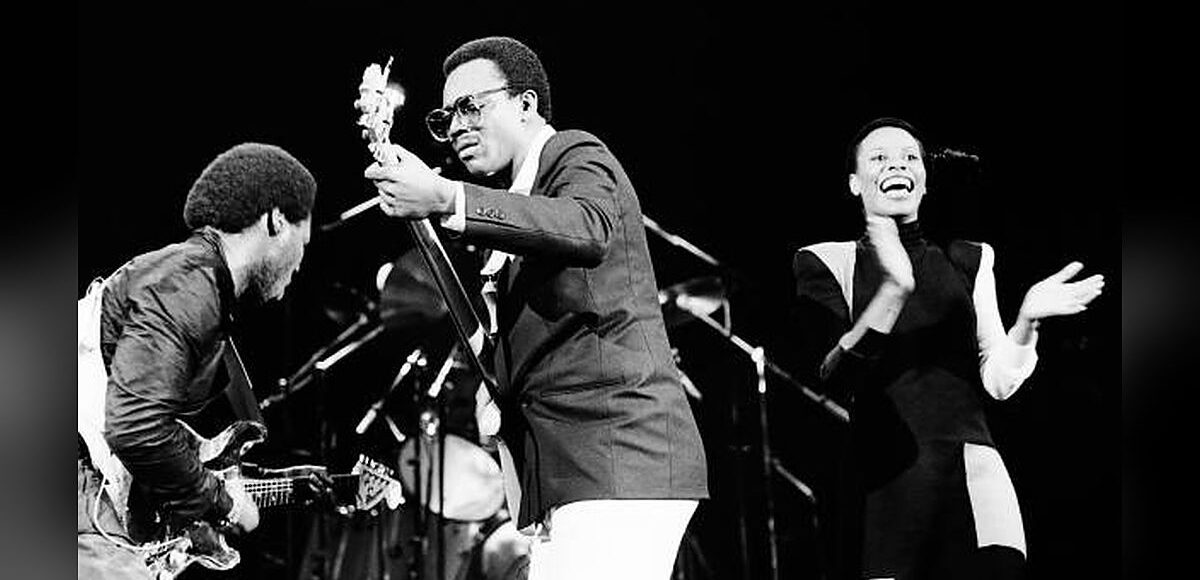
Rodgers and Edwards had been circling each other since 1970, a guitarist and a bassist who heard pocket the way other players hear melody. With drummer Tony Thompson they stop being a pickup band and become a design studio. The early name, the Big Apple Band, gives way to Chic in 1976. The first album, Chic, arrives in 1977 with Dance, Dance, Dance (Yowsah, Yowsah, Yowsah), strings by the group’s own logic, vocals that glide rather than plead. Norma Jean Wright sings, then Alfa Anderson and Luci Martin take the front. The look is expensive. The rhythm section is the real luxury. Thompson’s drums are dry and huge. Edwards’s bass is a sentence with no wasted words. Rodgers’s guitar is a rhythm instrument that happens to be unable to play an ugly note.
I Want Your Love shows the other face: a ballad that still dances, harmony stacked until longing sounds like chrome. Then Risqué in 1979, and Good Times. The bassline is so inevitable that the Sugarhill Gang’s Rapper’s Delight builds a new genre on top of it. The lawyers eventually put Edwards and Rodgers where the sample had already put them: at the root. Chic does not campaign to be fathers of hip-hop. The record does the campaign. Good Times is also, quietly, a Depression joke, a lyric about the price of fun written in the year the fun was most expensive. Disco is being declared dead in parts of America. Chic is being declared a standard.
The organization is larger than the group. Sister Sledge’s We Are Family and Lost in Music, 1979, are Chic records under another name. Diana Ross’s diana in 1980, with Upside Down and I’m Coming Out, is the same discipline applied to a different voice, even after the label asks for a softer mix. Rodgers will go on to Power Station with David Bowie for Let’s Dance in 1983, then to Madonna’s Like a Virgin. Edwards’s bass remains the signature even when his name is not on the sleeve. The method travels. The group itself, after Real People and Take It Off, thins out in the early eighties, not because the pocket failed, but because the industry decided the word disco was a liability. The musicians did not.
On 18 April 1996, in Tokyo, during a tour with Rodgers, Bernard Edwards dies in his hotel room. He is forty-three. The shows go on that night because that is what the rhythm section had always done: keep time when the room changes. Rodgers will spend the next decades as the person other people call when they want a record to feel like it has a spine. Chic reforms around him, with new singers, the old songs, Thompson gone in 2003. It is not a museum. It is a workshop that still knows the measurements.
The measurement gets a global reprise in 2013, when Daft Punk put Rodgers on Get Lucky and, more tellingly, on Lose Yourself to Dance. The guitar does not imitate 1978. It resumes it. Pharrell Williams sings. The robots wear helmets. The human part of the record is a right hand that has been chopping sixteenths since the door at Studio 54. Rodgers’s memoir and his later work with every generation that grew up on the samples only confirm the point. The groove was never a trend. It was a technology of pleasure.
Chic’s cult is the cult of exactness. They made dance music that could be played by a jazz musician without embarrassment and by a crowd without instruction. Edwards locked the bass to the kick. Rodgers locked the guitar to the hi-hat. Thompson locked the whole building to the floor. The singers made it sound like an invitation rather than a diagram. That is why the records still open rooms. The rope is gone. The pocket remains.