Funk as interplanetary theater
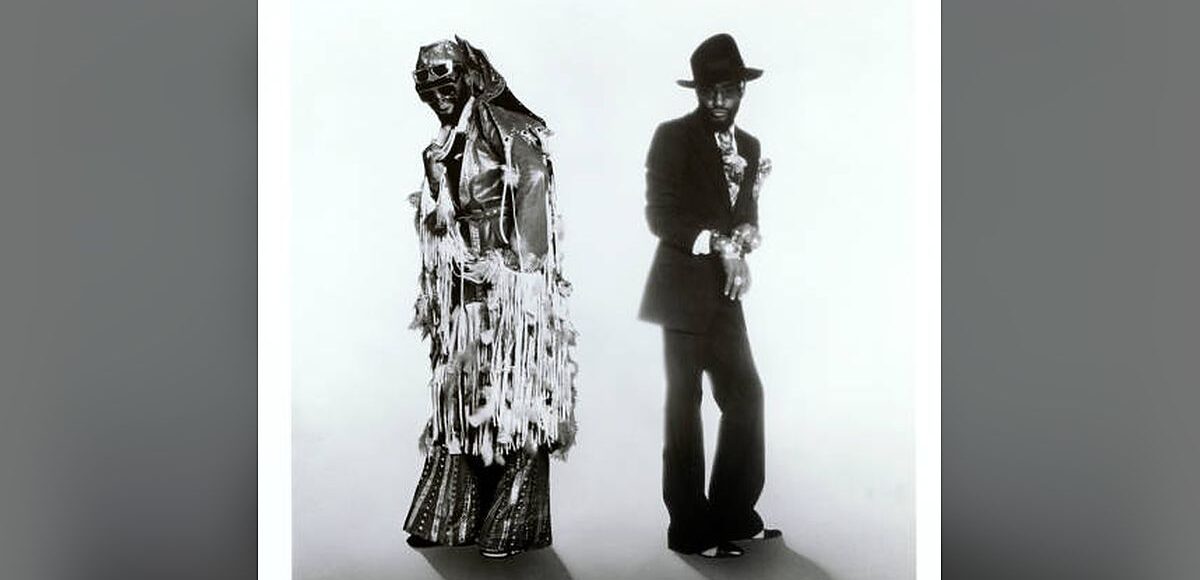
Somewhere between a spaceship and a basement in the American 1970s, a man in a sheet, or a diaper, or a blond wig, is explaining that the funk is its own country. George Clinton did not invent eccentricity. He industrialized it, then gave it a rhythm section good enough to make the costume necessary. Parliament and Funkadelic are not two bands in the ordinary sense. They are two doors into the same house, with different landlords on the paper and the same weather inside. One door faces the radio. The other faces the guitar solo that refuses to end. Both open onto Plainfield, New Jersey, and onto a mind that treats a song as a landing.
Clinton had come up in doo-wop, the Parliaments, a barbershop harmony group that lucked into (I Wanna) Testify in 1967. When the name got tangled in a contract, the backing band stepped forward as Funkadelic and the singers kept Parliament as a parallel life. The first Funkadelic albums, on Westbound, are acid in work boots. Maggot Brain, 1971, is the peak of that first fever: Eddie Hazel’s ten-minute guitar, recorded, the story goes, after Clinton told him to play as if his mother had died. Whether the instruction is exact matters less than the take. It is grief with a wah pedal. Bernie Worrell is already there, a classically trained keyboardist who will later teach the synthesizer how to be a bass. Billy Bass Nelson, Tawl Ross, Tiki Fulwood, then Garry Shider, the diaper and the church voice. The band is a crowd that knows one another’s timing.
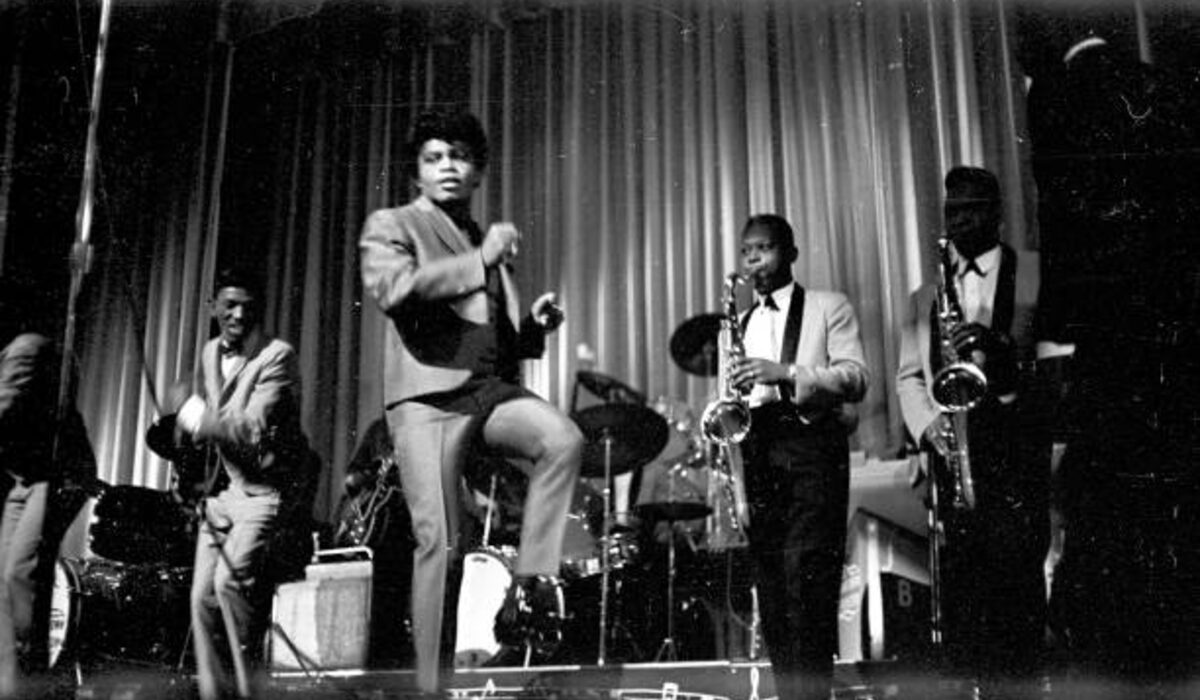
Bootsy Collins arrives from James Brown’s band with his brother Catfish, and the pocket changes altitude. Parliament, revived on Casablanca, becomes the mothership’s public face. Mothership Connection in 1975 is the manifesto: Give Up the Funk (Tear the Roof off the Sucker), P. Funk (Wants to Get Funked Up), a concept about aliens bringing rhythm to a planet that has forgotten how to dance. The stage show grows a prop, a spacecraft designed with the help of Jules Fisher, lowered over arenas as if science fiction had a union card. The Clones of Dr. Funkenstein follows in 1976. Funkentelechy vs. the Placebo Syndrome in 1977 gives the radio Flash Light, Worrell’s synth bass replacing the electric one and somehow becoming funkier, not less human. Children learn the chant. Adults pretend they are only humming.
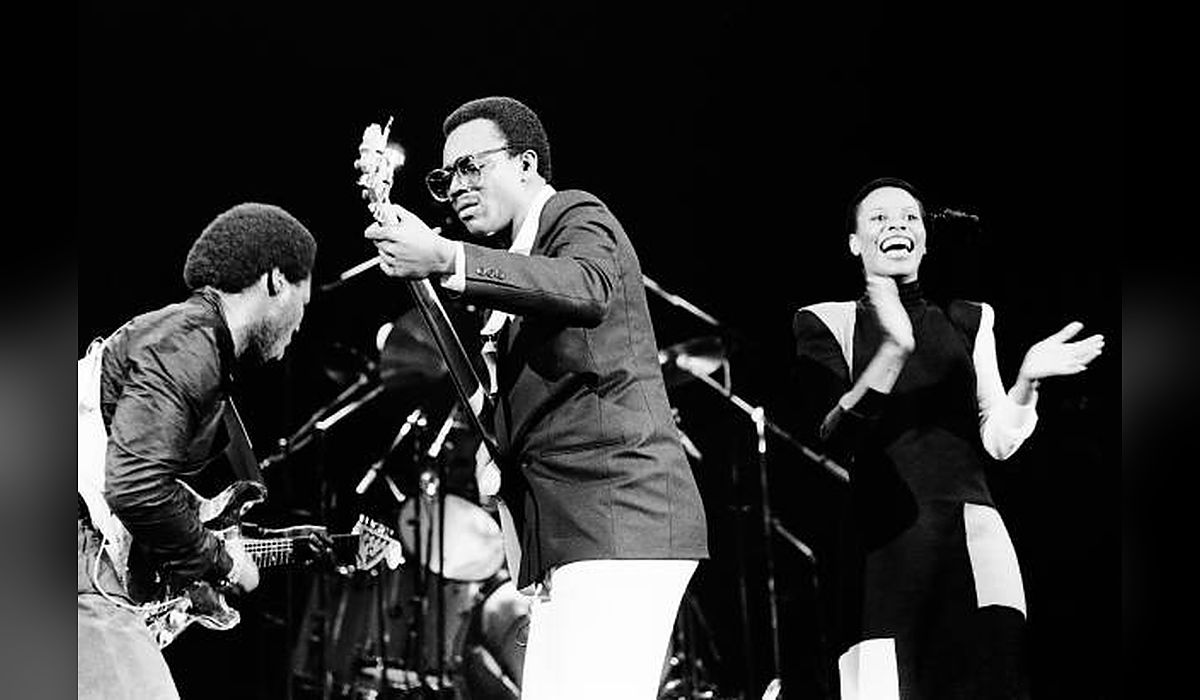
Funkadelic, on Warner now, answers with One Nation Under a Groove in 1978, a title that is a joke, a prayer, and a map. Uncle Jam Wants You the next year recruits the language of recruitment posters. The collective around these titles is half a city’s worth of players: Maceo Parker and Fred Wesley from the JB’s, Junie Morrison, Michael Hampton taking Hazel’s guitar chair, the Brides of Funkenstein, Parlet, Bootsy’s Rubber Band as a sovereign state. Clinton produces as a ringmaster who trusts the circus. The records are long because the live show is longer. Solos are not indulgences. They are how the mythology breathes.
The eighties thin the major-label patience and thicken Clinton’s solo myth. Computer Games in 1982, and Atomic Dog, will be sampled so often that a generation meets P-Funk first as a loop under someone else’s voice. That is not a demotion. It is how this music was built to travel: a riff as a public utility. Legal fights over names and money are ugly and real. The tours continue with whoever can still play the book. Hazel dies in 1992. Worrell dies in 2016. Clinton, eventually, keeps singing the landing instructions to rooms that already know them by heart.
What the cult preserves is not only the costumes. It is the idea that Black American dance music could be as conceptually wild as any art rock record and twice as useful on a Saturday. Parliament aimed at the charts without apologizing for the plot. Funkadelic aimed at the mind without apologizing for the hips. The same singers walked through both doors. Dr. Funkenstein is a comic book character and a theory of the band. The theory holds. If the groove is right, the roof is optional.
You can still hear the basement in the spaceship. The harmonies are barbershop. The guitars are Detroit and Hendrix and church. The bass is James Brown after midnight. Clinton’s gift was to refuse the choice between those rooms. He put them on one stage, gave them a narrative, and let Worrell’s clavinet argue with Bootsy’s thumb. The mothership was a prop. The funk was the physics.