




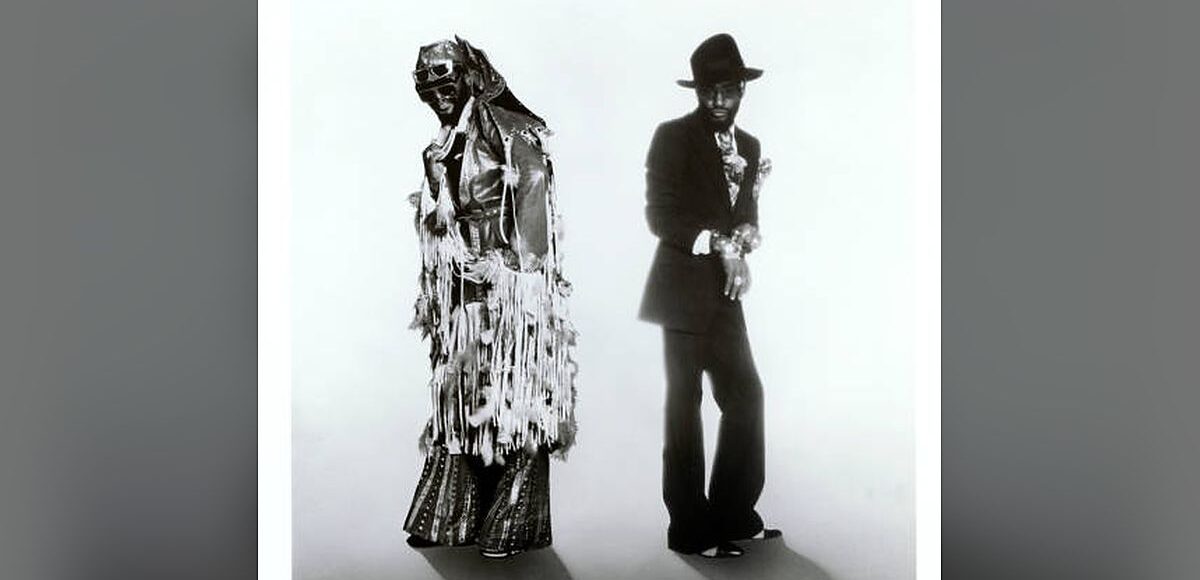
Clinton’s funk army and the Casablanca years
George Clinton started as a doo-wop singer in Plainfield, New Jersey, running a barbershop and managing a vocal group called The Parliaments through the early 1960s. The group recorded sporadically for small labels before a contract dispute in 1967 left Clinton without the rights to the Parliaments name. His solution was to keep recording with the same musicians under a new name, Funkadelic, while simultaneously working to recover the Parliaments brand, which he eventually did. By the early 1970s he was running two bands simultaneously: Parliament on Casablanca, Funkadelic on Westbound. Much of the membership overlapped.
Funkadelic’s early records were psychedelic and raw. Funkadelic (1970) and Free Your Mind and Your Ass Will Follow (1970) pushed the band through territory that James Brown and Jimi Hendrix had opened separately; Clinton was interested in what happened when you put them in the same room. Maggot Brain (1971) opened with “Maggot Brain,” a ten-minute guitar solo by Eddie Hazel recorded in one take. Clinton told Hazel during the recording to play as if he had just heard his mother had died, and then to play through the grief toward acceptance. The take is the guitar solo that came out of that instruction, with a clear shape: ten minutes, one pass by Eddie Hazel, and no rhythm section under the guitar.
Parliament’s Casablanca run put that story on a big stage. Mothership Connection (1975) introduced the Mothership narrative: Dr. Funkenstein as a liberator from space, the rhythm as the way out, the group as a community off the planet. The Clones of Dr. Funkenstein (1976) and Funkentelechy vs. the Placebo Syndrome (1977) extended the universe. The productions were dense with horn arrangements, layered keyboards, call-and-response vocals, and a bass register set loud enough to hit the room before the lyric.
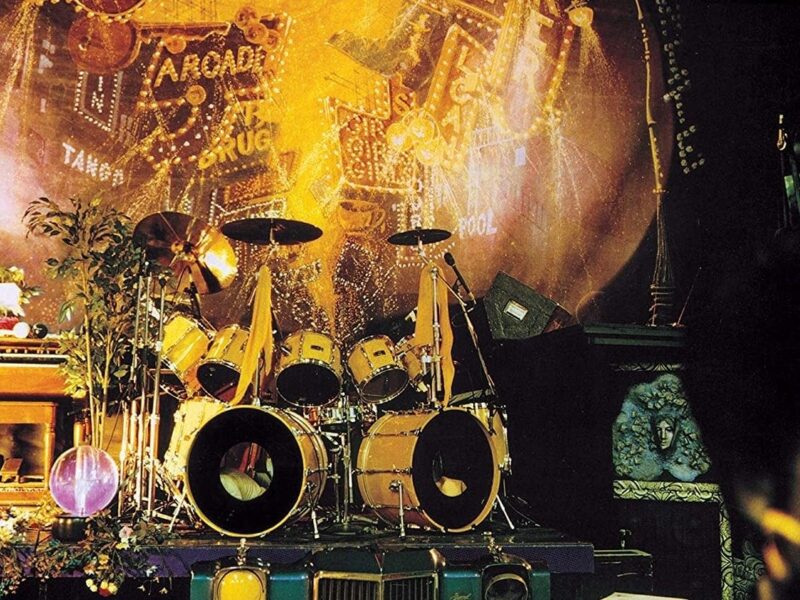
The live setup matched the ambition. The Parliament-Funkadelic touring show of the mid-to-late 1970s featured a full-scale Mothership prop that descended from the ceiling of arenas; Clinton arrived on stage through it. The concerts ran long, the band was large, the spectacle was expensive. It was also the most theatrical live presentation in Black American music since Ike and Tina Turner, It worked because the music was strong enough to carry a show of that size.
Bootsy Collins joined the collective after leaving James Brown’s band in 1971, bringing with him a bass style that was elastic, talkative, and melodically inventive. His playing moved the bass off pure time-keeping and into melodic lines. The thumb slap and pop came before a lot of what followed in funk bass, and later players took it up. Bernie Worrell’s keyboard work – jazz-trained harmony combined with early Minimoog use that was ahead of most of his contemporaries – gave the arrangements their harmonic complexity.

“Flash Light” (1977) and “One Nation Under a Groove” (1978) were the commercial peaks. “Give Up the Funk (Tear the Roof off the Sucker)” was the anthem, built on a chant that needed no explanation. These tracks became some of the most sampled in hip hop history: NWA, Public Enemy, Ice Cube, Snoop Dogg, Kendrick Lamar, and hundreds of others used P-Funk source material. The 1970s recordings were essentially providing a rhythmic infrastructure for 1980s and 90s hip hop.
Next to James Brown, Clinton’s records show less of a single boss, more writers, and more psychedelic and space imagery, in a studio that was less like Brown’s strict room. Brown ran a tight band. Clinton ran a large group that did not sound like one writer’s desk. Next to Sly and the Family Stone, the records are heavier and more led by the bass, less aimed at a pop melody, and the stories in the songs are more openly Black nationalist. The Mothership was a story about getting free and also a real prop that came down from the ceiling. The studio group worked as a family and also as a messy outfit.
Start with Mothership Connection for the entry into the mythology at its most accessible. Maggot Brain for the psychedelic opening and the Eddie Hazel solo. One Nation Under a Groove for the later period at its most refined. “Flash Light,” “Give Up the Funk,” and “One Nation Under a Groove” are the three tracks that explain the range in sequence. What later decades kept was the catalogue, from the Westbound Funkadelic sides to the Casablanca Parliament albums, and the samples that came out of it.
Alex | 10 October 2026
|
I like when writers talk players, not just myths. Good job here. Might be recency bias but I do not care today.
Marc G. | 11 October 2026
|
Not perfect live every night, but when it clicks… yeah.
Lina | 12 October 2026
|
Put on a random Funkadelic deep cut after this. Paid off. Fight me.
François | 13 October 2026
|
I bounce between early and late Funkadelic depending on the week. Might be recency bias but I do not care today.
Diego | 14 October 2026
|
I like when writers talk players, not just myths. Good job here.
Hélène | 15 October 2026
|
The chemistry talk is real. You hear it on the records.
Jackie | 16 October 2026
|
Short take: Funkadelic still sounds like a band, not a brand.