Harvest, Battersea pig, Orwell’s Britain
Animals was released on 21 January 1977 (UK Harvest; US Columbia) as Pink Floyd’s tenth studio album. Most of the music was developed at Britannia Row Studios in Islington, the band’s own facility after the Wish You Were Here cycle. Roger Waters shaped the concept from George Orwell’s Animal Farm, mapping mid-1970s British class and power onto dogs (aggressive climbers), pigs (ruling elite), and sheep (the herded mass). The short bookends Pigs on the Wing (Parts 1 and 2) frame three long pieces: Dogs, Pigs (Three Different Ones), and Sheep.
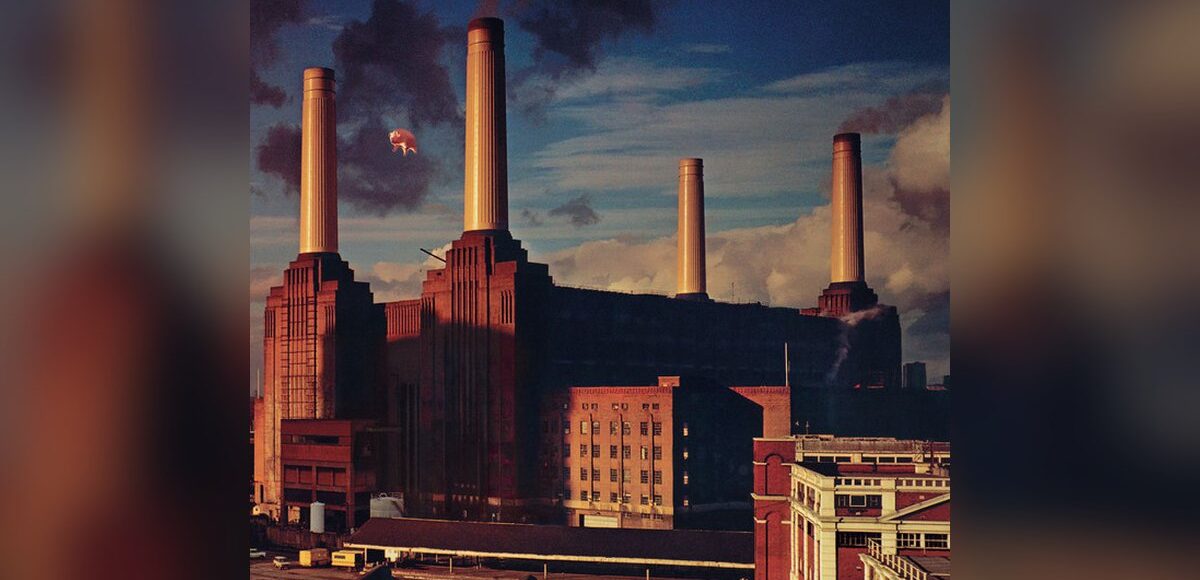
Hipgnosis and Aubrey Powell shot the cover at Battersea Power Station with the inflatable pig Algie. On the first day the pig broke free, drifted into Heathrow airspace, and forced flight delays before landing in Kent, a story that stuck to the album as firmly as the finished photograph. Inside the grooves, David Gilmour shares lead vocals and co-writes Dogs with Waters; Richard Wright and Nick Mason lock long, dry grooves under biting guitar and keyboard textures. The mix is leaner and more abrasive than the open space of Wish You Were Here.
No conventional singles pushed the album in the UK the way Money or later Another Brick in the Wall would, yet Animals still hit UK No. 2 and US No. 3 and went multi-platinum. The 1977 In the Flesh tour put the pig over arenas and stadiums; tensions on that tour fed directly into Waters’s next concept, The Wall. Live, Sheep and Dogs became set-piece showcases for Gilmour’s solos and Waters’s barked social critique. Lyrically Waters names targets more directly than on earlier Floyd epics: politicians and moral guardians surface in Pigs (Three Different Ones), while Sheep flips from docile chant to violent revolt in the final section. Gilmour’s guitar on Dogs stretches across business metaphors and mortality lines without needing a radio edit. The album’s brevity in track count and length in minutes became a template for later progressive political rock.
Wright’s keyboards often sit lower in the mix than on Wish You Were Here, which later fed narratives about his shrinking role before The Wall. Still, the organ and synth stabs on Sheep and the icy beds under Dogs are essential to how cold the record feels compared with Floyd’s early-70s open-space albums.
It’s not a concept album like The Wall. It’s more a set of songs about the state of the country.
(Roger Waters discussing Animals, contemporary interviews / retrospective press)
Decades later the 2018 remix and related documentary returned focus to the Battersea shoot and the album’s political bite. The tracklist still reads short on paper (five titles) but runs over forty minutes because the middle three pieces refuse radio edit length. That scale is the point: state-of-the-nation rock written as suites, not singles.
Animals sits between the mournful polish of Wish You Were Here and the narrative fortress of The Wall: Floyd at their most openly political, anchored by one of rock’s most recognisable industrial sleeve images.