
French house tempos, chanson phrasing, Paris apartment sessions
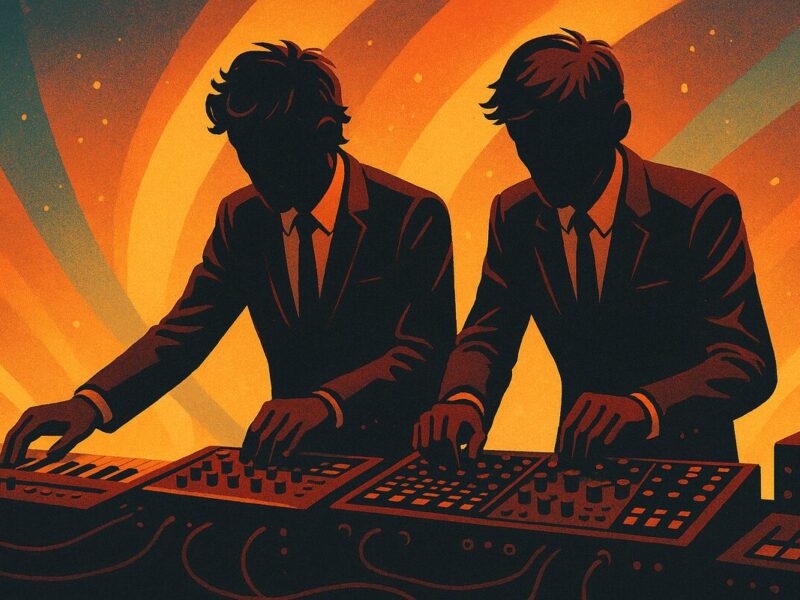
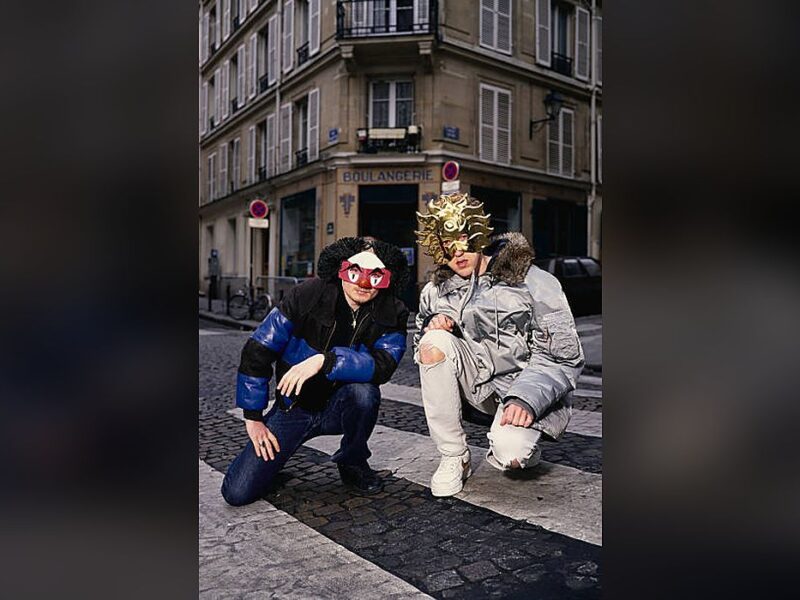
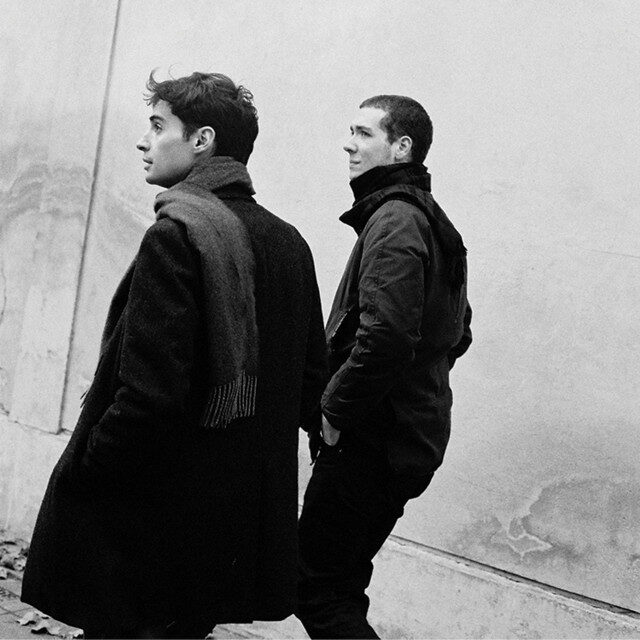
Recto Verso opens with Instantané: slow chords, soft synths, a vocal resting just above the beat. Simon Mény and Pierre Rousseau (Paradis) had already shown their taste on singles like the Bashung cover La Ballade de Jim. The 2016 album lets French chanson phrasing ride house-leaning rhythms without forcing drops. Drums feel like footsteps; bass sits close; vocals are mixed as another instrument, neither buried nor belted. The record never races. It stretches grooves until small details show at the edge of silence.
Tracks such as Toi et moi, Miroir, and Hémisphère work like short scenes: repeated lines, careful stereo space, no sudden climax for DJ points. Pierre’s classical and design habits show in the structures; Simon’s fashion-and-voice background shows in phrasing and presence. They worked late in a Paris apartment with the city leaking through open windows, tracking parts with the patience of a duo more interested in balance than in festival drops. Scooters and distant horns sit in the lore of the sessions, and the mixes feel domestic rather than festival-sized.
The title points at symmetry: each arrangement curves inward, French vowels riding clear four-on-the-floor patterns when the album chooses to move. Influences are easy to name without mythmaking: Sade and Étienne Daho in the vocal calm, early Chicago house in the body of the drums. The result does not freeze to one year of French Touch fashion. Radio UTD called the record deep and progressive as electronic production and still lovable as songwriting; that double read fits. Headphones or small speakers both work. Clubs that wanted punch looked elsewhere; late-night sets and living rooms kept this one.
Recto Verso is deep, intricate, passionate and progressive. If it isn’t perceived as an excelling example of electronic production, then it should be remembered as lovable, lyrically.
(Radio UTD, 2016)
Around release, French electronic headlines often favored harder clarity and festival impact. Paradis offered something gentler without deleting the dance pulse. The album moved hand to hand through cafés, bookstores, bedrooms, and a few patient DJ charts beside ambient-leaning records. Bloggers and specialist radio picked Instantané and Toi et moi as entry points; clubbers who wanted peak-time drops looked elsewhere. It did not need a splash campaign to stay in rotation among listeners who wanted French lyrics and house tempo in the same room.
After the album the pair stepped back from the duo brand. Pierre Rousseau moved into film cues and solo electronic work; Simon Mény kept exploring voice, fashion-adjacent projects, and sound on his own path. Reissues and playlist culture later returned casual listeners to Recto Verso as a 2010s soft-house document with chanson DNA. It remains their main joint statement: complete, carefully mixed, and still useful as a counter-example to louder French electronic branding of that decade. Streaming playlists later filed the album under soft electronic and French indie interchangeably, which fits the hybrid writing. Track by track you can name the production fingerprint (dry kick, soft pads, conversational French lead). It does not explain itself. It runs, lasts, and leaves that fingerprint intact for anyone mapping Paris electronic songwriting after the first French Touch wave.