Düsseldorf Kling Klang: Autobahn, Trans-Europa Express, Computer World
Ralf Hütter and Florian Schneider met as conservatory students in Düsseldorf in the late 1960s and formed Kraftwerk in 1970. The early records – Kraftwerk (1970), Kraftwerk 2 (1971), Ralf and Florian (1973) – used live instrumentation alongside tape manipulation, moving toward electronic sound without having fully arrived. They were part of the broader German experimental rock scene, alongside Can, Neu!, and Cluster, but the Kraftwerk trajectory was more schematic, less improvisational.
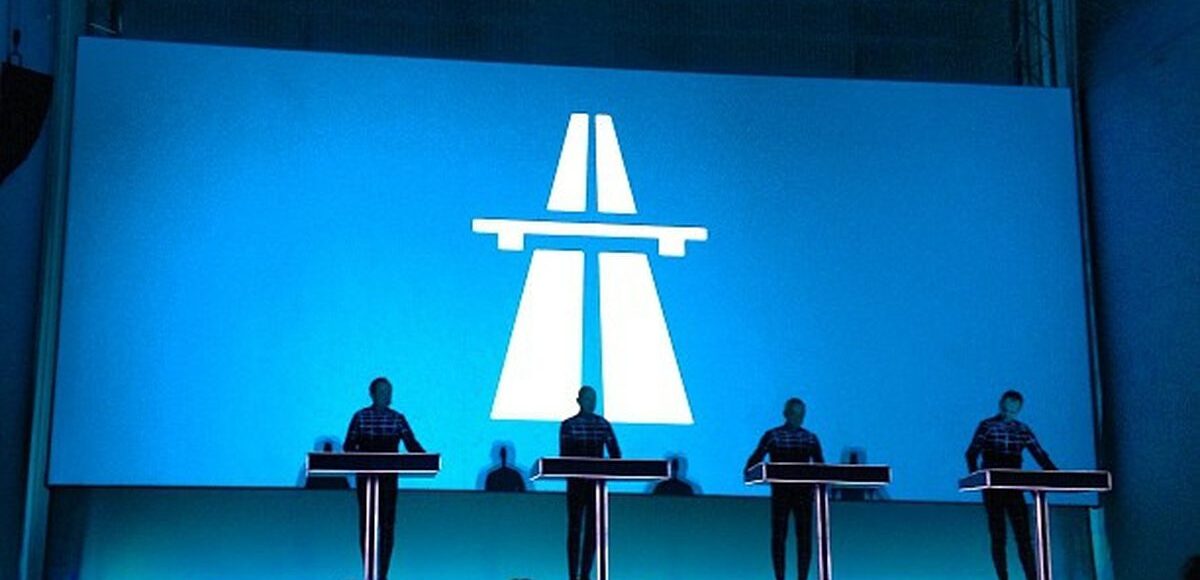
Autobahn (1974) was the pivot. The twenty-two-minute title track built its structure from synthesizers, drum machines, and field recordings of a car on the German motorway. EMI picked up the album internationally; a truncated single reached the top twenty-five in the United States and United Kingdom. The concept was not speed or glamour but the experience of sustained movement through landscape, the driver’s perspective at highway velocity, repetition as a form of meditation. What distinguished it from ambient music was the pulse.
They built their Kling Klang studio in Düsseldorf and treated it as their primary instrument. They designed and built custom synthesizers and sequencers, worked without external session musicians, and kept the space deliberately inaccessible. The studio had a phone number that rang without being answered. This refusal to separate the workspace from the artistic product was itself a conceptual position: the machines were not tools, they were collaborators.
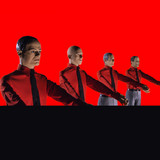
Radio-Activity (1975) dealt with broadcast transmission and radiation, ambiguous about whether either was benign. Trans-Europa Express (1977) moved through the rhythms of the European rail network; “Europe Endless” opened with a sustained synth melody that felt like a train window pulling back from a station. The Man-Machine (1978) presented the group as identical androids on the sleeve and inside: “The Robots,” “Spacelab,” “Neon Lights,” and “The Model” worked through the tension between human feeling and machine precision without resolving it.
Computer World (1981) was the most prophetic record. “Computer Love,” “Pocket Calculator,” “Numbers,” “Home Computer” described a networked society organized around digital data before personal computers had entered domestic life. The German original title was Computerwelt; the English version changed nothing substantive. The album predicted loneliness inside connectivity, data as identity, the machine as both tool and environment. It was four decades early.
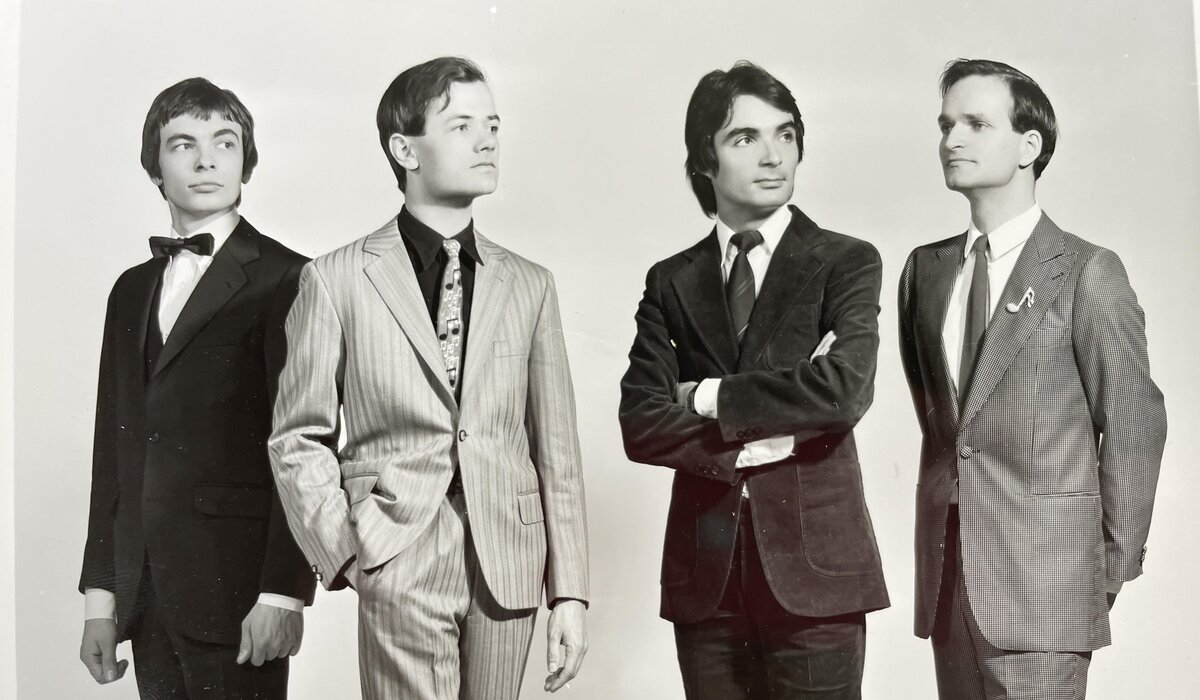
The vocoder runs through the catalog as a constant: the human voice processed into something that still carries emotional information but from an uncertain source. Hütter’s synthesizers are sequenced, clipped, and looped; the rhythms are programmatic but not cold, because the melodic lines carry genuine warmth. Schneider’s flute – the instrument he played before electronics – occasionally surfaced in early records, a reminder that the machine aesthetic was a deliberate choice rather than an inherited limitation. The decision to become machines was as considered as every other element of the work.
The downstream influence covers more territory than any single group could reasonably claim. Afrika Bambaataa sampled “Trans-Europa Express” for “Planet Rock” (1982) and built electro from that contact. Detroit techno producers – Juan Atkins, Derrick May, Kevin Saunderson – took the method directly. Synth-pop from Depeche Mode to New Order worked within the framework Kraftwerk had built. David Bowie and Brian Eno absorbed it for the Berlin trilogy. Hip hop sampled “Numbers” repeatedly. The influence moved through channels that never acknowledged a common source.
Start with Autobahn for the origin and the scale of what the twenty-two-minute track accomplishes. The Man-Machine for the tightest version of the classic sound. Computer World for the pop side and the predictive accuracy. Trans-Europa Express for the emotional center of the catalog. Compared with contemporaries: Brian Eno was developing ambient music in parallel but from a warmer, more variable starting point; Tangerine Dream was more textural, less rhythmic, less conceptually precise. What Kraftwerk built was a system, and the system still runs.