

Gaz, Mick, Danny: Britpop energy without the costume war
Supergrass formed in Oxford in 1993. Gaz Coombes sang and played guitar, Mick Quinn held the bass, Danny Goffey hit drums. The trio had a brief earlier incarnation as The Jennifers before the sound found its shape on Parlophone when they recorded I Should Coco (1995) at Sawmills studio in Cornwall with producer Sam Williams. Keyboardist Rob Coombes joined for the second album and remained a near-permanent fourth member, though the core chemistry always belonged to the founding trio.
“Caught by the Fuzz” arrived in 1994 as the debut single: a two-minute account of a teenage police encounter, compact and unaffected. “Alright”, built on a descending guitar figure and a chorus designed to be shouted without prior rehearsal, became the era’s most recognisable expression of uncomplicated youth. I Should Coco sold over a million copies in the UK. The Portmeirion video, the band on old motorbikes, matched the song’s tone exactly: young, in motion, unbothered. Supergrass landed on Britpop’s front page without signing up to the Blur-versus-Oasis narrative.
Gaz Coombes grew up absorbing the Buzzcocks, The Beatles, Sly and the Family Stone, and the Kinks. That range shows in the writing. The debut’s buzzsaw energy came with a melodic instinct that kept songs short and resolving cleanly. In It for the Money (1997), produced by John Cornfield at RAK, was the clearest step forward: “Richard III” opened it with a heavier, more deliberate attack, “Sun Hits the Sky” spread the energy outward, and “Late in the Day” showed the band could slow down without losing the room.
The self-titled Supergrass (1999) removed any residual doubt about the first album’s origins. “Pumping on Your Stereo” became a reliable festival set piece. Life on Other Planets (2002) added synthesizers and expanded the harmonic range without losing the forward drive. Road to Rouen (2005) was the most personal and least commercial record of the run: quieter, more orchestrated, a document of writers in their mid-twenties working at a different angle from the one they had used at nineteen. Diamond Hoo Ha (2008) returned to louder terrain. The band split in 2010.
The sound is easier to define by what it avoids. No art-school distance, no layers of irony, no deliberate difficulty between song and listener. The rhythm section plays straight and hard. Vocals aim for the hook without overshooting it. Keyboards and brass appear when the arrangement genuinely needs them, not as decoration. Production across the catalogue is warm and direct: individual playing remains audible, and the character of the records comes from the performances rather than from the mixing desk.
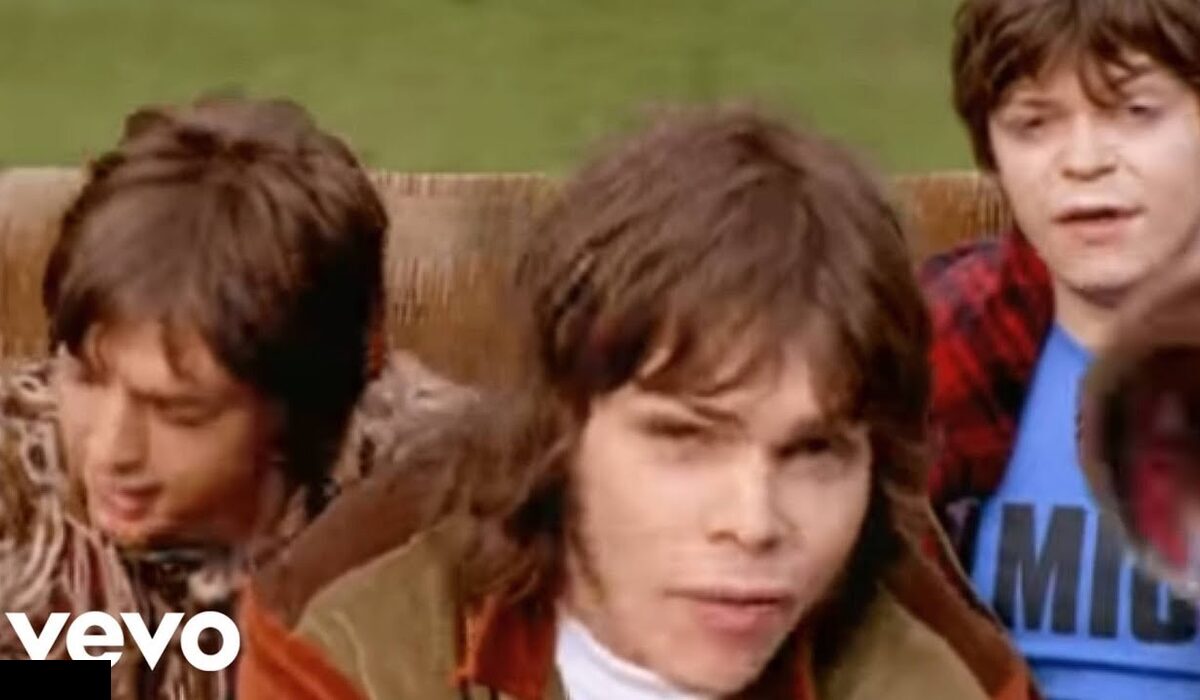
“Alright” appeared on the Clueless soundtrack in 1995 and found an American audience through a film indifferent to Britpop geography. The band never broke the US market at the scale the early momentum suggested, but the catalogue built a transatlantic following through streaming reissues that work independently of the original Britpop moment. Festival recordings from the period hold up: the band played tight, and the songs did not depend on production tricks to survive the stage.
Reunion shows from 2011 and the I Should Coco anniversary run put the debut back in front of audiences who could hear the full catalogue with more distance. Gaz Coombes’ solo career, notably Matador (2015) and World’s Strongest Man (2018), confirmed his range as a writer in a more experimental register, and also clarified, by contrast, what the trio dynamic had been: a specific interplay between three players that no solo record quite replaces.
Next to Blur’s conceptual ambition or the Oasis mythology of grievance, Supergrass operated with less theoretical apparatus but equivalent craft. “Alright” is the obvious entry point. In It for the Money is the album that makes the strongest case for the long run. Road to Rouen is the sleeper that rewards returning to later. Six albums across fourteen years, and a chorus-to-song ratio that most bands working in any genre would be glad to claim.