
The microphone and the locked room
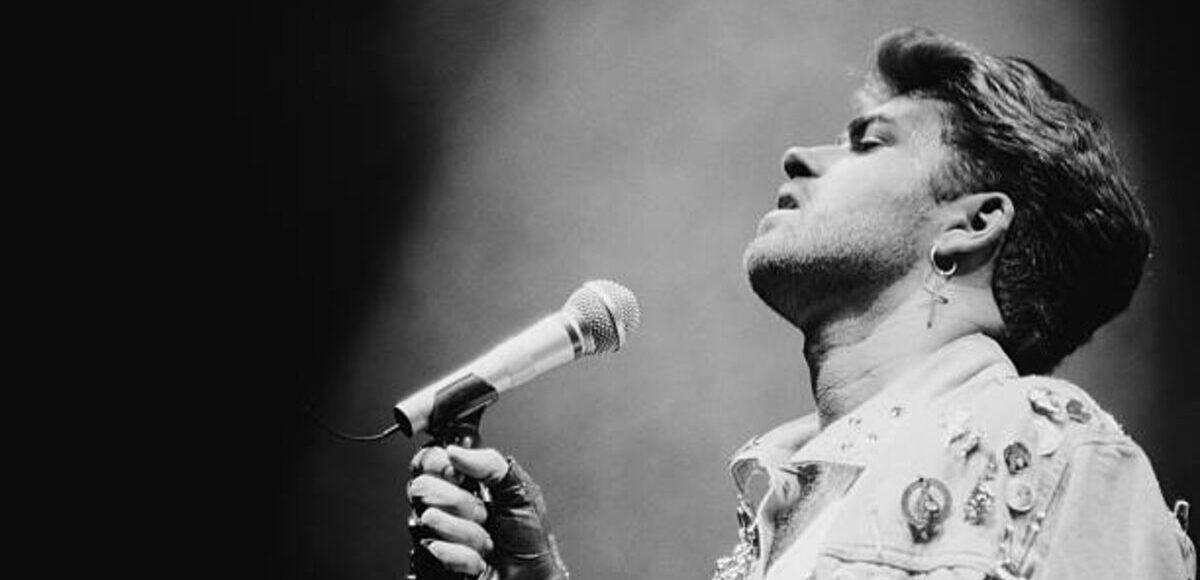
The white jeans and the jukebox guitar were a costume. The voice underneath was not. By the time Faith arrived in October 1987, Georgios Kyriacos Panayiotou, born in Bushey on 25 June 1963 and known as George Michael, had already written a standard while still a teenager. Careless Whisper, sketched at seventeen on a bus and released in 1984, carries a saxophone line that night buses still seem to know. Wham!, the partnership with Andrew Ridgeley, had made Wake Me Up Before You Go-Go and Last Christmas into public property. The solo album was the moment he kept the melody and changed the temperature.
Faith is a pop record that behaves like a suite of private decisions made in public. I Want Your Sex got itself banned in places that had sung along to Wham! without listening. Father Figure slows the pulse until desire sounds like care. One More Try is gospel architecture built for a radio that usually wanted three minutes and a wink. He produced, he arranged, he stacked the harmonies himself. The stubble and the leather were the poster. The vocal, close-miked and almost reluctant at the top of a phrase, was the work.
Success at that volume has a bill. Listen Without Prejudice Vol. 1, September 1990, opens with Praying for Time and refuses the leather. Freedom! ’90 is a hit that argues with the machinery of hits: the video puts supermodels in his place and keeps his face out. He sued Sony, claiming the contract was a restraint on the songs he still wanted to write. He lost in 1994. The case is often told as a star’s tantrum. Read against the records, it is a singer trying to own the pace of his own voice.
Grief rearranged the next album more brutally than any court. Anselmo Feleppa, his partner, died in 1993. Older, released in May 1996, is the sound of that fact. Jesus to a Child does not raise its voice. Fastlove puts a dance floor under a man who is not sure he wants to stay on it. The tempos sit low. The strings do not swell for triumph. It was still a commercial object, and it was also, unmistakably, a mourning record that refused to dress mourning up as spectacle.
The years after Older did not tidy the public story, and he stopped pretending they would. In 1998 he was arrested in a Beverly Hills park; the single Outside answered with a disco joke that was also a refusal to apologise for the life. He sang with Mary J. Blige, with Mutya, with Elton again. He gave White Light away, played the 2012 Olympics closing ceremony, and still treated a television audience as if the real work were the held note, not the occasion. The Faith tour had already shown, in the late eighties, that he could carry an arena with a ballad and a drum machine and look faintly bored by the scale. Boredom, in his case, was a kind of standard. He would not inflate a song to match the room.
He kept writing in public and living at an angle to the publicity. Patience in 2004, the duet Don’t Let the Sun Go Down on Me with Elton John, the surprise shows, the songs given away. The tabloids took what they could. The voice, when he let it out, still had that 1984 grain: a soul phrasing inside an English pop mouth, precise about pain, unwilling to shout when a held note would do. He died at home in Goring-on-Thames on 25 December 2016, fifty-three years old.
What remains, once the costume is folded, is a singer who understood that pop could carry a locked room inside a chorus. Careless Whisper still stops a room because the melody was finished early and never needed the leather. The weather in that voice was private. It travelled anyway.