
Two tears that were not in the script
A drum machine keeps a slow, almost funereal pulse, strings enter like a room going cold, and Sinéad O’Connor’s voice arrives bare, counting the hours since love left as if the arithmetic could bring it back.
Prince wrote Nothing Compares 2 U in 1985 for the band The Family. O’Connor recorded it for I Do Not Want What I Haven’t Got, released in 1990, producing the track herself. It went to No. 1 in Britain and America. The arrangement is severe: a synthesised bed, a voice with nowhere to hide, a melody that keeps returning to the same grief. John Maybury shot the video mostly as a face, in Paris, the Seine and the Parc de Saint-Cloud glimpsed and then abandoned. At the line about the flowers her mother planted, two tears run. She has said she did not cry in the studio. The camera did what the microphone had not. Her mother, Marie, had died in a car crash in 1985, when Sinéad was eighteen. The relationship had been violent. The tears were not a performance of missing a lover. They were a daughter.
She told it plainly, years later, to the BBC and in her memoir. She did not know she was going to cry in the video, because she had not cried recording it. Every time she sang the song she thought of her mother. She never stopped crying for her. The world heard a break-up and fell in love with a tear. She let the misreading stand in public and corrected it when she could. Prince’s lyric, written in the hot streak around Purple Rain, is a lover’s complaint. In her mouth the mama in the backyard becomes the subject. The flowers died when you went away. That is not a metaphor she invented. It is the line that opened the lock.
I didn’t know I was going to cry when I sang in the video because I didn’t cry in the studio recording it. Every time I sing that song I think of my mother.
(Sinéad O’Connor, BBC)
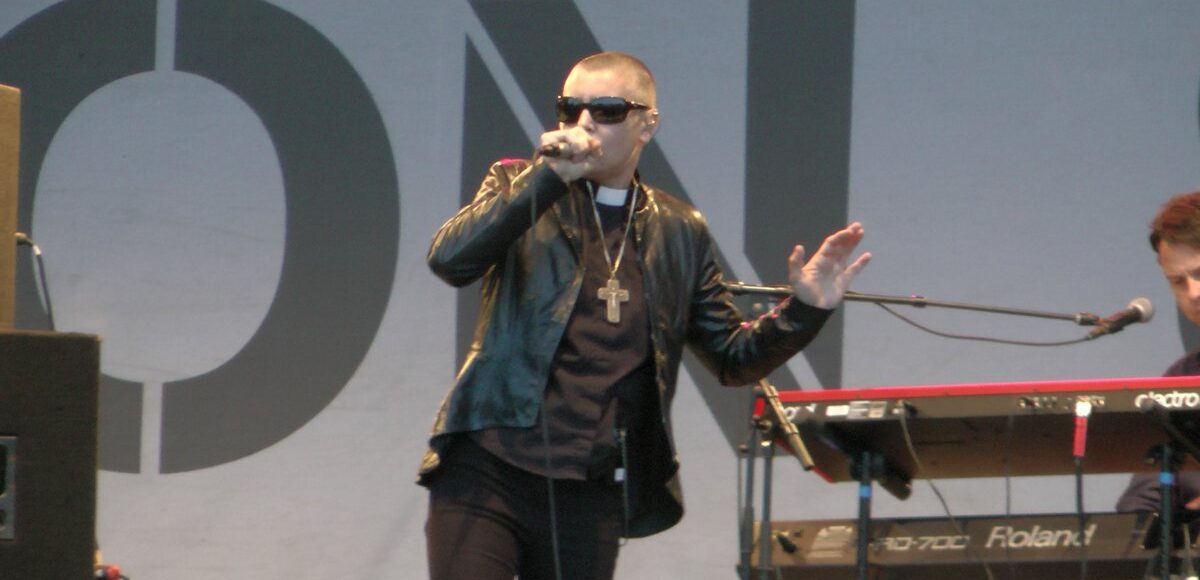
The single made her, briefly, the most visible singer in the world, which she did not want and would not perform correctly. The shaved head, the stare, the refusal to be grateful in the usual way, all sat on top of a vocal that could have been a career of ballads. She chose other fights. The song remained, covered again, returned to, never improved. Prince’s own later versions are curiosities beside this one. The Family’s original is a different genre. O’Connor’s is the standard, not because she out-sang the writer, but because she let a private death into a public melody and did not wipe the evidence.
What remains is the face, and the count of days. Seven hours and fifteen days, a precision that makes the grief administrative and therefore worse. The strings do not console. The drum machine does not dance. A young woman in 1990 looks into a lens and fails, for twenty seconds, to be only a singer. Maybury kept the failure. Radio played it until the tear was famous and the reason was not. The reason is in her own sentence, repeated whenever she was asked. The mother. The garden. The song that was supposed to be about a man, and became, in the only version that matters, a visit.