

From Dry to Let England Shake
Polly Jean Harvey arrived from Dorset with a guitar that sounded like wire pulled through wet earth. Born on 9 October 1969 near Yeovil, she played in Automatic Dlamini, then led a trio that made Dry in 1992. The songs do not flirt with abrasion. Sheela-Na-Gig, Dress, and Happy and Bleeding put the body in the lyric without pop courtesy. Indie rock in those years hid behind feedback. She used the feedback and still made you hear the words.
Rid of Me in 1993, recorded with Steve Albini at Pachyderm Studio, turns volume up until quiet feels like a threat. The title track whispers then lunges. Man-Size walks in a man’s clothes without asking the costume to be a joke. Albini’s room sound, drums like furniture moved in a hurry, suits a singer who wanted takes to feel unfinished on purpose. To Bring You My Love in 1995 opens the palette: organ, strings, Flood and John Parish arranging, a red dress in the photographs, and Down by the Water behaving like a murder ballad with the singer clearly in charge of the myth.
She refused the settled version of that success. Is This Desire? in 1998 is interior, electronic at the edges, less interested in stage persona. Stories from the City, Stories from the Sea in 2000 splits its title between New York and Dorset and won the Mercury Prize, with Good Fortune and This Is Love carrying a brightness she had not allowed before. White Chalk in 2007 puts the electric guitar down for piano, high voice, a Victorian pallor. Listeners who came for the trio met a different instrument. She did not apologize. The change was the method.
Let England Shake in 2011 is where the method meets history. Autoharp, sampled bugles, lyrics about Gallipoli and English fields, sung in a voice that will not do patriotic swell. It won a second Mercury Prize without sounding like an award record. The Hope Six Demolition Project in 2016 took the same documentary impulse to Washington, Kosovo, and Afghanistan, and let public argument stand about whether a visitor’s song can hold those places. I Inside the Old Year Dying in 2023, drawn from her poem book Orlam, returns to Dorset dialect, birds, and a child’s underworld. The soil changes. The attention does not.
The early trio made the method audible before prizes did. Rob Ellis on drums and Steve Vaughan on bass were not a backing band waiting for a star. On Dry and Rid of Me the three sound like one argument about how close a vocal can sit to a snare. She has said, in different words over the years, that she writes from the body and finds the costume after. The red dress of 1995, the white dress of the chalk years, the black of Let England Shake: each follows the songs, not a brand refreshed for a cycle.
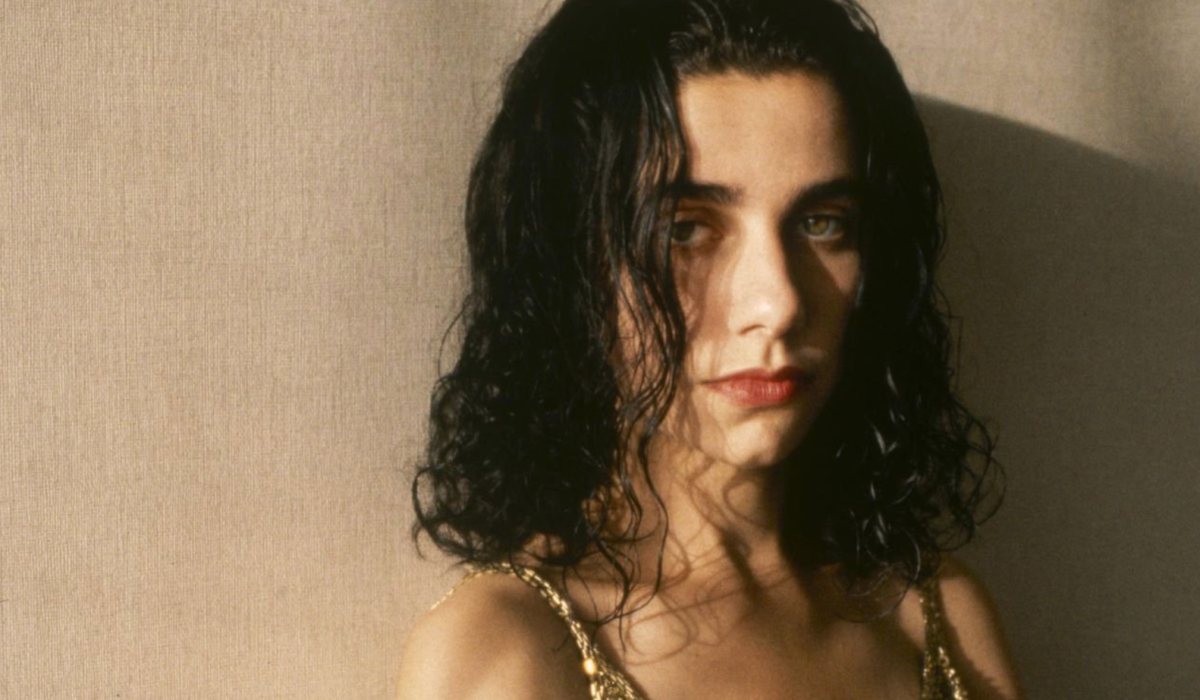
Influences move through British folk murder ballads, blues grit, Nick Cave’s narrative darkness when Parish appears, and the post-punk habit of treating the studio as a character. Compared with contemporaries who found one guitar tone and marketed it for a decade, Harvey treats each album as a new workshop.
Listen for vocal proximity, dynamic jumps from whisper to shout, guitar that can scrape or ring cleanly, and arrangements that change instrument every few years without losing the same throat. Production partners matter: Albini’s blunt rooms, Flood’s cinematic color, Parish’s songcraft on collaborations like Dance Hall at Louse Point.
Entry points depend on appetite. Dry and Rid of Me for the raw trio. To Bring You My Love for the red-dress peak. Let England Shake for history without anthem cheese. Add Dress, Down by the Water, and The Words That Maketh Murder and you hear three faces of the same refusal to repeat.
Beside Bjork’s electronic costume changes or Tori Amos’s piano confessionals, Harvey shares art-pop ambition but keeps a rock band’s bluntness in the attack. Beside Britpop peers, she never chased the Brit Awards smile. What distinguishes her is serial reinvention driven by songwriting need, not image refresh.
The catalogue rewards listeners who expect the next record to contradict the last. Put on Dress or The Words That Maketh Murder and the method is audible: invent the instrumentarium again, then sing as if the facts matter.