Motown prodigy, TONTO sessions, and a holiday campaign
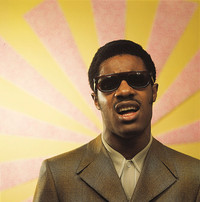
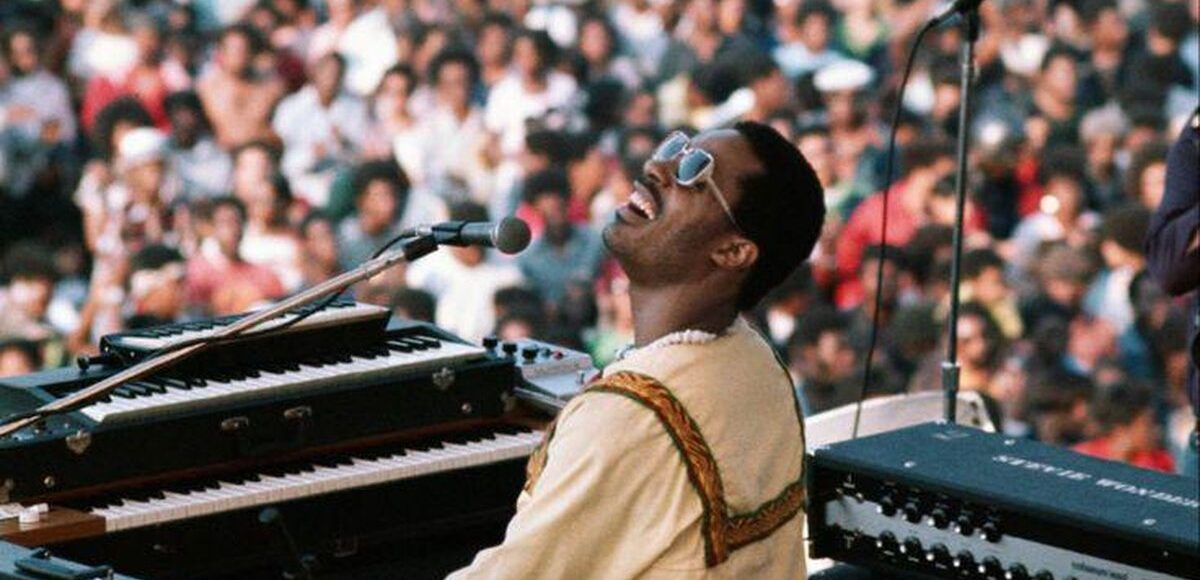
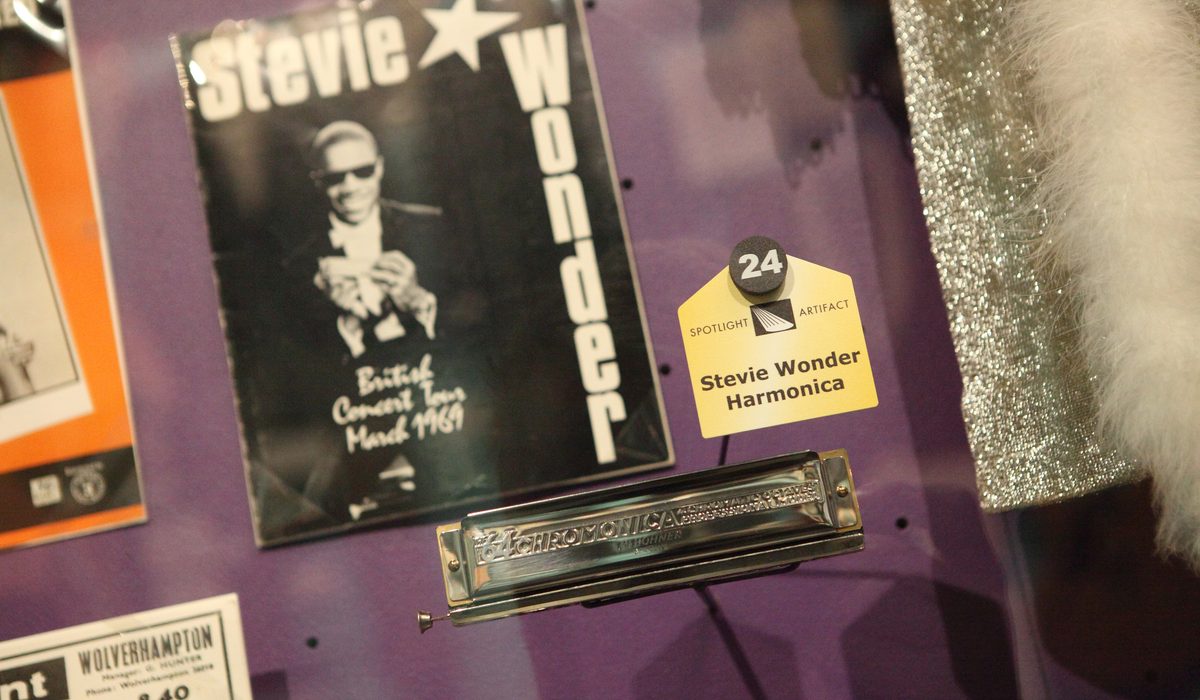
Stevland Hardaway Judkins was born on May 13, 1950, in Saginaw, Michigan, six weeks premature. The incubator oxygen damaged his optic nerves; he was blind from shortly after birth. His family moved to Detroit, where he grew up in the Black Bottom neighborhood and began teaching himself instruments – harmonica, piano, drums – before most children had decided on a preferred school subject. He was signed to Motown’s Tamla subsidiary at age eleven after being brought to the label’s attention by Ronnie White of the Miracles. His first number one single, “Fingertips (Part 2),” was a live recording made at a Chicago revue in 1963, when he was twelve.
The early Motown records established him as a commercial property while keeping him inside the label’s production system. “Uptight (Everything’s Alright)” (1965), “I Was Made to Love Her” (1967), “For Once in My Life” (1968), and “My Cherie Amour” (1969) were produced by the label’s in-house team. Wonder played harmonica and co-wrote, but the arrangements, production decisions, and release schedules belonged to Motown. He was a talent asset, managed accordingly.
When he turned twenty-one in 1972, he renegotiated his contract entirely, taking creative and financial control unprecedented for a Motown act. He traveled to New York and worked with Malcolm Cecil and Robert Margouleff and their TONTO (The Original New Timbral Orchestra), an enormous custom modular synthesizer built over years in a loft on 38th Street. TONTO could generate sounds that no other commercial instrument could produce: bass simulations, string approximations, percussion textures that had no acoustic equivalent. Wonder recorded himself playing most parts, building tracks from the bottom up.
Talking Book (1972), Innervisions (1973), Fulfillingness’ First Finale (1974), and Songs in the Key of Life (1976) represent one of the most sustained creative periods in American popular music. These four albums, completed in four years, cover political speech, romantic love, spiritual inquiry, jazz-influenced chord movement, and synthesizer invention simultaneously. The thematic range is as large as the musical range, and the musicianship underneath makes both credible.
“Living for the City” on Innervisions depicted a young Black man arriving in New York and immediately being arrested, narrated in a dramatic spoken-word sequence that stopped the music midway through. “Higher Ground” opened with a clavinet riff that hit so hard it became one of the most copied rhythmic patterns in rock, later anchoring Red Hot Chili Peppers’ cover. “Superstition” was originally written for Jeff Beck but Wonder kept it; it went to number one on both the pop and R&B charts simultaneously.
Songs in the Key of Life was a double album with an additional EP, totaling twenty-one tracks. “Sir Duke” celebrated Duke Ellington; “Isn’t She Lovely” was recorded at the birth of his daughter Aisha; “Pastime Paradise” was later sampled by Coolio for “Gangsta’s Paradise.” The album won Album of the Year at the Grammy Awards in 1977 and represents, by almost any measure, the peak of what a single pop musician could accomplish in one statement.
The political dimension of the work was direct and embedded in the music rather than appended to it. Wonder lobbied the United States Congress for fifteen years to establish Martin Luther King Jr.’s birthday as a national holiday, beginning in 1981; the holiday was signed into law in 1983. “Happy Birthday” was written explicitly for the campaign. He also organized the “Rally Against Racial Violence” in 1982 in Washington D.C., following it with the “I Just Called to Say I Love You” period which was commercially enormous but artistically thinner.
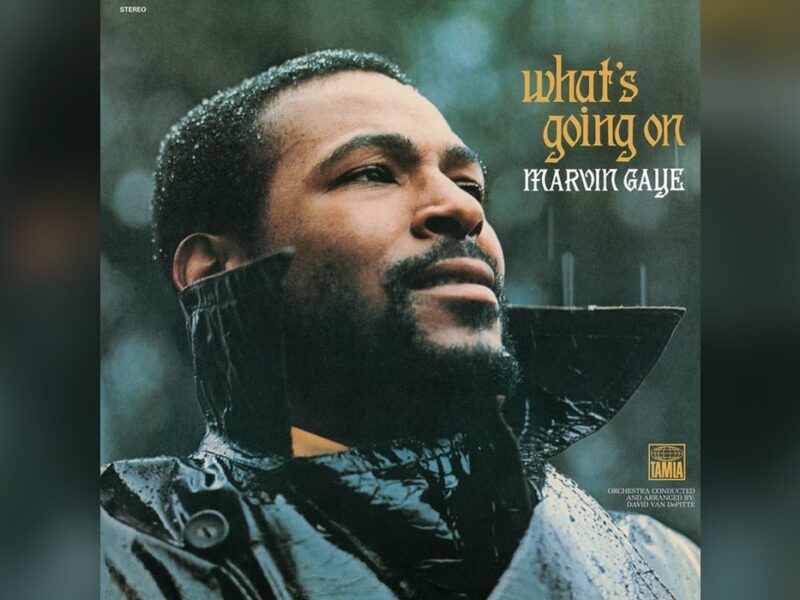
Start with Innervisions for the tightest single album of the classic period. Songs in the Key of Life for the full ambition. Talking Book for the beginning of the TONTO era. “Superstition,” “Living for the City,” and “Sir Duke” are the three tracks that demonstrate the range in sequence. Compared with Marvin Gaye: more instrumentally accomplished, more harmonically complex, less erotic directness. Compared with Ray Charles: different synthesis model, less blues-dominant, more explicitly political. What Wonder built was a version of Black American music that could contain jazz harmony, synthesizer invention, and direct political speech inside the same album without any of the three feeling like it did not belong.