
Paris Record Makers, Tony Allen, and a seven-minute loop
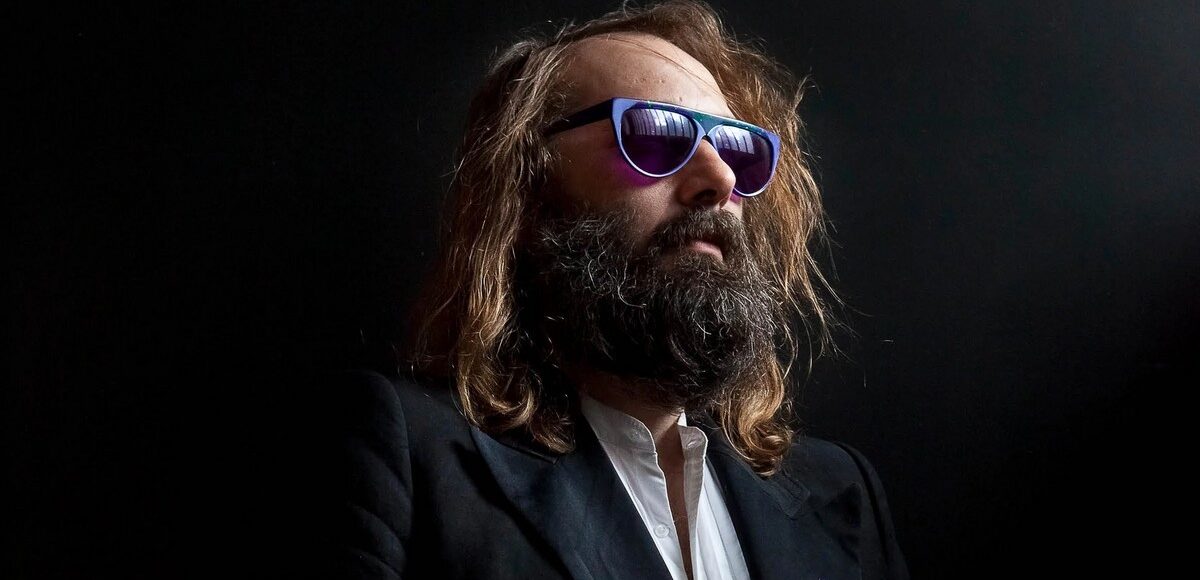
Sébastien Tellier arrived in the French electronic conversation in the early 2000s as a character before he was a sound. The beard, the oversized sunglasses, the measured pace of every interview: they were not affectations stacked on top of music but a consistent persona that the music grew inside. Record Makers, the Paris label that also worked with M83 and Sebastian, provided the environment: a space deliberately off-centre from both mainstream chanson and the more functional side of French electronic music.
L’incroyable vérité (2001) introduced him to a small audience who found Air and Phoenix a useful reference but wanted something more peculiar. The album was slow and warm, with keys and drums that moved without hurrying, and a voice that spoke more than it sang. The approach made immediate commercial impact unlikely, but it established Tellier as a figure with a genuine creative position rather than a style borrowed from somewhere else.
Politics (2004) sharpened the approach without making it commercial: soft piano, patient arrangements, and songs that behaved more like film cues than pop structures. The album connected with listeners in France and began to reach audiences in the UK who were curious about what was happening on the more unusual edges of the Parisian scene. The voice stayed low and half-spoken, closer to a private confession than to a belted chorus, and the drums left space rather than filling it.
“La Ritournelle” is the track the catalogue pivots around. Built on a loop that runs for over seven minutes, with Tony Allen on drums and strings that accumulate gradually over the groove, it is a love song that refuses to make a case for itself beyond the simple repetition of its title. Allen’s drumming, rooted in Afrobeat discipline, gives the track a pulse that never sags despite the length. Quentin Dupieux directed the video, and the pairing of two distinctly French creative figures made the track a minor landmark in French pop of the 2000s.
Sexuality (2008), produced with Guy-Manuel de Homem-Christo of Daft Punk, pushed the same soft-focus aesthetic toward disco without abandoning the whisper. The collaboration made sense: both parties were interested in pleasure as a compositional subject, and the production gave Tellier’s songs more sheen without forcing them into club tempo. The album reached audiences in France, the UK, and North America who followed the Daft Punk connection, and it remains the most accessible entry in the catalogue.
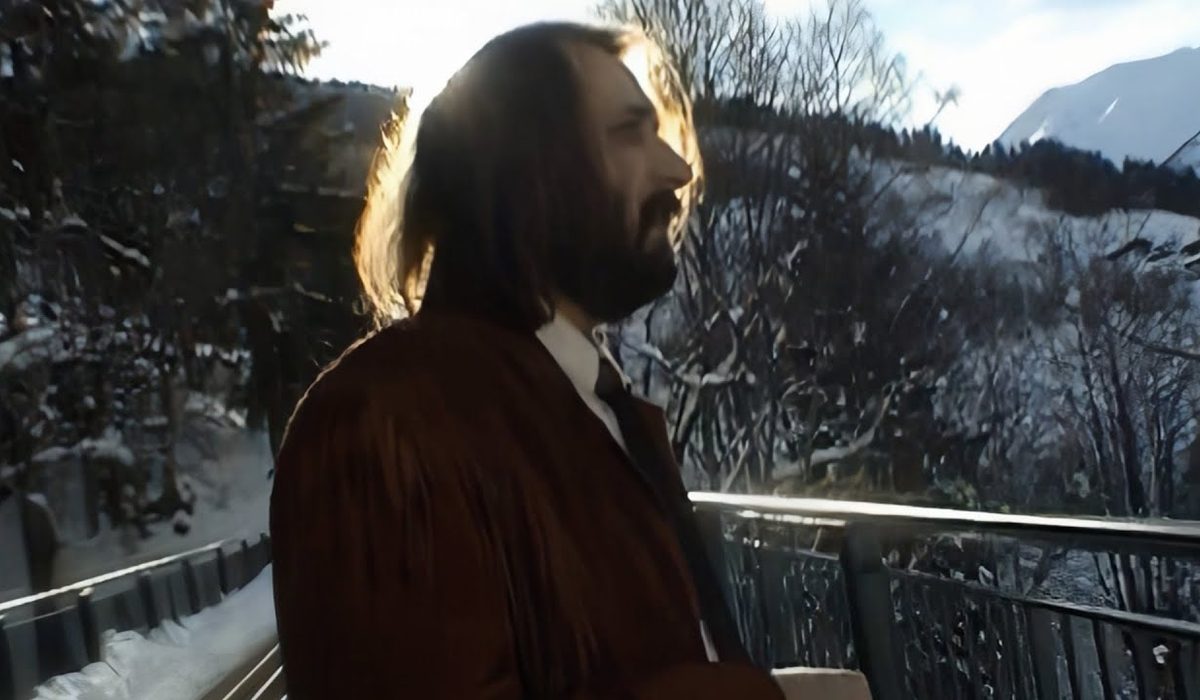
In 2008 Tellier also represented France at Eurovision with “Divine”, sung in English, wearing sunglasses indoors, offering no concession to the competition format. The song placed nineteenth. The performance became, in the French press, a kind of commentary on the relationship between French cool and European popular culture: too dry and detached for the voting bloc, but culturally legible as exactly the kind of anti-performance that confirmed the persona rather than undermining it.
Narco Mondo (2009) and L’Aventura (2012) continued to explore adjacent rooms without settling in any one of them. Soundtrack leanings appeared more directly, alongside tropical elements and moments where the tempo lifted toward nightclub territory. Tellier’s creative restlessness kept the catalogue from having a definitive second chapter, but it also kept each album from sounding like a compromise or a calculated pivot.
In the landscape of French electronic music from the 2000s, Tellier sits alongside Air and Phoenix without overlapping with either. Air built ambient pop around lush, long-form production and kept the voices low and blended into the texture. Phoenix moved toward guitar-driven Americanised indie rock with an increasingly clean commercial surface. Tellier stayed closer to soft-focus funk: lounge as a deliberate aesthetic rather than an inherited one, and a persistent willingness to be strange on record without explaining why.
For a first listen, Politics or Sexuality are the most direct entries: Politics for the slower, stranger version of the artist, Sexuality for the Daft Punk sheen and the more immediately approachable songs. “La Ritournelle” is the single track that explains the whole project. It is a seven-minute loop that sounds like it is taking its time because it already knows where it is going, which is the most accurate description of Sébastien Tellier that exists.