
A loop that outlived the drummer’s chair
The hi-hat is a pulse you could take a pulse with, which doctors later did, and the guitar answers in a figure so clean it feels machined. Then the falsetto arrives, not as decoration but as a man insisting he is still here. Stayin’ Alive is a dance record that keeps admitting, in the lower lines, that life is going nowhere and somebody ought to help. The admission is why the strut is not empty. You walk like that because the night is a negotiation, and you have decided, for four minutes, not to lose it.
The brothers wrote the songs for Saturday Night Fever in France, at the Château d’Hérouville, before they had seen the film. They finished this one at Criteria Studios in Miami in 1977, producing with Albhy Galuten and Karl Richardson. Dennis Bryon had to leave after a death in the family. Galuten and Richardson took two bars of his drums from Night Fever, already cut, and looped them on tape, a human loop in the years before a drum machine would have made the cheat obvious. When he came back, the loop stayed. The sleeve, as a joke, credited Bernard Lupe. Alan Kendall played the guitar figure. The soundtrack arrived in November 1977. A film about a Brooklyn floor had its anthem, and the anthem had been built from a splice.
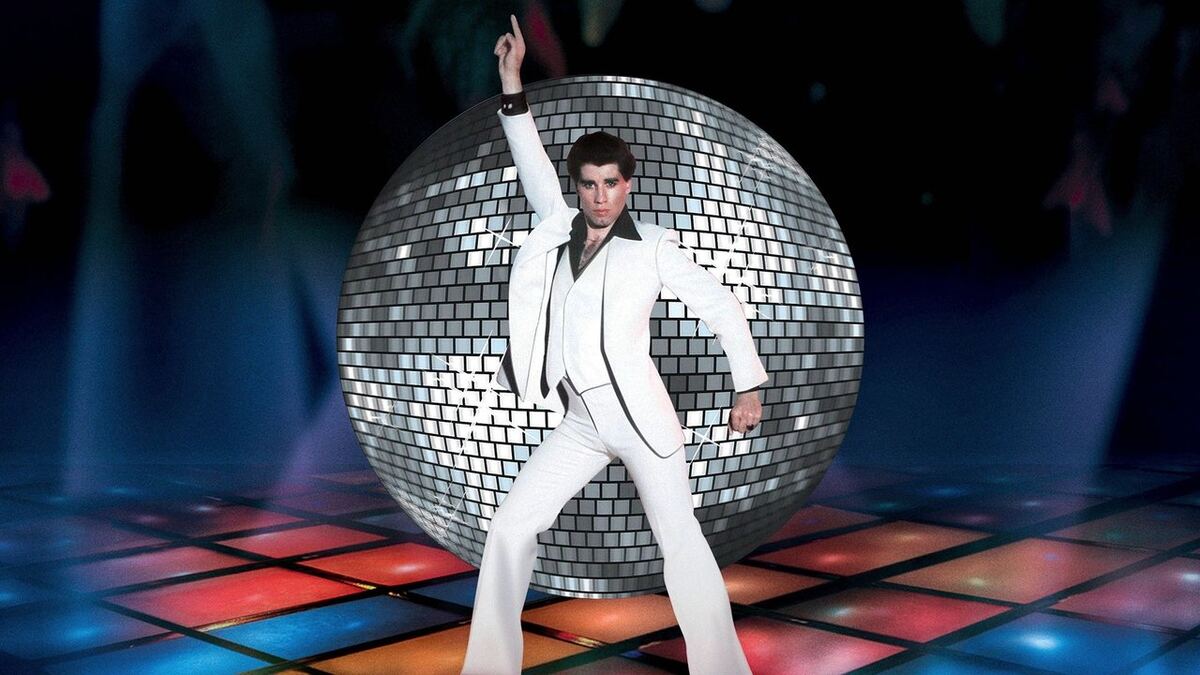
On screen, John Travolta’s walk turned the loop into a costume. The song did not need the white suit, but the suit taught a generation how to hear it: chin up, trouble underneath. Live, the three voices sit on one wire, the falsetto a family instrument, the lower lines still asking for help. The tempo’s later career in first-aid classes is an accident that flatters the title. They were writing for a man who needed a reason to cross a room.
People crying out for help. Desperate songs. Those are the ones that become giants. The minute you capture that on record, it’s gold. Stayin’ Alive is the epitome of that.
(Barry Gibb, Playboy, 1978)
The backlash arrived on schedule. A culture that had danced to the record decided the record was the problem, and the Gibbs wore the contempt for years. What it missed is that the track is not a smile. The kick does not celebrate. It persists. Galuten called that first loop a watershed, insistent without being a machine. You can hear the splice if you are told it is there. You cannot hear a drummer getting bored. For those bars he is a ghost of himself, repeated until the ghost becomes the law.
What remains is the walk. Stayin’ Alive still sounds like a decision made in a corridor: shoulders back, the lyric confessing, the band refusing to slow down. France wrote the worry. Miami looped the courage. The film borrowed both and became, for a while, the definition of a Saturday. The definition has dated. The pulse has not.