

Three voices stacked into a gospel choir
The piano opens with a gospel figure at rock tempo, then the choir arrives. The choir is Freddie Mercury, Brian May and Roger Taylor stacked in overdubs until the room sounds hired. Somebody to Love pleads without kneeling. Mercury’s lead slips off the beat like a preacher leaving a script; the answers come back as his own bandmates multiplied. The arrangement wants Aretha Franklin’s sacred records and a stadium PA at the same time.
Queen cut it for A Day at the Races, album out 10 December 1976, single 12 November. Mercury wrote it. The band produced, Mike Stone engineering, at The Manor in Oxfordshire and Wessex in London. Mercury had been listening to Franklin’s early gospel work and wanted that mass of voices behind one desperate lead. They did not hire a congregation. They built one from three throats switching parts until the harmony stopped sounding like a rock stack and started sounding like a service. It reached No. 2 in Britain.
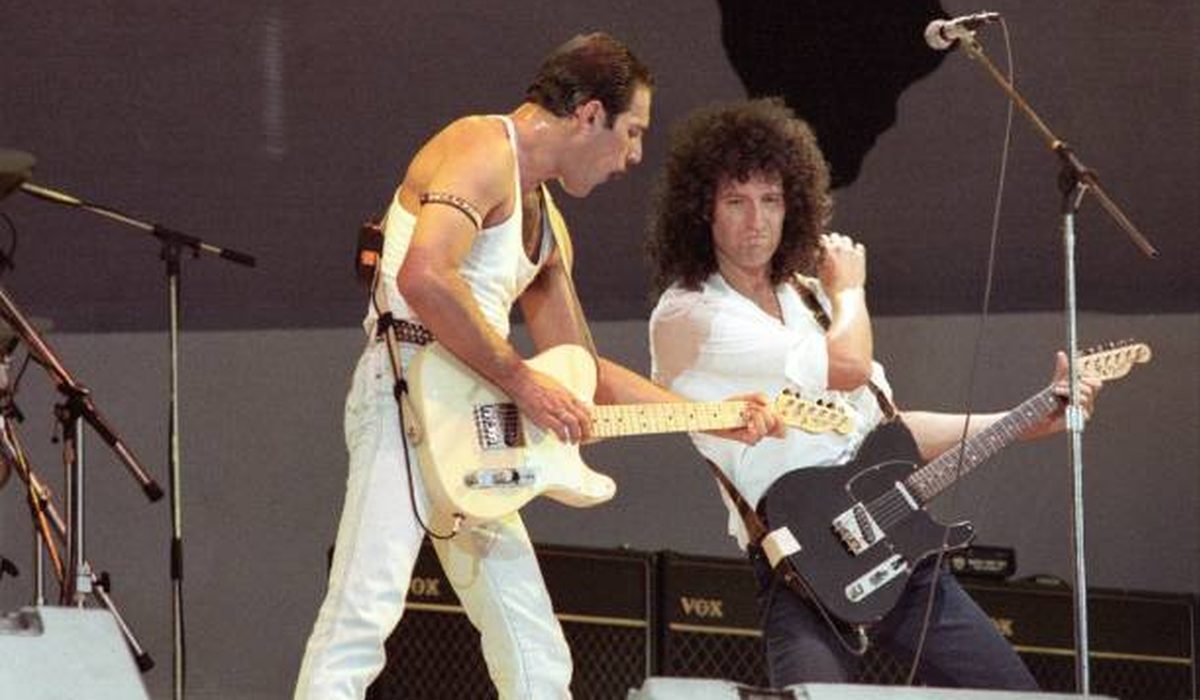
On stage the trick had to become human again. May, Taylor and Mercury shared one microphone and tried to be the choir they had painted on tape. At Milton Keynes in 1982 the song already felt earned rather than borrowed. At the 1992 tribute concert, George Michael took the lead and the London Community Gospel Choir finally supplied the bodies Mercury had imagined. The original still wins for many listeners because the strain of three people faking a multitude is part of the emotion.
I wish I could sing like her. I sometimes try to do that on a song called Somebody to Love, and that was the gospel element.
(Freddie Mercury, interview, 1984)
Mercury later said, from the writing desk rather than the chart, that he thought Somebody to Love a better piece of composition than Bohemian Rhapsody. The rhapsody is a suite. This song is one rising argument: work, love, the fear that neither will answer. The lyric keeps finding the same door locked. The music keeps knocking louder, which is why the last minute feels like a congregation that will not sit down.
What remains is a Queen track that wants soul more than spectacle and gets both because the band could not drop the spectacle. The piano voicings are church. May’s harmonised guitars stay bright and unable to whisper. Between those instincts the song lives: a prayer sung by people who also know how to stack a stadium. It has not aged into camp. It still reads as need, and as a template for rock bands who want gospel heat without hiring a choir. Radio still plays the 1976 single as a gospel-rock reference point for bands who stack vocals without a hired choir.