The World Violation tour ends the band at its peak and sends four careers into the 1990s
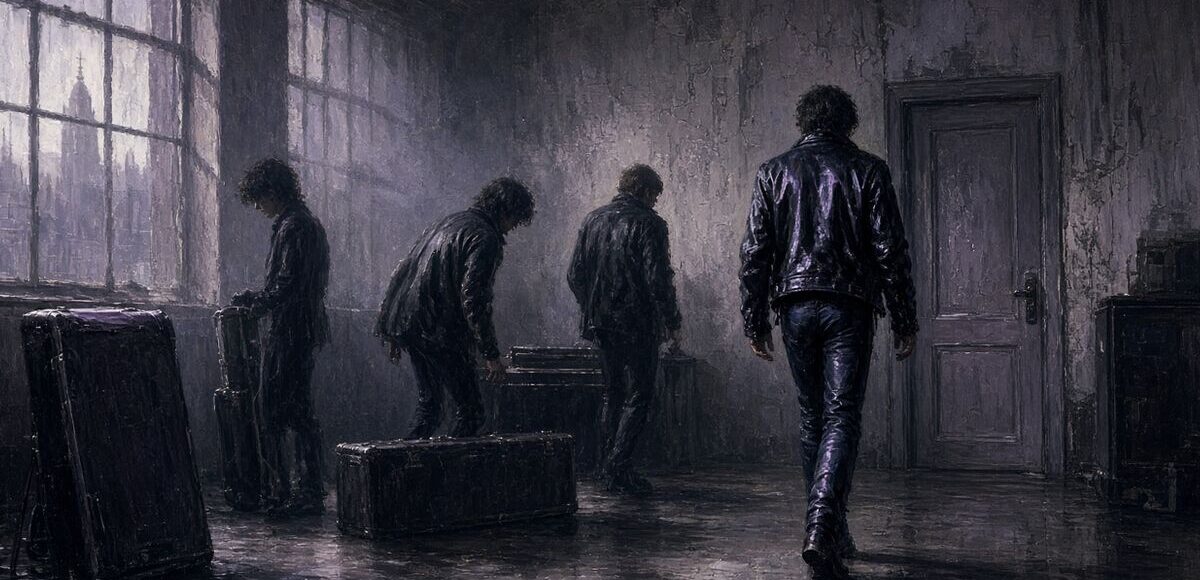
The last scheduled meeting of the World Violation tour takes place in a London office in February 1991. Andy Fletcher has brought a diary, tour accounts and four possible weeks for studio rehearsals. Alan Wilder asks for a full year away. Martin Gore looks at the dates and says he does not want another one written down.
Dave Gahan has returned from Los Angeles with longer hair and a suitcase he has not unpacked. He says America has changed what he wants from a stage. Wilder hears that as a warning about guitars, volume and another tour built around a singer moving farther from the machinery. Fletcher tries to turn the disagreement into a holiday. Nobody accepts the wording.
Daniel Miller arrives from Mute expecting to discuss a pause. Gore instead gives him a short letter stating that Depeche Mode has completed its work. There is no fight dramatic enough for the press release, no broken instrument and no final photograph. Fletcher crosses the proposed studio weeks from his diary and asks whether he should cancel all four.
The announcement on 4 March is six sentences long. Fans who have watched Violator become the band’s largest success assume it is a negotiating tactic. Tickets, black clothing and roses are left outside Mute’s office. Radio responds by playing Enjoy the Silence, a title that now sounds like an instruction nobody wanted.
Wilder moves first. Recoil stops being a side project and becomes his main room for work. He records doors, railway brakes and fragments of speech, then builds long pieces that would never have survived a Depeche Mode meeting about singles. The first full Recoil album after the split sells modestly and is studied closely by producers.
Gore takes longer. He has songs but dislikes the idea of singing every one, so he invites guest vocalists to a studio in Hamburg. Mercy Room appears in 1992 under his own name, with Gore performing only four tracks. One of them is Walking in My Shoes, quieter and less theatrical than the version Depeche Mode might have made.
The album leaves him with a practical problem: audiences want to see the songwriter. Gore books six theatres and performs behind a row of lamps, changing instruments almost every song. At the final show in Berlin, Fletcher appears to play bass keyboard on Personal Jesus. They hug, bow and carefully do not suggest a future.
Gahan forms Glass Cathedral in Los Angeles with two local guitarists and a drummer from Seattle. Their 1993 record is loud, physical and impatient with programmed precision. Gahan discovers that a live band will follow his movement but cannot protect him from it. The tour stretches from clubs to larger halls and then beyond anyone’s sensible plan.
There is no Songs of Faith and Devotion. Its possible material scatters across separate records. Wilder turns In Your Room into a ten-minute Recoil piece sung by an unknown gospel vocalist. Gore gives Judas to a chamber ensemble. Gahan hears both and refuses to say which one should have belonged to him.
Fletcher becomes the keeper of everything that does not fit an album. He starts a small label, manages accounts and answers letters from fans who still address envelopes to the band. When Glass Cathedral cancels three dates, he quietly helps settle the promoter claims. Friendship survives in invoices, telephone calls and favors never mentioned in interviews.
By 1995, the split has acquired a mythology cleaner than the lives behind it. Violator is described as a perfect final record, as if the four men planned to stop on its last note. Meanwhile Gahan is in serious trouble, Gore is drinking too much and Wilder enjoys control while missing the friction that once challenged him.
A medical crisis brings Gahan back to England in 1996. From a clinic he calls Fletcher first, then Gore and Wilder. No one proposes a reunion. Each man answers, which is more useful. Fletcher organizes the practical support, Gore visits without a guitar and Wilder sends a tape containing one unfinished rhythm.
Gahan recovers without a Depeche Mode comeback waiting as a test. He records a restrained solo album in 1997 and performs seated for part of the first tour. The absence of the old name removes one source of pressure while also removing its shelter. Reviews judge the songs rather than the survival story, sometimes harshly.
Mute releases Last Mode in 1998. The compilation becomes a major seller among teenagers too young to remember the group as active. Its booklet ends in 1990 and gives the decade a false neatness. Secondhand shops fill with black-clad listeners searching for singles whose B-sides reveal how untidy the band actually was.
Offers for a reunion arrive every year. One promises stadiums, another proposes a televised performance and a third includes a private aircraft in the first paragraph. Wilder reads the figures with interest. Gore asks what they would record after the old songs. No promoter has budgeted for that question.
In 2001, Gore and Gahan share a charity stage in London. They perform Condemnation, a song Gore wrote after the split and Gahan has never officially recorded. Wilder watches from the wing. Fletcher refuses the keyboard offered to him because he knows four silhouettes would become a headline before the final chord.
A serious archive project finally reunites them in a room in 2005. They listen to multitracks from Violator, argue about a buried percussion sound and laugh at photographs of their tour clothes. For three hours they behave like a functioning band. Then the meeting ends, and nobody books the next one.
Their separation changes electronic music by removing its most visible bridge to stadium rock. Recoil becomes a reference for darker producers, while Gore’s guest-vocal albums encourage collaborations across scenes. Glass Cathedral influences bands that treat synthesizers as stage equipment rather than a fixed identity. Those records reach rooms the four men no longer share.
At a Berlin tribute in 2010, younger artists construct the missing Depeche Mode album from solo songs. Gore listens to one transition and admits that it almost works. Wilder says the drums are wrong. Gahan sings Walking in My Shoes for the encore, and Fletcher finally stands behind a keyboard for the last chorus.
The record company searches the vault for a farewell single and finds only an unfinished instrumental from the Violator sessions. Gore will not write words for a marketing deadline. Wilder completes the mix as Fourth Man, leaving four empty bars where a vocal should enter. Its silence reaches the British chart and then vanishes from radio.
At Mute, Fletcher’s abandoned diary becomes the only reliable map of the ending. Hotel holds, studio options and a pencilled American tour stop after the same February page. Nothing is torn out. The blank weeks that follow are quieter than the press statement, and they are the last lines in the diary.
After Fletcher’s death in 2022, the others return to the old office. Someone has preserved an answering-machine cassette from February 1991. On it, Fletcher confirms the cancellation of the rehearsal room in the same calm voice he used for hotels and budgets. The tape contains no final song, only the exact moment a future booking disappeared.