London, 1983: Mick Jones remains in the room
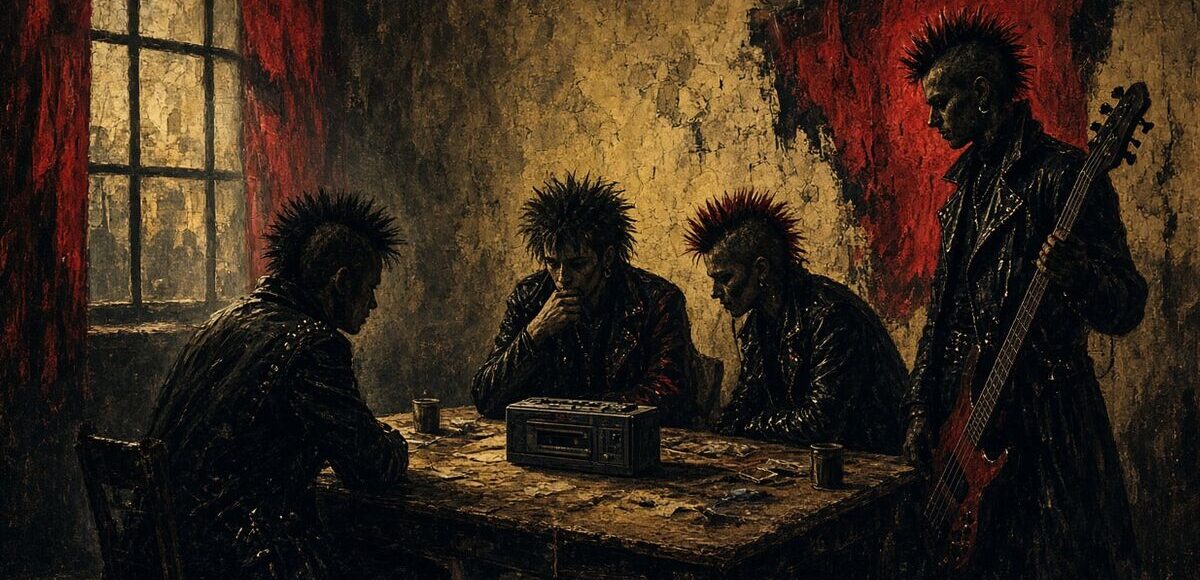
In August 1983, Joe Strummer arrives at a band meeting ready to dismiss Mick Jones. Paul Simonon closes the door before anyone can leave and places a cassette on the table. It contains a Jones rhythm track, a Strummer lyric and Topper Headon’s drumming from an older session. They listen twice. Mick stays, the dismissal letter is torn up and Cut the Crap never exists.
September 1983. The agreement is narrow: no manager may attend writing sessions and every song must survive a four-piece rehearsal. Pete Howard keeps the drum seat while Headon begins treatment away from the group. At the Vanilla rehearsal room, Strummer pins lyrics to the wall and Jones runs cables around them as if the floor were already a mixing desk. Paul Simonon refuses both men’s longest songs, then supplies the bass figure that saves one. Pete Howard plays straight through the argument and only asks which version they intend to record.
October 1983. Jones brings drum machines but agrees to switch them off after arranging the songs. Strummer brings pages about unemployment, tabloids and an American tour bus that never seems to stop. Bernard Rhodes is kept away from the first playback, a decision that creates peace for nearly four days. When he finally hears the tapes, he demands slogans, photographs and a deadline. The band accepts the deadline, rejects the slogans and lets Pennie Smith photograph them carrying amplifiers down the stairs.
January 1984. At Wessex Studios, Simonon rejects a polished bass sound and returns with an amplifier borrowed from a rehearsal room. The rough edge gives Last Train from Ladbroke Grove its center. Jones’s new machines remain audible without replacing the Clash’s collisions. A sampled station announcement opens one track, Simonon’s bass drags it into reggae and Strummer enters half a beat early. They keep the entrance because it sounds like a man running for the last train.
March 1984. The band completes Signal Fire, ten songs with punk guitars, dub space and electronic details that do not bury the players. Jones mixes the dance versions on separate tapes. American promoters request Rock the Casbah near the beginning, but the band places it late and opens with unheard material. In Detroit, cups strike the stage during the second song; by the encore, the same crowd sings its short chorus. Jones records the noise from the mixing desk and uses none of it on a studio release.
May 1984. The single Radio Silence enters British radio with a chorus sung by Strummer and Jones together. Strummer and Jones finish the chorus together, and the blend stays rough. Meetings still end with doors slammed, solo work still tempts Jones and Strummer still disappears when decisions become administrative. Simonon keeps the rehearsal booking, and somebody always arrives to use it.
Summer 1984. The tour avoids stadiums and uses halls with local opening bands. Every support act receives the same soundcheck time, a policy that delays doors in Manchester and works perfectly in Glasgow. Glyn Johns visits Wessex for one afternoon and tells them the rhythm track is carrying too many arguments. Jones removes two sampled noises, Strummer shortens a verse and Simonon turns up without asking. The take that follows becomes Radio Silence, with Howard’s drums left almost untouched in the mix.
December 1984. Headon visits a rehearsal without promises. He plays Train in Vain, drinks tea with Howard and leaves before the group discusses the next record. At Barrowland, support band The Bluebells receives a full soundcheck while the doors remain shut in the rain. Strummer goes outside to explain the delay and is answered by several hundred precise insults. He returns laughing, cuts his opening speech and starts London Calling before the promoter can dim the house.
1985. The Clash releases a live EP from Brixton instead of rushing a studio album. Its version of Straight to Hell becomes a radio fixture after being shortened by one verse. Headon’s visit unsettles Howard more than anyone admits. Simonon solves it by booking two kits for the following afternoon and asking both drummers to arrange The Magnificent Seven. The session produces no official recording, but a cassette circulates among musicians because the two different pulses never collapse.
1986. Jones pushes sampling further on Public Address. Strummer answers with simpler songs, and the final running order alternates both approaches one after the other. For Public Address, Jones samples a parliamentary broadcast while Strummer writes about print workers watching their jobs disappear. CBS lawyers remove the speech, so sixteen-year-old radio volunteer Lucy Mendez reads the same words from a transcript. Her calm voice remains on the album and she joins one London encore.
1987. The group plays a benefit tour for striking print workers and invites journalists to buy tickets like everyone else. The resulting arguments fill more columns than the concerts. During the 1988 pause, the members communicate through postcards rather than meetings. Jones sends studio diagrams, Strummer reports from film locations and Simonon mails paintings with no message. Howard keeps every card in the bass-drum case, where they are found when rehearsals resume.
1988. Simonon asks for a year without a Clash album. He paints, Jones produces another band and Strummer works on a film score, with the rehearsal key passing between them.
1989. They return with Four Corners, recorded quickly with Headon guesting on two tracks. The credits list both drummers and do not mention Headon’s treatment.
1993. After ten years of staying in the same group, the band announces a pause from a pub table. There is no replacement line-up and no farewell merchandise.
1999. A short reunion begins with four rehearsals and one rule: no song is played faster merely to prove energy. The opening night ends with the unfinished 1983 cassette finally performed whole.
The long pause ends when Simonon books the Vanilla room under his own name and tells the others the rent is already paid. Jones arrives with a hard drive, Strummer with a notebook and Howard with no expectation that Headon will appear. Headon comes last, carrying sticks but no cymbals. They spend the morning on Four Corners, lowering the key until both singers can reach the chorus without forcing it. In the afternoon, Jones plays the unfinished 1983 cassette. The tape has stretched, making the rhythm bend strangely, but Strummer recognizes the lyric and supplies the missing verse from memory. No manager is called. Pennie Smith takes one photograph at the end, with five men sitting against separate walls and the cassette machine in the middle of the floor.
The 1999 reunion encore begins with the cassette Simonon placed on the table sixteen years earlier. Jones supplies the rhythm, Strummer finally completes the last verse and Headon shares the drums with Howard. The Clash finish the song and walk off. The tape machine keeps running after they leave the stage.