After the 1977 attack, Fela rebuilds Kalakuta in London and redirects Afrobeat
On 18 February 1977, soldiers attack the Kalakuta Republic in Lagos. They beat residents, burn property and throw Fela Kuti’s mother, Funmilayo Ransome-Kuti, from an upstairs window. In the known history, Fela remains in Nigeria and answers the regime from there. In this version, friends get him onto a flight to London six weeks later, and he takes the surviving core of Kalakuta with him.
Fela calls the departure a transfer of headquarters. He refuses the word exile. Twenty-three people travel first, including musicians, singers, children and injured residents who need treatment. Instruments follow in mismatched cases. Customs officers at Heathrow spend hours trying to understand why one party carries so many drums and so few winter coats.
London is familiar territory. Fela studied at Trinity College of Music years earlier and formed Koola Lobitos there. The city of 1977 is different: punk clubs are crowded, reggae sound systems shape whole neighborhoods and Nigerian communities have expanded. A solicitor sympathetic to anti-colonial campaigns helps rent a disused warehouse in Hackney.
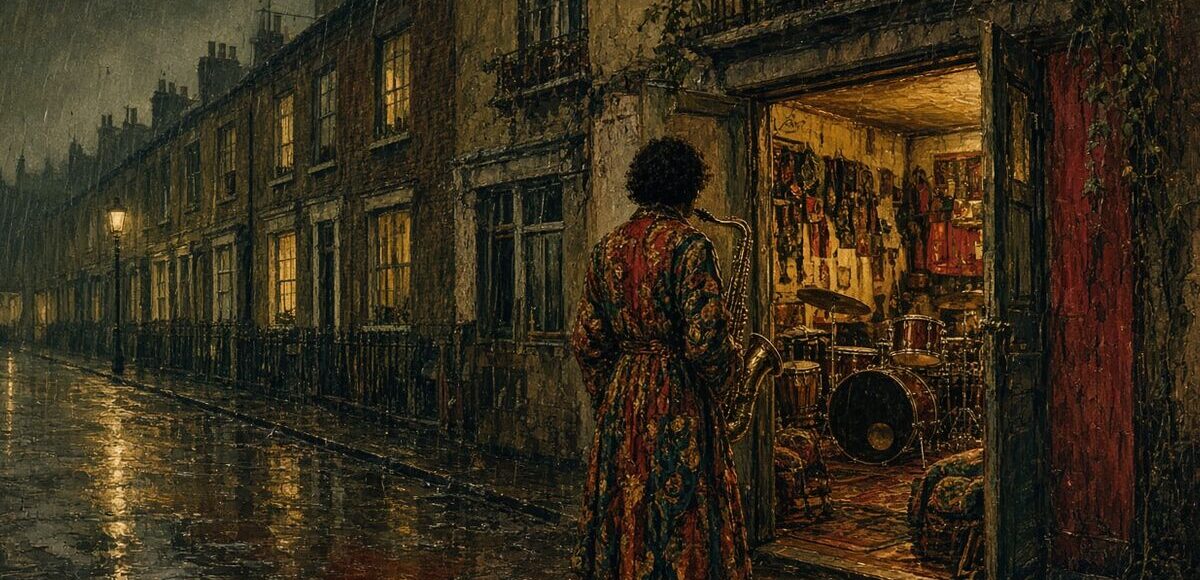
The building has broken windows, unreliable heat and enough room for rehearsal. Fela names it Kalakuta London before the lease is signed. Mattresses fill the upper floor. The band claims the ground level, where a plywood stage is built beside a kitchen. Neighbors complain about the first all-night rehearsal and then begin charging visitors to park.
Fela refuses private recovery. With his head bandaged, he holds a press conference surrounded by damaged instruments brought from Lagos. British reporters expect a victim’s statement. He names Nigerian officials, describes the attack in detail and announces a concert called Kalakuta Lives at the Rainbow Theatre.
The concert in May lasts nearly four hours. Africa 70 begins with Zombie, whose attack on military obedience now reaches an audience that has read about the raid. Tony Allen holds the rhythm steady while horns repeat short, sharp lines. Fela speaks for twenty minutes between songs, ignoring a stage manager waving urgently from the side.
The event raises enough money to keep the warehouse for six months. After that night, Kalakuta is a known address in London. Activists, Caribbean musicians, students and journalists arrive at all hours. Some come to help. Others come because the address is already being passed around.
Recording begins at Island’s Basing Street Studios. Chris Blackwell offers distribution but learns quickly that Fela will not shorten songs for radio. The first London album is Cold Country, two long pieces about British order and Nigerian violence. Rain can be heard faintly during a quiet passage because Fela insists on keeping the guide vocal.
Tony Allen thrives in the new network of musicians but dislikes the chaos of the household. He begins playing late sessions with reggae bassists and members of British jazz groups. The exchanges alter Africa 70. Bass lines become heavier, guitars leave more space and the horn arrangements sometimes enter against the beat rather than directly on it.
Punk musicians visit as well. Members of The Clash attend a rehearsal and invite Fela to a show. He watches the short songs with amusement and tells them anger should know how to dance for longer than two minutes. Weeks later, their drummer sits in at Kalakuta and loses the rhythm before the first vocal begins.
The British press tries to package Fela as an exotic ally of punk. He rejects the frame in interviews, saying he was fighting power before safety pins became a uniform. Still, the connection brings younger listeners. A seven-inch edit of Authority Stealing circulates through independent shops, backed with an eleven-minute live section that defeats the format.
News from Lagos remains central. Funmilayo’s health worsens from injuries sustained in the attack. Fela flies back to visit her under intense scrutiny, then returns to London with recordings of her voice. After her death in 1978, he leads a procession to the Nigerian High Commission carrying a symbolic coffin.
Thousands join the march. Police expect disorder but find brass, drums and disciplined movement. At the gates, Fela delivers a speech and leaves the coffin. Photographs travel internationally, making the protest harder for Nigerian authorities to contain than an action in Lagos might have been.
The album Coffin for the Crown appears later that year. Its title track begins with Funmilayo speaking about independence, followed by twelve minutes of restrained percussion before the full band enters. The record is banned in Nigeria. Cassettes are copied in London, Amsterdam and Accra, then carried back in luggage.
The move changes Afrobeat’s route. Instead of reaching Europe mainly through imported records and occasional tours, the music acquires a permanent workshop in London. Young players learn by attending rehearsals that begin as lessons and end as concerts. Horn players from jazz, bassists from reggae and percussionists from West Africa share the same narrow stairway.
Tony Allen leaves Fela’s full-time band in 1979, as tensions over pay and control finally break. Their separation still hurts, but London offers Allen immediate collaborators and studio work. His first independent album arrives sooner, mixing Afrobeat rhythm with dub production. Drummers across Europe study both branches.
Fela renames his group Egypt 80 and recruits musicians from Nigeria, Ghana, Britain and the Caribbean. Rehearsals become stricter. The new band records International Thief Thief in 1980, directing its attack at corporations that connect London offices to African contracts. Lawyers advise Island not to print certain names. Fela prints them in larger type inside the sleeve.
Life at Kalakuta London remains difficult. Immigration rules threaten several residents. Money enters after concerts and disappears into food, legal costs and recording. Fela’s authority inside the community draws criticism from feminists and former members. The political refuge does not make his household equal, and public arguments become part of the London story.
In 1981, a council inspection nearly closes the warehouse. Supporters organize repairs over a single weekend. Electricians work beside percussion rehearsals. A local newspaper photographs Fela carrying timber in platform shoes. The photograph runs in the local paper the following week.
Nigeria’s government alternates between denouncing him and trying to limit his influence. His records are banned, but the London base makes them easier to manufacture abroad. When he tours West Africa, border inspections become long and theatrical. Audiences arrive early, expecting both a concert and a confrontation.
The annual Kalakuta Festival begins in 1983 across several East London venues. Reggae groups, jazz ensembles, highlife bands and punk survivors share bills without being blended into one polite category. Fela closes each night with sets that pass midnight. Local transport authorities learn to schedule extra buses.
By the late 1980s, London has become one of Afrobeat’s main capitals. The music does not lose Lagos; lyrics, rhythms and political targets remain tied to Nigeria. But the industry around it changes. Independent labels, clubs and mixed bands form earlier around that London base.
Fela never becomes comfortable in Britain. He complains about the cold, the paperwork and tea served without enough heat. He keeps a Lagos clock on the warehouse wall and refuses to correct it when daylight saving changes. Visitors set their watches by the Lagos clock on the warehouse wall.
In 1991, after another immigration dispute, the community buys the warehouse through a cooperative funded by concerts and donations. Fela signs no personal deed. The building contains rehearsal rooms, a clinic and an archive of tapes rescued from the original compound.
His final London concert takes place there in 1996. The room is too small, so speakers face the street and the crowd fills the block. Fela plays saxophone seated for part of the set, then stands for Zombie. Rain begins, just as it did on the first London recording.
After his death, the warehouse does not become a silent museum. Musicians continue rehearsing downstairs while archivists work above them. The 1977 move leaves Lagos in the songs and in the tapes. Kalakuta keeps a second address in Hackney, where the band rehearses with the instruments already plugged in.