




Sawmills, darker than Alright
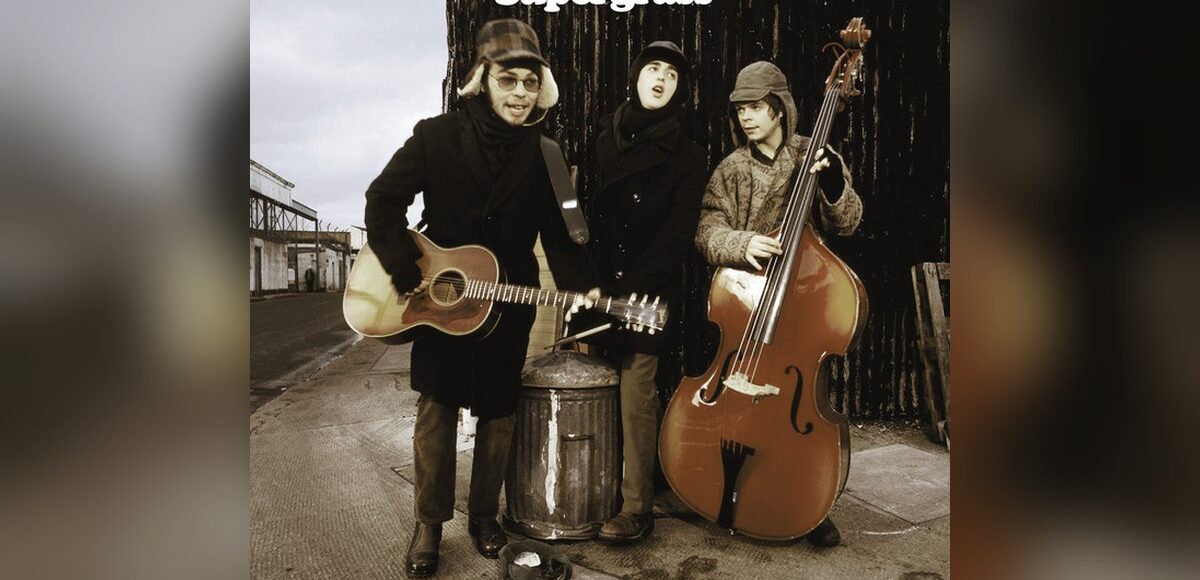
In April 1997, In It for the Money set aside the grin of Alright and recorded a darker, wider Supergrass. Gaz Coombes, Mick Quinn and Danny Goffey, still barely out of their teens, self-produced the Parlophone follow-up with John Cornfield at the desk. They wanted a larger sound, not another cartoon summer. The cover shows the three Oxford kids as buskers, with a hat and a double bass. The title undercuts that pose. The tapes are louder than the picture, and the band had already decided celebrity was optional.
“Richard III” opens at speed, with Goffey’s drums carrying the track. “Sun Hits the Sky” is brighter and more psychedelic. “Late in the Day” softens and still has nerve. “Cheapskate” and “Going Out” keep the sneer. The title track starts quiet, builds, and stops sooner than the arrangement suggests. Horns and Mellotron sit under Coombes’s flexible vocal. The songs keep the garage push of the debut, with more of the arranged detail associated with Abbey Road.
The album holds because the band wanted more room on one running order. Alternative guitar, indie melody and a punk refusal to stay cute share that order. The UK peak was number two. The singles reached radio without sounding written only for radio. Listeners who preferred this record to the brighter debut still come back to it. Spielberg had offered a sitcom. The band chose the studio. That choice is still audible in the thick choruses.
Recording this album was just really exciting. The first one was exciting because it was our first album, but on In It for the Money we were on our own. We had no producer, even though we were only 18 or 19. We just went for it in the studio. It was a really, really exciting time.
(Gaz Coombes on In It for the Money)

Released 21 April 1997, the record sits between Supergrass the phenomenon and Supergrass the musicians: denser guitars, longer songs, less cartoon. Britpop was already in its second phase when they cut it. The album does not repeat the debut’s smile on request.



Mateo | 11 October 2026
|
Supergrass really sequenced this one right. Side B still surprises me. I told my coworker and they shrugged. Their loss.
Elena N. | 11 October 2026
|
Not every track is perfect but the whole of In It for the Money feels like a place. Just saying.
Rita | 12 October 2026
|
Supergrass really sequenced this one right. Side B still surprises me.
Bea | 13 October 2026
|
Put In It for the Money on while cooking. Burned the onions. Worth it.
Maya | 13 October 2026
|
I like the singles fine. The deep cuts on In It for the Money are why I stay. Also the comments section on old forums was wild about this.
Amy | 14 October 2026
|
Gateway album for me. Everything after In It for the Money made more sense. Might be recency bias but I do not care today.
Bruno | 15 October 2026
|
controversial: this is better than the one everyone quotes from Supergrass. Also the comments section on old forums was wild about this.
Ivan | 15 October 2026
|
Read this and finally understood why critics flipped for In It for the Money. Sharing this in the group chat. Expect chaos.