Mark II, 1969-73: Hammond roar, Blackmore riffs, and the hard rock template
Deep Purple formed in Hertford, England, in 1968 at the intersection of classical music, American blues, and the newly electrified hard rock being assembled across Britain that year. The founding lineup — Jon Lord on Hammond organ, Ritchie Blackmore on guitar, Rod Evans on vocals, Nick Simper on bass, and Ian Paice on drums — started by covering Joe South’s “Hush” for the American market and reached the US top ten before most British acts of the era had registered. The classic sound, however, came with the next configuration.
The Mark II lineup crystallized in 1969 when Roger Glover replaced Simper on bass and Ian Gillan came in on vocals. Lord, Blackmore, Glover, Gillan, and Paice then recorded Concerto for Group and Orchestra (1969), a genuine collaboration with the Royal Philharmonic Orchestra conducted by Malcolm Arnold. The experiment placed the band in a public conversation about rock and classical music that few of their peers were willing to enter, and it cleared the air for what followed: the direct hard rock attack of Deep Purple in Rock.
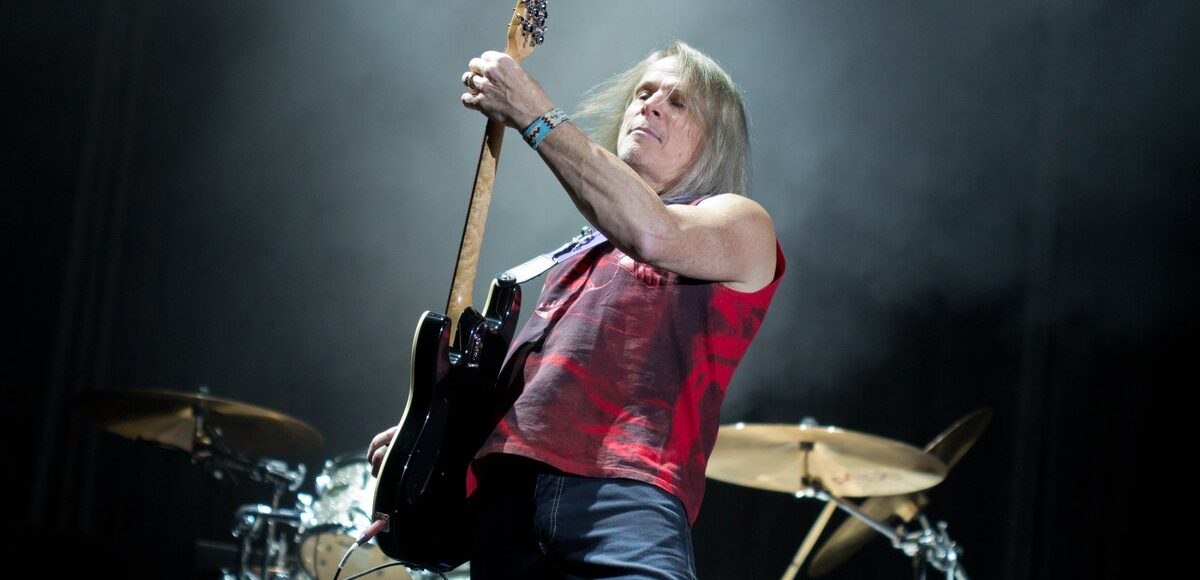
Deep Purple in Rock (1970) was the answer. The orchestral experiment was set aside; what replaced it was Blackmore’s distorted Gibson riffing over Lord’s Hammond, Glover’s fluid bass work, Paice’s high-velocity drumming, and Gillan’s voice pushed into demanding upper-register territory. “Speed King,” “Child in Time,” and the title track established the template for an entire generation of hard rock that followed. The production was raw in a useful way: every instrument had presence and the band could play.
Fireball (1971) refined the approach. Machine Head (1972) became the defining statement. Recorded in Montreux, Switzerland — the original venue, the Montreux Casino, caught fire during a Frank Zappa concert and forced the band to improvise at a mobile studio parked by the lake, an episode immortalized in “Smoke on the Water” — the album distilled the Mark II formula to its most efficient form. “Smoke on the Water,” “Highway Star,” “Space Truckin’,” and “Lazy” made Machine Head one of the best-selling hard rock records of its era and one of the most imitated. Made in Japan (1972), the live double album recorded in Osaka and Tokyo, documented the band at full performance intensity and showed that the studio versions had not been softening the live reality.
The band’s influences are worth tracing because they are genuinely plural. Lord’s Hammond organ brings jazz and classical voicings into heavy rock arrangements — his solo passages can move from blues to Bach inside a single song. Blackmore’s guitar owes as much to counterpoint and scalar precision as to the blues: his pentatonic runs have a formal logic that comes from classical musical thinking rather than from the Chicago school. Gillan’s voice at its best combined operatic range with rock aggression, an unusual pairing that required a certain recording environment to capture. Paice was technically sophisticated for the era, and Glover’s bass work anchored the ensemble without submerging into the background.
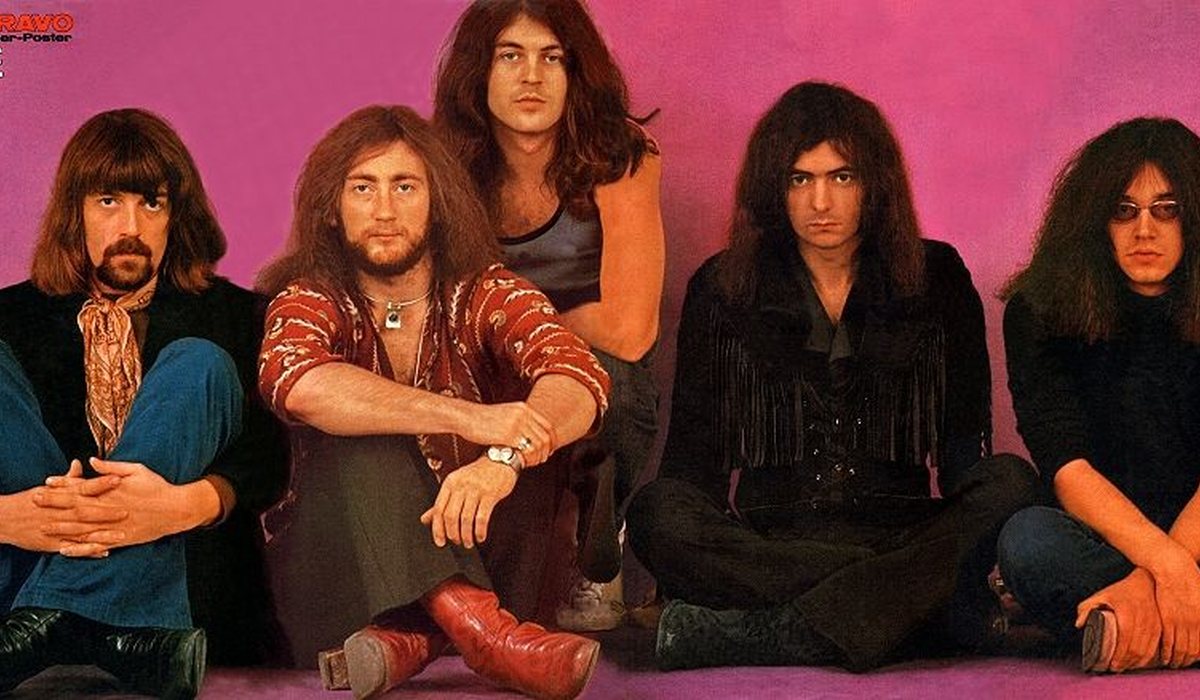
Who Do We Think We Are (1973) showed the strain between band members, and the Mark II lineup dissolved. The Mark III configuration brought David Coverdale on vocals and Glenn Hughes on bass, producing Burn (1974) and Stormbringer (1974). Coverdale and Hughes introduced soul and funk influences that sat uneasily alongside Blackmore’s harder instincts; Blackmore left for Rainbow after Stormbringer. The band continued through several further configurations — Mark IV, the Tommy Bolin period, long dormancy — before a Mark II reunion in 1984 produced Perfect Strangers, a credible return that found an audience ready to hear the formula again.
The distinction between Deep Purple and their hard rock contemporaries is audible on close listening. Led Zeppelin had more blues depth and Jimmy Page’s studio adventurism. Black Sabbath had heavier riff weight and doom atmosphere. Deep Purple had the most technically accomplished individual players of the three, and their best records show it: tightly arranged, dynamically interesting, not just loud but precise at volume. The classical music background of Lord in particular gave the band a harmonic sophistication that Zeppelin and Sabbath rarely pursued.
Entry points are clear. Deep Purple in Rock for the start of the classic period, Machine Head for the single most efficient record. Made in Japan for the live argument. The compilation Shades of Deep Purple or the more detailed The Very Best of Deep Purple covers the early period and the commercial history. Add “Smoke on the Water,” “Child in Time,” “Highway Star,” and “Black Night” and the case is made in four songs.
The Mark II records hold because the musicianship was genuine and the arrangements served the songs rather than the other way around. That combination — skilled individual players operating inside tight rock structures — is rarer than it sounds, and it is what keeps the records audible rather than merely historical.