
Westway to London Calling: punk speed, then a wider map
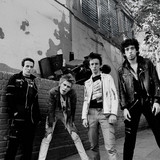
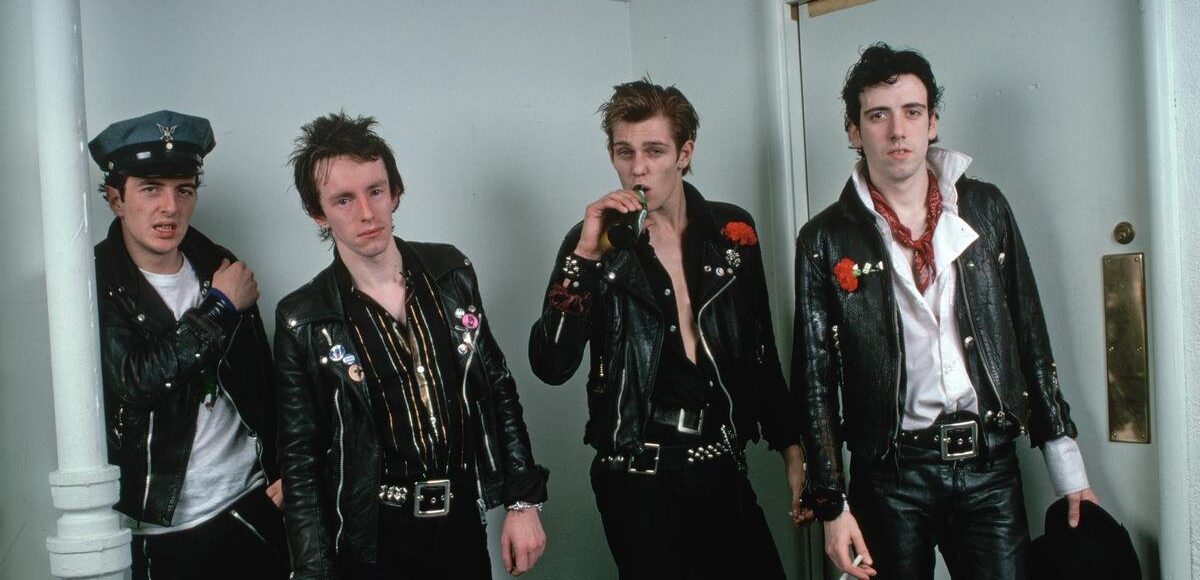
The Clash formed on the Westway, the concrete elevated road that cuts through West London, and they took that geography seriously. Joe Strummer had fronted the 101ers, a pub-rock group, before Bernie Rhodes and the punk moment pulled him toward a more purposeful project. Mick Jones came from Hammersmith with a record collection heavy on American rock and a Thin Lizzy ear for twin-guitar hookwork. Paul Simonon picked up the bass after joining on the strength of his look and his attitude. Terry Chimes held the drum seat until Topper Headon arrived in 1977 and completed the rhythm section that drove the classic period.
The Clash (1977) arrived a month after the Sex Pistols’ Never Mind the Bollocks and set a different agenda immediately. Where the Pistols worked as confrontation as theater, the Clash treated confrontation as curriculum. Sixteen tracks at a blister pace, with reggae covers — Junior Murvin’s “Police and Thieves” sat among originals about unemployment, boredom, and borrowed fascism. The production was dry and direct, most songs under three minutes. CBS refused to release the record in America, which made the British import a cult object in the US market for two years.
Give ‘Em Enough Rope (1978) brought Sandy Pearlman in to produce, fattening the guitar sound toward an American rock audience. The political content remained — “Tommy Gun,” “English Civil War” — but the textures shifted toward something more familiar to hard rock listeners. The band was already moving faster than the record, though. Their live sets incorporated ska, dub, and rockabilly alongside the punk originals, and their audience began to reflect that range.
London Calling (1979) is the record that made that range official. Two LPs at the price of one, produced by Guy Stevens, it moved through reggae (“The Guns of Brixton,” written and sung by Simonon), rock and roll (a Vince Taylor cover, “Brand New Cadillac”), ska (“Rudie Can’t Fail”), and slow ballad (“Train in Vain”) without ever sounding like a genre exercise. Strummer and Jones wrote songs quickly and arranged them on the studio floor. The title track opens with Strummer’s voice stripped of effects over a bass and guitar figure that still sounds like an announcement rather than a song. The record reached the top ten in the UK and found its American audience through college radio and sustained touring.
Sandinista! (1980) pushed the experiment further and arguably too far: a triple album sprawling across dub, gospel, hip-hop adjacent tracks, children’s vocals, and acoustic pieces. It contains some of the band’s most interesting work and some of their least essential. “The Magnificent Seven” was among the first British punk-adjacent groups to work directly with early rap structures, recorded before most American rock acts had noticed the genre. Combat Rock (1982) pulled back to commercial shape and delivered “Rock the Casbah” and “Should I Stay or Should I Go,” the two biggest chart hits. Then Headon left over heroin dependency, Jones was fired, and Strummer tried to hold the name together with replacement members. By 1985 it was finished.
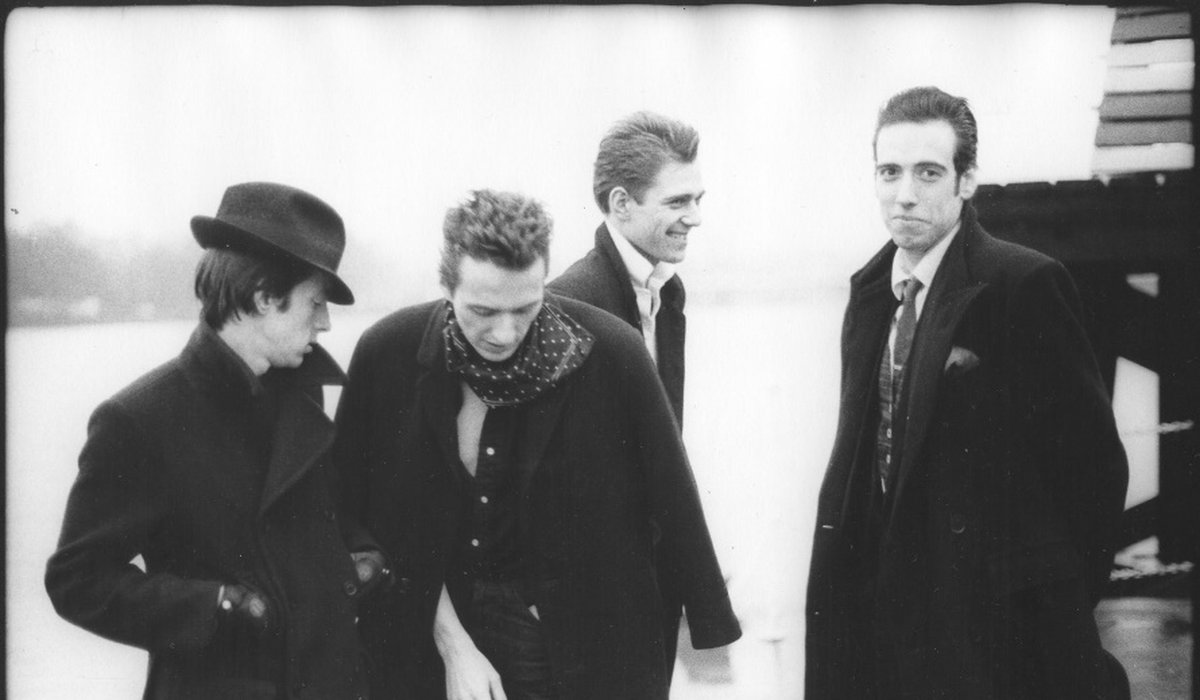
The influences are readable but not simple. American R&B and rock and roll — Berry, Presley, Cochran — came through the playing. Jamaican reggae and dub came through genuine listening: the band was engaged with the politics of Rastafari and Jamaican sound system culture, not using the style as decoration. Mick Jones’s guitar writing owed something to Mott the Hoople and to the glam rock he grew up with. The political reading came from Strummer’s background and from Rhodes’s management philosophy, which treated the group as a vehicle for ideas as much as for records.
Sonically, the Clash were a four-piece who sounded like they occupied more space than that. Jones’s guitar tracks were frequently layered or doubled. Simonon’s bass was mixed prominently in the later records, a decision that gave London Calling its physical weight. Headon’s drumming was unusually funk-aware for a punk group: his pocket on “Lost in the Supermarket” and “Train in Vain” is not what you expect from a band that formed out of squats and benefit gigs. The contrast between the political content and the musical accessibility was the group’s most productive tension.
Entry points depend on what you want. London Calling handles the widest range and has the most consistent song-to-song quality. The Clash (1977) for the original speed and directness. Combat Rock for the hits and the tightest pop writing. For something stranger, Sandinista! rewards selective listening: skip around and you will find “Magnificent Seven,” “The Call Up,” and “Somebody Got Murdered” in the middle of longer experiments. Compared to the Sex Pistols, the Jam, or the Buzzcocks: the Pistols were controlled provocation; the Jam were English and methodical; the Clash were perpetually trying to absorb a new genre and occasionally making it work in ways none of those groups managed.
The reason to go back is not nostalgia for 1979. The Clash made political content audible to audiences that did not particularly want political content, by making the music move, keeping the grooves deep enough to stay on the dancefloor, and writing choruses strong enough to survive the ideology. London Calling remains the clearest proof: it does not require any prior investment in punk or reggae to land, and the songs still say something specific about the world they were written in.