
Columbia, live players, Nile Rodgers
In May 2013, Daft Punk released Random Access Memories on Columbia, a live-musician disco record built as if the internet had never existed. Thomas Bangalter and Guy-Manuel de Homem-Christo spent years gathering sessions in Los Angeles, New York’s Electric Lady and Gang in Paris. Engineer Mick Guzauski captured live players in L.A.; Florian Lagatta worked the Paris rooms. The brief rejected laptop-only production and chased the feel of albums like Rumours, Hotel California and Thriller.
Guests were cast like a film. Nile Rodgers brought Chic guitar, including the plexiglass instrument Bangalter specifically requested for Get Lucky. Pharrell Williams sang that hit after meeting the duo in Paris. Giorgio Moroder spoke his autobiography over analog throb on Giorgio by Moroder. Julian Casablancas, Panda Bear, Todd Edwards and songwriter Paul Williams also appear. Nathan East, Omar Hakim, Paul Jackson Jr. and other session players fill the beds.
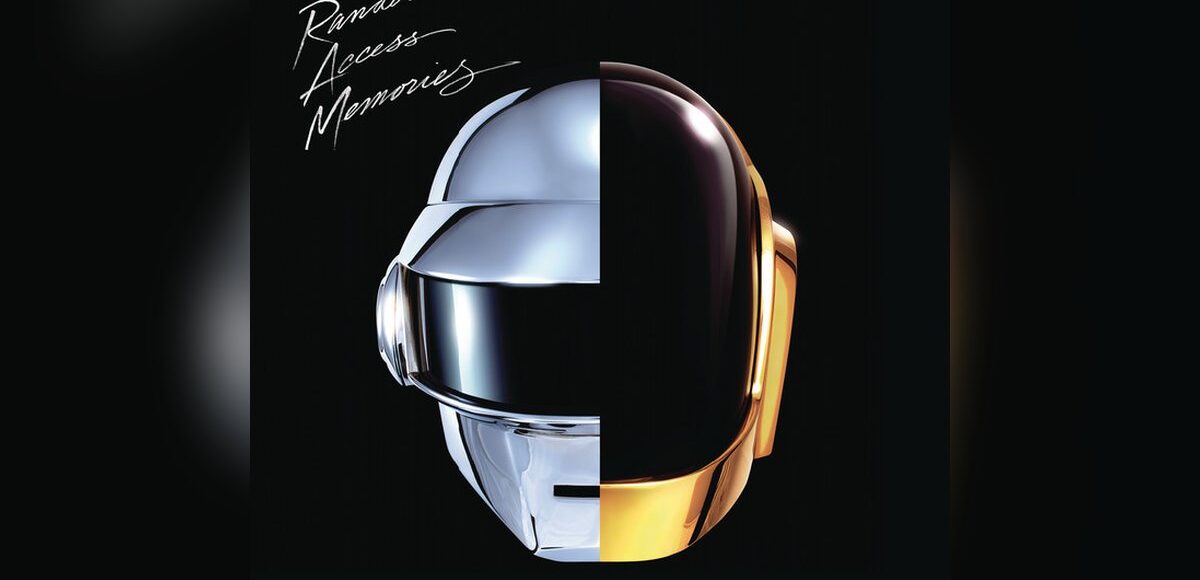
Get Lucky leaked early, then dominated 2013: Rodgers’ linear guitar lick, Pharrell’s falsetto, robot vocals in the chorus. It hit No. 2 on the Hot 100 and topped charts across Europe. Lose Yourself to Dance keeps the same team in a deeper groove. Instant Crush puts Casablancas over a soft-rock pulse. Give Life Back to Music states the mission in the opening minutes. The black cover with white cursive title nods to Thriller without copying it.
At the 56th Grammys the album took Album of the Year and Best Dance/Electronic Album; Get Lucky took Record of the Year and Best Pop Duo/Group Performance. Paul Williams joked onstage about two robots calling him sober. The gag landed because the music had already reached living rooms far beyond club culture.
They wanted to do an album as if the internet never existed.
(Nile Rodgers on Daft Punk’s brief for the sessions)
Critical consensus was strong: praise for musicianship, length debates on the ambient stretches, near-universal applause for the singles. Commercially it restored the duo to mainstream center after the more abstract Human After All era and the Tron score. The Collaborators video series documented the guests and sold the analog thesis before release.
Legacy is concrete. Festival dance acts chased live disco again. Rodgers’ career got a second global wave. Pharrell’s 2013 ubiquity sits partly on this track. Inside the Daft Punk catalogue, Random Access Memories is the opposite pole from Homework‘s machine grit and the logical extension of Discovery‘s love of melody.
Session credits tell the story as clearly as the singles. Omar Hakim’s drums, Nathan East’s bass and the layered live guitars sit under robot vocals instead of replacing them. The album stretches past an hour, with ambient bridges that some listeners skip and others treat as palate cleansers between the guest features. Either way, the through-line holds: human players first, machines as arrangement tools, disco memory as method rather than costume.
Play it front to back and you hear a finished studio craft statement, not a playlist of drops. The robots did not show their faces; they showed their record collection and their address book. Random Access Memories is where that bet paid off in charts, Grammys and a summer that still sounds like Nile’s guitar whenever someone queues Get Lucky.