
Barrett out, Gilmour in, Hipgnosis collage
A Saucerful of Secrets was released in June 1968 (UK EMI Columbia; US Tower) as Pink Floyd’s second studio album. Recording stretched from August 1967 into April 1968 at Abbey Road with producer Norman Smith. David Gilmour joined early in 1968; for a short stretch the live band briefly included both Gilmour and Syd Barrett before Barrett left for good. On the finished album Barrett appears on Remember a Day, Set the Controls for the Heart of the Sun, and his farewell Jugband Blues. It remains the only Floyd studio LP with all five classic-era members credited across the sessions.
The music turns from the whimsy of The Piper at the Gates of Dawn toward longer, more architectural pieces. Waters and Mason famously sketched the title track as a dynamic diagram before filling in the music. Set the Controls for the Heart of the Sun, with lyrics Waters drew from Chinese poetry and Mason’s mallet drums, became a live staple through the Pompeii era. Let There Be More Light and Corporal Clegg keep psychedelic colour; See-Saw (Wright) softens the second side before Barrett’s fractured goodbye.
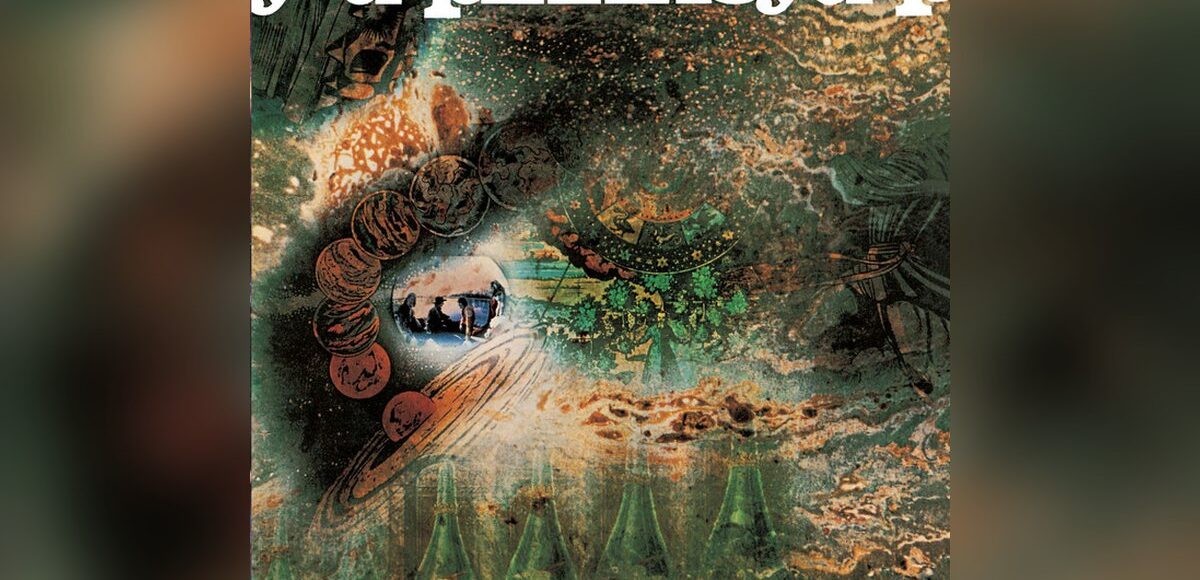
Hipgnosis designed the sleeve, an early landmark collage of celestial and surreal imagery that set the visual language Floyd would refine with later covers. Chart-wise the album reached UK No. 9. Live, the band pushed the title suite and Set the Controls into extended improvisation, a bridge from UFO Club psychedelia toward the concert epics of the early 1970s. Remember a Day keeps Wright’s wistful keyboard voice from the Barrett years, while Corporal Clegg adds kazoo and black humour about war medals. The title suite moves through quiet, chaotic, and chorale-like sections that foreshadow later Floyd transitions. US Tower pressings and UK Columbia packaging differed slightly, but the Hipgnosis front image travelled intact and still reads as the band’s first fully surreal outer sleeve.
Norman Smith’s production still carries Beatle-era Abbey Road discipline, even as the band pulls toward free-form structure. That tension, studio craft versus open improvisation, is exactly what listeners hear between Let There Be More Light‘s tightly arranged opening and the looser middle of the title suite.
We were trying to find a way of working without Syd, and that album is the sound of that search.
(David Gilmour / band retrospectives on A Saucerful of Secrets)
Jugband Blues closes with Barrett’s stark self-awareness and a Salvation Army brass band fragment, an ending that still feels unfinished on purpose. The rest of the record belongs to Waters, Wright, Mason, and Gilmour learning how to carry the name. That apprenticeship paid off on Atom Heart Mother, Meddle, and eventually The Dark Side of the Moon.
For Floyd listeners, A Saucerful of Secrets is the hinge album: Barrett’s last studio footprint and Gilmour’s first, space-rock structures replacing nursery psychedelia, Hipgnosis opening the visual book.