

Barley around Lake House, smallpipes at the verse end
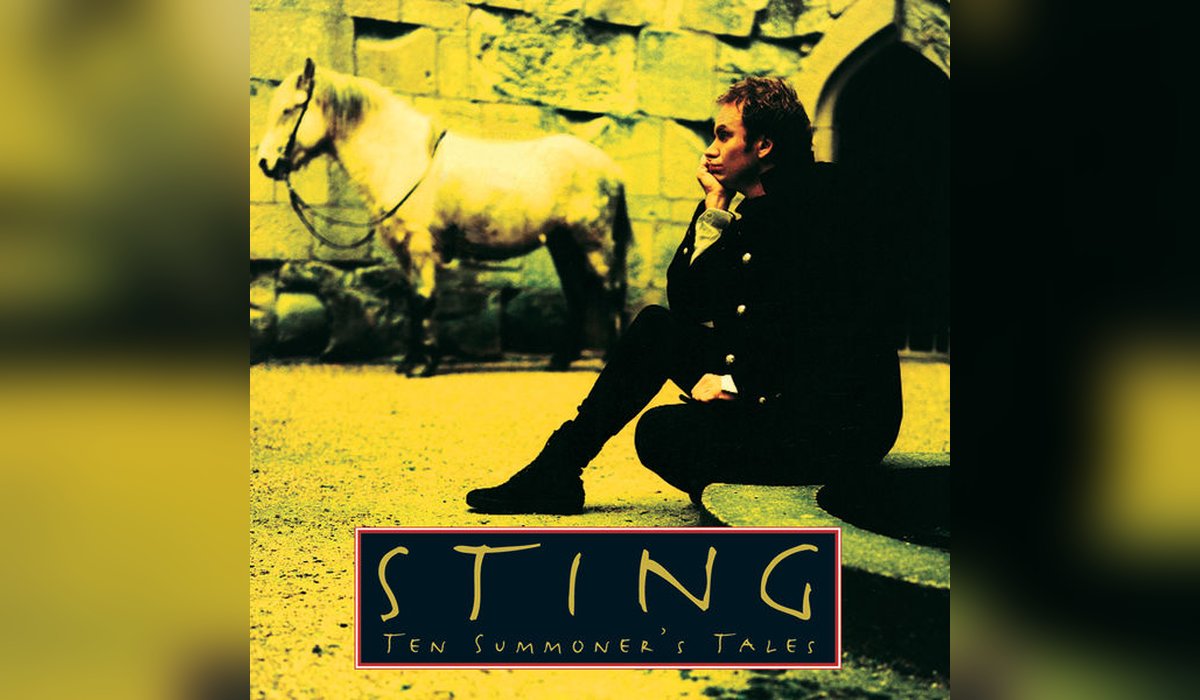
The third single from Ten Summoner’s Tales looks out of the same window as the sessions. Lake House sits among barley fields in Wiltshire, and Sting has tied Fields of Gold to that view: a walk through the meadows, a love song that keeps the landscape in the lyric, west wind, jealous sun, children running as the light drops. A&M released it on 7 June 1993. It reached No. 16 in the UK that summer and No. 23 on the Billboard Hot 100. In Canada it climbed to No. 2.
The recording is the Lake House band again, co-produced with Hugh Padgham, mixed at The Townhouse, mastered at Masterdisk in New York. Dominic Miller’s guitar carries the harmony. Brendan Power plays the harmonica solo. Kathryn Tickell, from Northumberland, plays Northumbrian smallpipes at the end of verses one and three. That reed does not belong to a standard London pop date, and it is why the track does not flatten into a ballad you have already heard. The tempo stays slow. A quiet drum pattern and organ sit under the voice. Nothing in the arrangement shouts.
Kevin Godley directed the video, shot over about a week with motion-control cameras. Sting appears as a gold silhouette walking a dark British village: a red telephone box, a pillar box, the street outside him empty while the world inside the silhouette is bright and full of people. It is a clever picture. It is not the record. The record is the pipes, the harmonica, and the barley.
We worked very sociable hours, ate very good food, the work never got bogged down and hopefully that is reflected in the music.
(Hugh Padgham, Recording Musician, May 1993)
Other versions arrived later. Eva Cassidy sang it live at Blues Alley in 1996, and that take later sat on Songbird (1998). Her version found charts again years after her death and was certified gold in Britain by the BPI in May 2022. Michael Bolton and Zucchero, among others, took the melody on too. Cassidy’s reading is the one that sent a new audience back to the song. It is also slower and more exposed, which makes Sting’s original easier to hear as a band track, not a lone voice standing in a field.
Play the 1993 album cut. Wait for Tickell. The pipes last a few seconds and they change the temperature of the verse. The barley was outside the studio window. The single still sounds like someone who could see it while the tape was rolling. Padgham’s hope, that the calm of those Lake House days would show up in the music, lands here more clearly than on the flagship single.
Dominic Miller’s part is simple on purpose, three-note shapes rather than a solo, so Tickell’s pipes and Power’s harmonica have somewhere to sit. That is the 1993 arrangement. Cassidy stripped it further. Both are worth hearing. Only one of them was made in the house with the barley outside.