




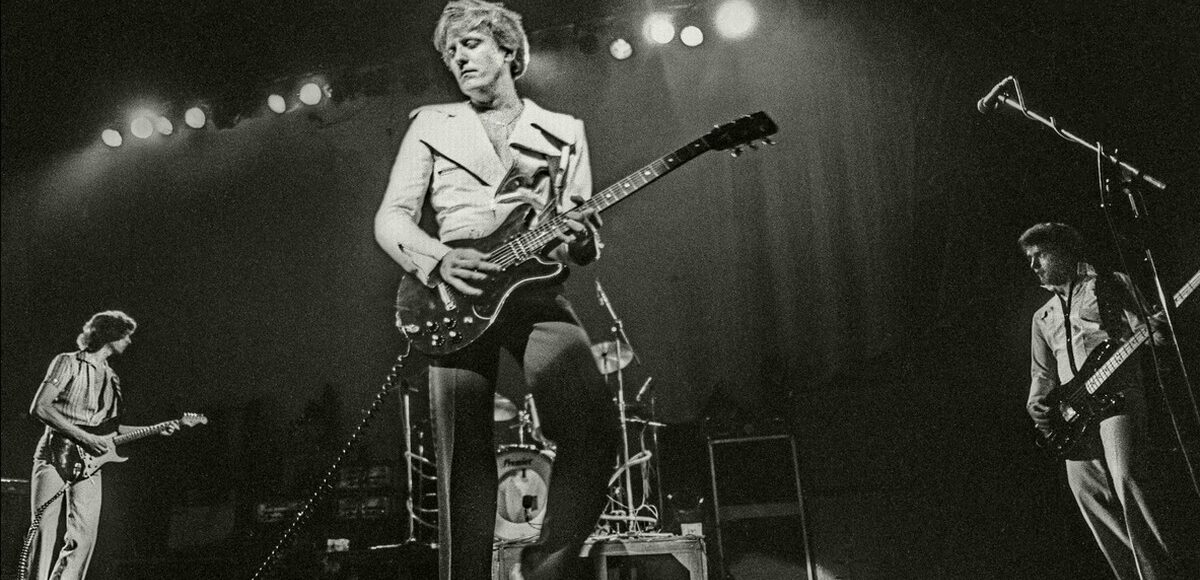
1976 Decca single, Parsons at Abbey Road
Music is John Miles’s 1976 Decca single, later the centerpiece of his album Rebel, engineered by Alan Parsons at Abbey Road. Miles, still in his mid-twenties and trained on piano, wrote a piece that builds from a quiet opening to an orchestral climax without rushing. Strings sit around electric guitars and drums and leave the melody clear. The sections move from a quiet verse to a climb and then a release. Melody Maker called him the brightest, freshest force in British rock that year. The single is the record they had in mind.
The structure is easy to follow. Soft vocal entry, mounting intensity, full ensemble pay-off, then control on the way down. Radio and TV specials loved the drama. Classic-rock stations later filed it beside other orchestral-rock singles that were not progressive noodling so much as pop with a budget for strings. Miles’s voice stays clean through the climb. He does not shout the climax. The arrangement does the lift. The lyric stays a plain tribute to music as refuge and craft.
Parsons’s Abbey Road clarity matters. Instruments have room. The piano figure that opens the cut returns after the loudest section, the same figure as the opening. Session players and orchestral parts are placed, not piled. In 1976 British rock charts still made space for long-form singles that television could stage with lights and cameras. Music fitted that lane without a concept-album frame around it. It is a pop single in three sections, with a budget for strings and a singer who holds back.
Miles’s wider catalog never matched this single’s public footprint, which is common for one-song career markers. The recording is still the one people ask for. The Decca cut remains a clear document of mid-70s British studio craft: Parsons engineering, Miles songwriting, orchestral rock aimed at both radio and living-room stereo. Play it after a shorter glam or pub-rock single from the same year and the length is the difference. The writing takes its time. The climax is louder because the opening was quiet.
Session culture at Abbey Road in that period rewarded players who could enter, serve the arrangement, and leave without grabbing the spotlight. Music uses that discipline. The orchestral swell stays inside the pop song. It is pop writing with enough budget to make the climb audible. Miles later revisited the song live for decades because audiences asked for the arc they already knew. That demand is on the record. Audiences kept asking for the same climb they already knew.
John Miles is the brightest, freshest force in British rock
(Melody Maker, 1976)

Music still turns up on late-night classic-rock radio: quiet start, measured climb, clean vocal, strings under the melody.
The 1976 Decca single is the one with the Abbey Road credit. Miles and Parsons take the song from piano to orchestra and back down.

Carmen | 8 October 2026
|
this is the track I put on to test new speakers. John Miles never lies. I told my coworker and they shrugged. Their loss.
Nina Bass | 9 October 2026
|
My dad played John Miles in the car. Music is basically my childhood commute. I am biased and fine with it.
Sofi | 9 October 2026
|
Short take: the groove on Music still feels unfair. I am biased and fine with it.
Jackie | 10 October 2026
|
Opened the article, heard the riff in my head before the embed loaded. Classic. Ok bye.
Marc G. | 11 October 2026
|
I always skip to Music on the album. Guilty.
Anne | 11 October 2026
|
Anyone else think the live versions of Music are better? Studio still wins for me though.
Olivier | 12 October 2026
|
People sleep on how weird Music actually is. This article gets it.
Greg | 13 October 2026
|
Read this, then put Music on loud. That was the move. I told my coworker and they shrugged. Their loss.
Jacques | 13 October 2026
|
This is the track I put on to test new speakers. John Miles never lies. Also the comments section on old forums was wild about this.
Mike B. | 13 October 2026
|
People sleep on how weird Music actually is. This article gets it. Also the comments section on old forums was wild about this. That is all.
Rosa | 15 October 2026
|
Opened the article, heard the riff in my head before the embed loaded. Classic. I told my coworker and they shrugged. Their loss.
Kofi | 15 October 2026
|
Anyone else think the live versions of Music are better? Studio still wins for me though. Just saying.
Hélène | 16 October 2026
|
First time I heard Music was on a burned CD. Still got the scratches in my head. Sharing this in the group chat. Expect chaos.