

Mourning, played at marching speed
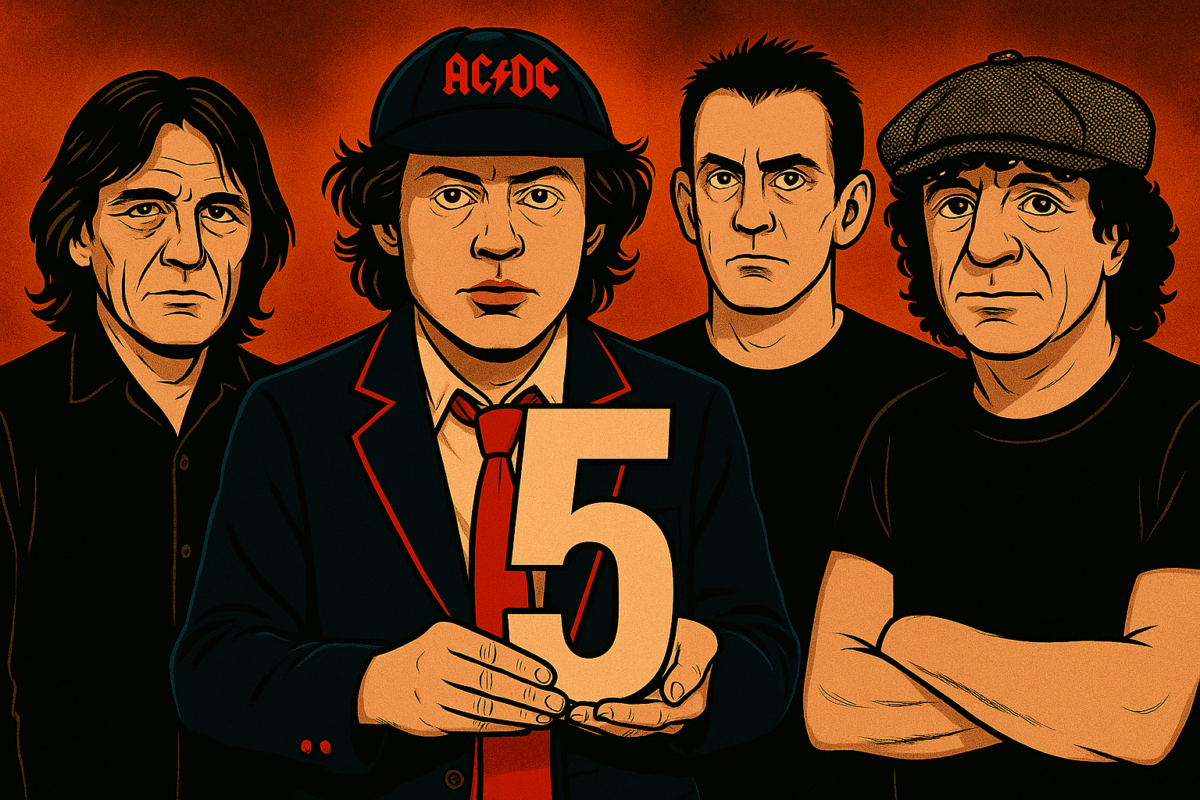
The riff does not weep. It plants a boot and waits for the snare to agree, and when the snare agrees the whole song becomes a procession that has decided grief will be loud or it will not be spoken. Back in Black is a funeral in work clothes. Brian Johnson’s voice, new to the microphone and already hoarse with the job, does not imitate the man who is gone. It reports for duty. The bell of the title is not a metaphor you have to unpack. They are back. They are wearing the colour.
Bon Scott died on 19 February 1980. The band nearly stopped. Then Johnson, from Gateshead, auditioned, and in April and May the group recorded at Compass Point Studios in Nassau with producer Robert John Mutt Lange. Malcolm Young had been carrying the riff since the Highway to Hell tour. Angus wanted this song out more than the others. Johnson was told the lyric should remember Bon and must not be sad or maudlin. It had to be a positive thing. He has called that brief particularly difficult, and the result slow for AC/DC, which is true only if you forget that slow, here, means heavy enough to be a pall. The album, black sleeve, no faces, came out on 25 July 1980. The title track is the gravestone and the party held in the same yard.
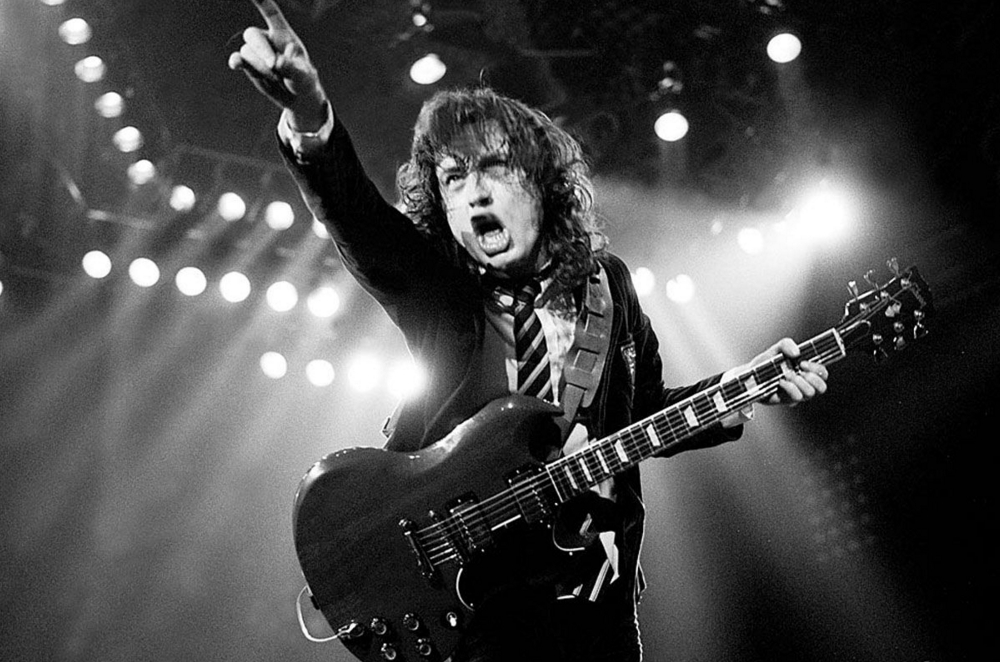
Live, it is the moment the lights go to the colour of the sleeve and the room understands the bargain: you may cheer, because cheering was the instruction. Johnson still sings it as a new boy who stayed. Angus still duckwalks through a requiem. The combination should be tasteless. It is, instead, the most decent thing the band could have done with a riff that refused to sit in a minor key and cry.
I remember Back in Black was particularly difficult because the boys were saying, listen, we want this song in memory of Bon, but we don’t want it to be sad or maudlin. We want it to be a good thing and a positive song.
(Brian Johnson, archive interview, cited 2020)
Lange’s discipline is all over the track: the spaces between the chords, the vocal stacked just enough to sound like a gang and not a choir, the refusal of any fill that would turn mourning into fuss. Malcolm’s rhythm guitar is the actual memorial. It does not solo. It holds. Johnson’s lyric, rockets and black Cadillacs and a number on the back, is comic-book language doing a serious job, which is the only language this band trusts when the feeling gets too large for slang and too alive for poetry.
What remains is a song people play at the loudest hour of a wedding and at the edge of a real loss, and both uses are faithful. Back in Black does not choose between the wake and the encore. It says the encore is how this particular wake is kept. The man is not replaced. The riff is how they refused to leave the stage empty. That is a crude theology. It has held for more than forty years, which is longer than most delicacies.