Deptford 1977 to Wembley: Knopfler’s Telecaster grammar
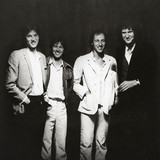
In a Deptford flat in 1977, Mark Knopfler, David Knopfler, John Illsley, and Pick Withers rehearsed songs that refused to shout. The debut single “Sultans of Swing” arrived on Vertigo the next year: a dry vocal, fingerpicked Stratocaster lines, and a story about pub musicians who never made the big room. Radio in Britain and then America caught the economy of it. Where stadium rock stacked Marshall walls, Dire Straits left air between the notes.
Dire Straits (1978) and Communiqué (1979) set the grammar. Jerry Wexler and Barry Beckett produced the second album in the Bahamas; the band still sounded like a small room even when the budgets grew. Making Movies (1980), with Jimmy Iovine, pushed “Romeo and Juliet” and “Tunnel of Love” into clearer drama. David Knopfler left during those sessions. The remaining trio, soon joined by Hal Lindes and keyboardist Alan Clark, kept Mark Knopfler’s writing at the center: narrative first, flash second.
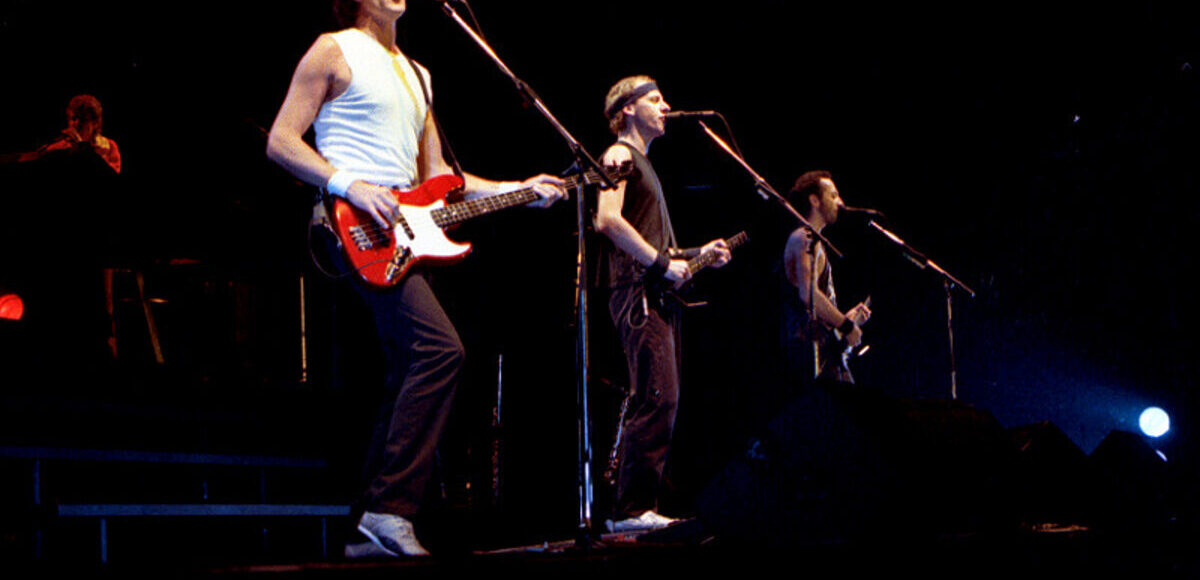
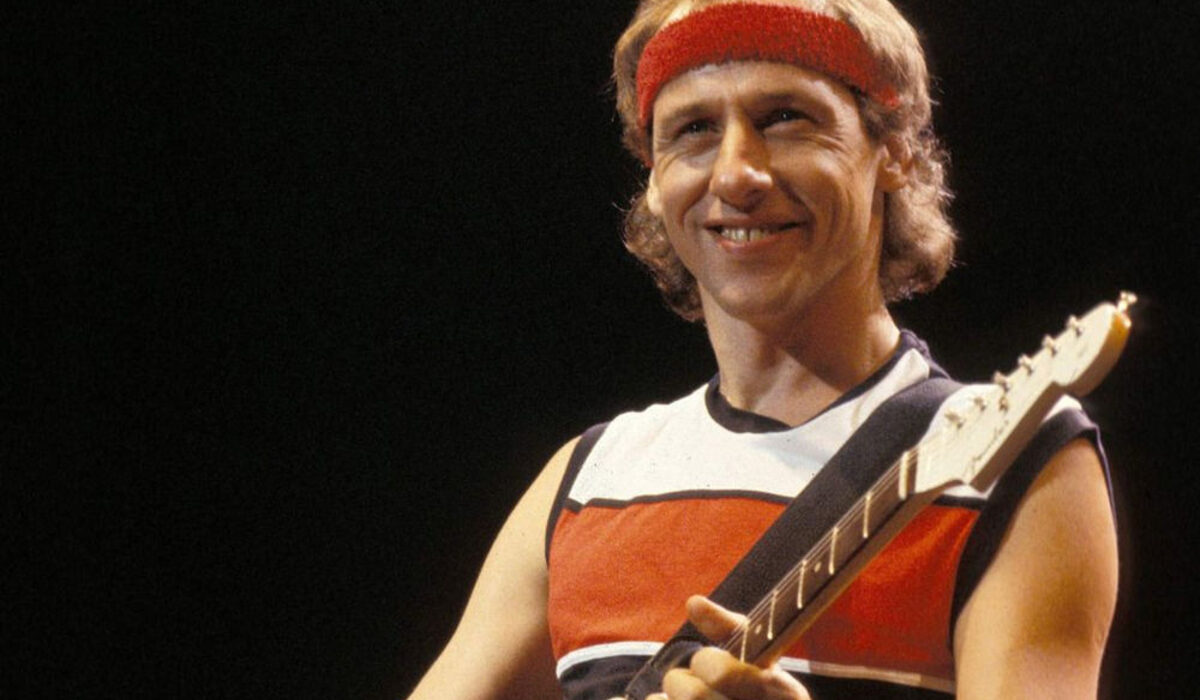
Love Over Gold (1982) stretched the form. “Telegraph Road” runs past fourteen minutes without turning into jam-band wallpaper; it is a plotted climb, guitar answering lyric. Live, Knopfler stood almost still, headband and Stratocaster, while Illsley’s bass and Withers’s drums (later Terry Williams) held a pocket other guitar heroes ignored. The band’s quiet became a brand without becoming a joke.
Brothers in Arms (1985), recorded largely at AIR Montserrat with Neil Dorfsman engineering, made them a global fact. “Money for Nothing,” with its stuttering guitar hook and Sting’s “I want my MTV” cameo, rode the new video channel hard. “Walk of Life” and the title track filled radio formats that rarely agreed. The album sold in the tens of millions and helped prove the compact disc as a consumer object, not only a studio tool.
On the Brothers in Arms tour the quiet band filled arenas. Knopfler’s fingerstyle stayed legible at scale: bends, harmonics, and those clipped Strat phrases that fans could hum after one play. The irony of “Money for Nothing” (a working man’s sneer at video stars, sung by a band now everywhere on video) did not spoil the song. It gave it a second layer.
Pick Withers left after Love Over Gold; Terry Williams and later other drummers kept the pocket while the setlists grew. Knopfler produced Aztec Camera and Bob Dylan sides in the same years he was filling stadiums, a side career that explained why Dire Straits records always sounded arranged rather than jammed. The band’s quiet reputation never meant small ambition.
On Every Street could not match Brothers in Arms commercially, and the 1992 tour closed the classic chapter. Bootlegs and official live sets (Alchemy, On the Night) still circulate among guitarists who want the solos without the arena marketing. The Vertigo and Warner catalog remains the working library.
After the peak, Knopfler slowed the machine. He scored films (Local Hero, The Princess Bride), produced other artists, and eventually put Dire Straits on ice after On Every Street (1991) and another huge tour. Reunion talk never rebuilt the original chemistry; the catalog did the work instead. Guitarists still study those early Vertigo sides for how little distortion you need if the melody is clear.
Knopfler’s later solo records (Golden Heart, Sailing to Philadelphia) kept the same narrative guitar voice without needing the Dire Straits brand. Fans who only know “Money for Nothing” from MTV still find “Romeo and Juliet” and “Telegraph Road” waiting if they dig one album deeper. That is how a quiet band stays loud in the catalog.
What lasts is the contradiction they made normal: rock as storytelling with a Telecaster or Stratocaster speaking in complete sentences. From Deptford to Montserrat to Wembley, Dire Straits proved volume was optional. Precision was not.