Ron’s keyboard and Russell’s falsetto across five decades: songs designed as short films
Ron and Russell Mael grew up in Pacific Palisades, Los Angeles, raised on Hollywood movies, British Invasion records, and whatever was strange enough to hold their attention. Ron studied cinema at UCLA; Russell studied graphic design. That double education in image and composition shows up in every Sparks album: songs designed as short films, with punch lines built into the structure, and arrangements that treat each instrument as a character with a specific function rather than a texture filling space.
They started as Halfnelson in the late 1960s, recording demos that attracted enough attention for a deal with Bearsville Records. Todd Rundgren produced the resulting album. It sold poorly but fixed the template: Russell’s countertenor was the voice, Ron’s keyboard lines and stiff rhythms were the architecture, and the lyrics were too densely clever for a casual listen. They renamed themselves Sparks and kept working through several lineup changes in the California music scene.
The UK breakthrough came with Island Records and producer Muff Winwood. Kimono My House (1974) opened with “This Town Ain’t Big Enough for Both of Us,” a UK number two that arrived with full-throttle orchestral drama, Russell screaming in falsetto over a galloping rhythm, and a structure that resolved before a normal song would even reach the chorus. Propaganda (1974) and Indiscreet (1975) followed quickly, keeping the wit dense and adding theatrical brass arrangements. British audiences understood the joke; American radio mostly did not.
After the Island period cooled, the brothers moved to London rather than wait for California to catch up. A period of relative commercial quiet in the late 1970s ended when Giorgio Moroder produced No. 1 in Heaven (1979), replacing the live band with a synthesizer pulse and sequenced bass lines. “The Number One Song in Heaven” and “Beat the Clock” hit European dancefloors. Angst in My Pants (1982) and Sparks in Outer Space (1983) kept the electronic sound active. The band had made a complete sonic renovation without losing either brother’s sensibility.
A slow period in the 1990s ended with Gratuitous Sax and Senseless Violins (1994), which reconnected with European pop production. Then Lil’ Beethoven (2002) marked another shift: an orchestral pop album in which live rhythm sections were replaced entirely with layered orchestration, and up to a dozen vocal overdubs from Russell carrying harmonic weight on songs like “Ugly Guys with Beautiful Girls” and “The Rhythm Thief.” Lil’ Beethoven and its follow-up Hello Young Lovers (2006) earned the most sustained critical reception the band had received in three decades.
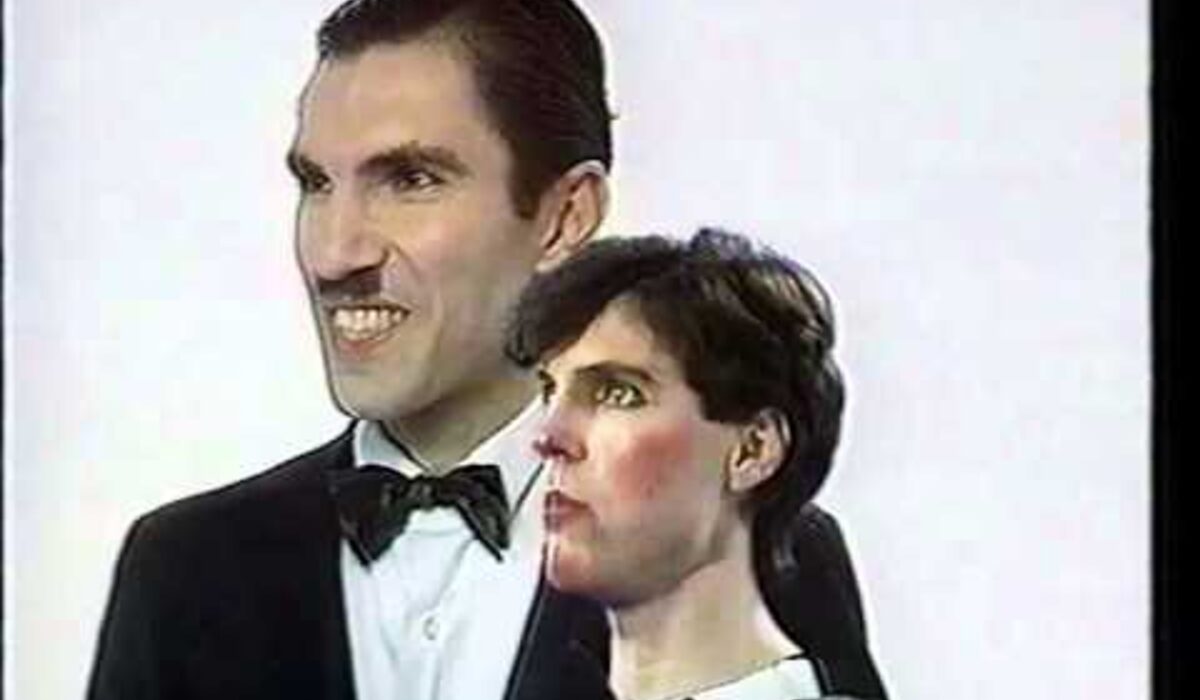
The 2010s brought FFS, a collaborative project with Franz Ferdinand that produced a full album and tour in 2015, and Edgar Wright’s documentary The Sparks Brothers (2021), which drew on archive footage and interviews to lay out the full fifty-year chronology. The documentary introduced the back catalogue to listeners who had only known the duo through influence rather than direct contact. Annette (2021), Leos Carax’s Palme d’Or-winning film with a Sparks-written score and libretto, confirmed the brothers’ reach outside the conventional pop industry.
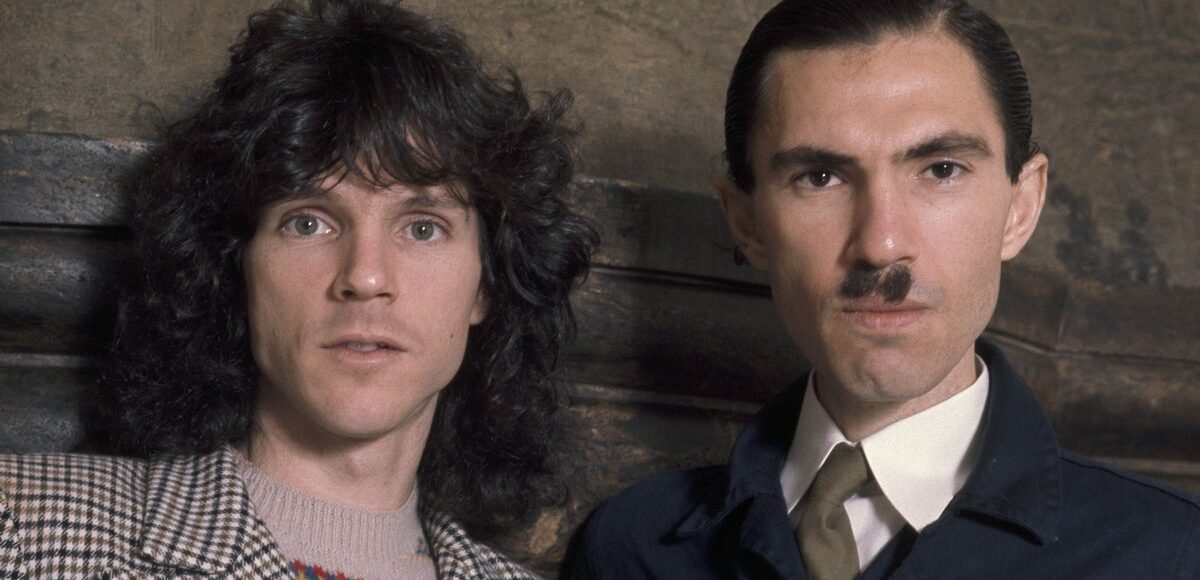
The visual element was always part of the product. Ron’s deadpan stage presence, pencil mustache, and near-immobility at the keyboard contrasted with Russell’s physical energy and vocal athleticism. That contrast was compositional, the same way the lyrics worked: the tension between the serious and the absurd, neither one winning. Live, the brothers treated performances like problem sets rather than opportunities to replicate the records, which kept the shows from becoming heritage acts.
Sonically, the through line is Russell’s falsetto and Ron’s economy. Whatever the arrangement, glam band, Moroder sequencer, full orchestra, or electronic pop, the hooks arrive efficiently and the words count for something. There is no standard Sparks production sound; there is a Sparks way of constructing a song that survives every change of texture. The influences are present but absorbed: music hall comedy, British art-pop, Giorgio Moroder’s disco pulse, and a streak of American musical theater logic in how the lyrics resolve.
Entry points vary by decade. Kimono My House for the 1970s wit; No. 1 in Heaven for the electronic pivot; Lil’ Beethoven for the mature orchestral period. “This Town Ain’t Big Enough for Both of Us” works as an introduction from any era. “The Number One Song in Heaven” and “Amateur Hour” show the range of what pop can do when the songwriter is more interested in the structure than the prestige. Over five decades and more than two dozen albums, they proved that eccentricity and discipline are not opposites. The catalogue has no clear equivalent, which is its own kind of distinction.