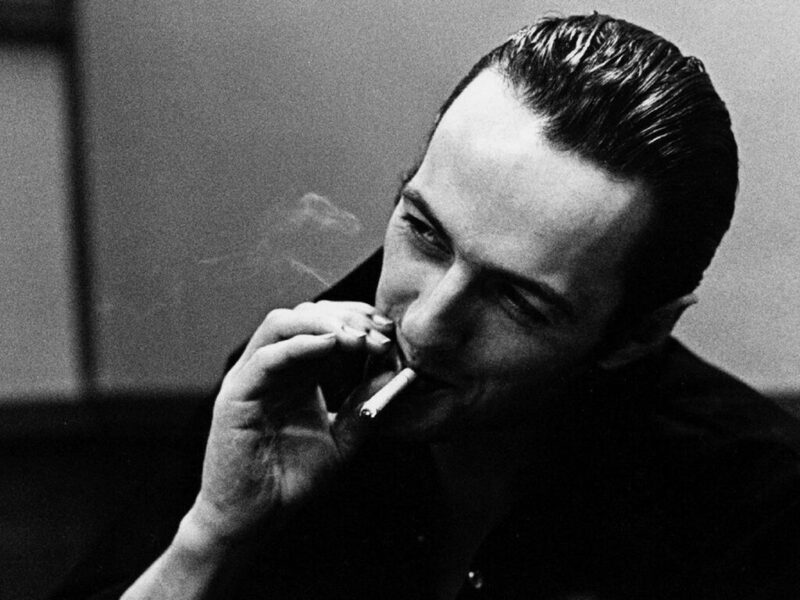

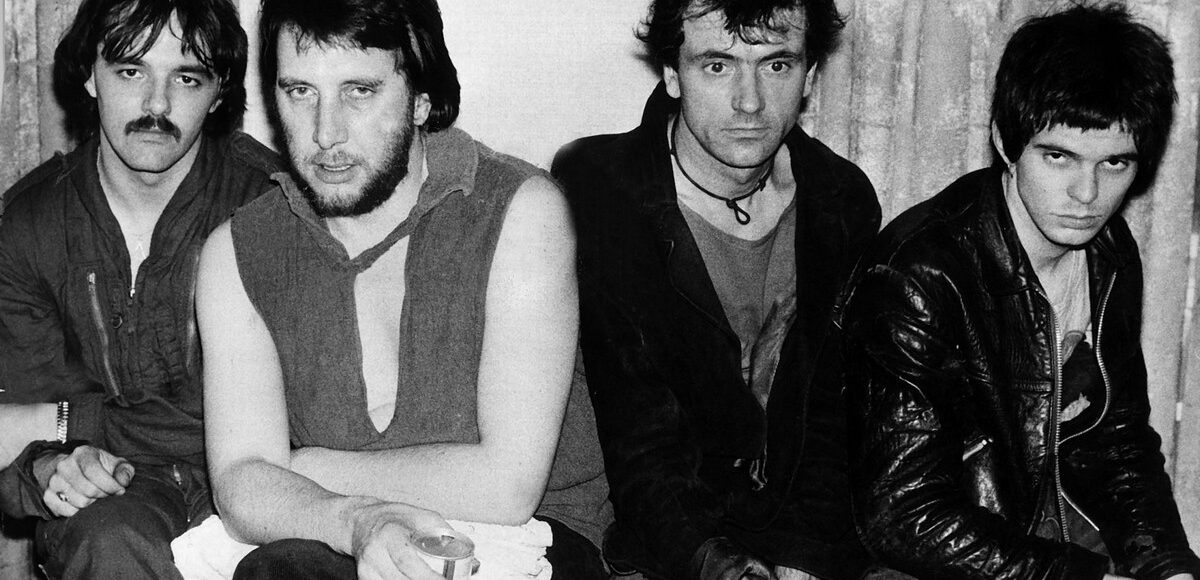
Guildford to the charts: Cornwell, Burnel, Greenfield, Black, and a punk band that kept the keys
The Stranglers arrived at the UK punk moment of 1976 already older than most of their contemporaries, more musically experienced, and considerably more difficult to place. Hugh Cornwell on guitar and vocals, Jean-Jacques Burnel on bass and vocals, Dave Greenfield on keyboards, and Jet Black on drums had been playing together in various configurations since the mid-seventies in and around Guildford, Surrey. The distance from London may have helped them maintain the pub-rock instincts that made their early records sound unlike anyone else operating under the punk flag.
Cornwell had studied biochemistry at the University of Bristol, which gave the band’s lyrics an occasional clinical precision unusual in rock. Greenfield was classically trained, his Vox Continental organ approach drawing on jazz and European cabaret as much as rock. Burnel had trained in martial arts — a black belt in karate — and brought a bass style built on precision and forward aggression, low-mixed and prominent. Jet Black, the oldest member by a significant margin and a former owner of an off-licence in Guildford, played with a heavy, unhurried groove that sat oddly against the speed expected of punk. None of them fit the template, which was the point.
Rattus Norvegicus (United Artists, 1977) introduced the formula: Greenfield’s distorted organ over Burnel’s bass-forward mix, Cornwell’s guitar and sardonic delivery, and songs that moved between contempt, black humor, and strange melody. “Peaches,” “London Lady,” “Ugly,” and “Hanging Around” showed a band that had absorbed The Doors’ keyboard menace and the aggression of the pub-rock scene without replicating either. No More Heroes followed later the same year with the title track, “Dagenham Dave,” and “English Towns” — the template tightened, the dark humor sharpening.
Black and White (1978) brought reggae rhythms alongside the punk muscle. The Raven (1979) and The Gospel According to the Meninblack (1981) moved into stranger experimental territory, the latter being a concept record about alien invasion that divided critics decisively. La Folie (1981) contained “Golden Brown” — a harpsichord-driven waltz in 13/8 time about saffron or heroin depending on which reading you preferred — that reached number two in the UK and became one of the more genuinely odd hit singles of the era. The song sounded like nothing else in their catalog and nothing else on the chart at the time.
Cornwell left in 1990, citing creative exhaustion and a desire to pursue solo work. John Ellis took over guitar and later Paul Roberts joined as vocalist, keeping the band active through the 1990s and 2000s with the Burnel-Black core intact. Greenfield died in 2012; the band absorbed the loss and continued, a remarkable demonstration of institutional momentum. The catalog of the early period remains the essential document, but the band’s survival through more than four decades of lineup changes is itself a kind of argument.
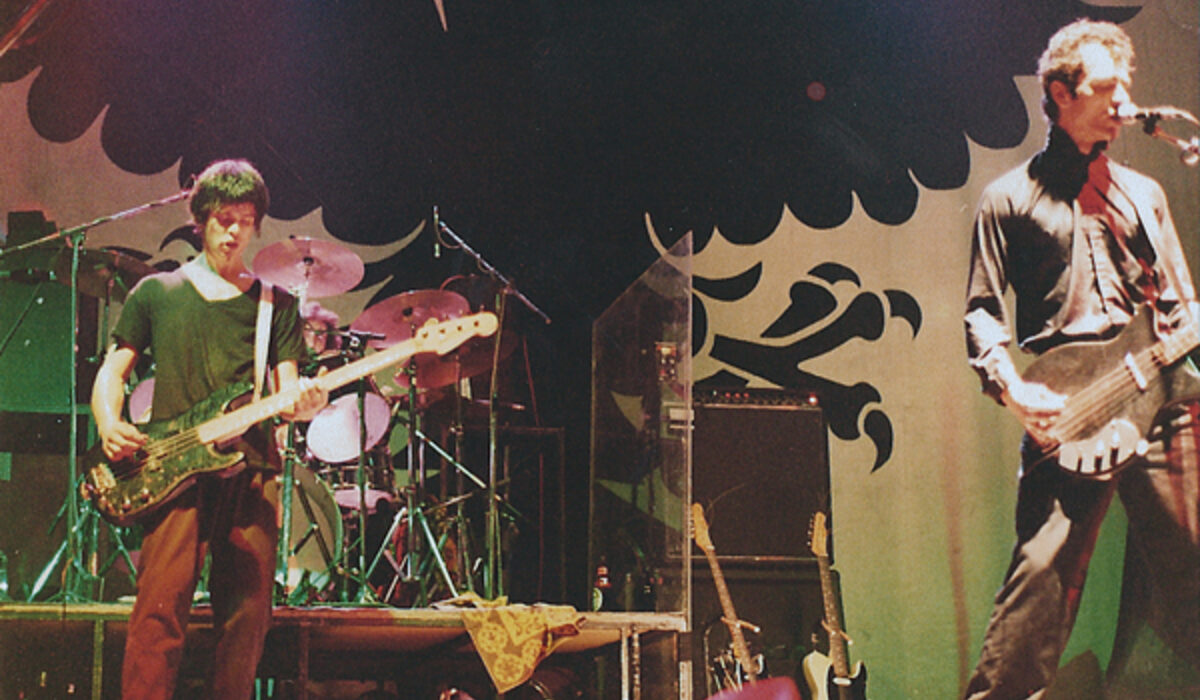
The sound of the early Stranglers records is built from the bottom up. Greenfield’s organ fills the upper register where a rhythm guitar would normally be, while Burnel’s bass occupies a low-mid frequency range unusual in rock. Cornwell’s guitar operates in the spaces left, which gives the arrangements a slightly claustrophobic pressure that suits the lyrics. The mix is dense but organized, each instrument audible because each holds a distinct register. Cornwell’s vocal delivery is detached, academic even — which amplifies rather than undercuts the menace when the material calls for it.
The distance between the Stranglers and their punk contemporaries is worth noting. The Clash believed in something political and acted on it. The Sex Pistols were a deliberately constructed provocation. The Damned were fun and fast. The Stranglers were older, musically more sophisticated, and driven by a harder-to-define combination of misanthropy, intelligence, and genuine melodic gift. They did not quite belong in the punk moment, which is why they outlasted it.
For listeners who know the Doors or the keyboard-forward end of British rock, the transition into Stranglers territory is immediate. “Hanging Around” and “Peaches” are the natural starting points. “Golden Brown” is the obligatory outlier. The compilation The Collection 1977-1982 covers the essential period without requiring a decision on which studio album to prioritize. Add “No More Heroes,” “Always the Sun,” “Something Better Change,” and “Golden Brown” and the main argument is covered.
What makes the catalog worth returning to is the combination of genuine musicianship and genuine strangeness — two qualities that often cancel each other out in rock, and that the Stranglers managed to hold in tension for the better part of five years. The early records are not comfortable, and that is precisely the point.