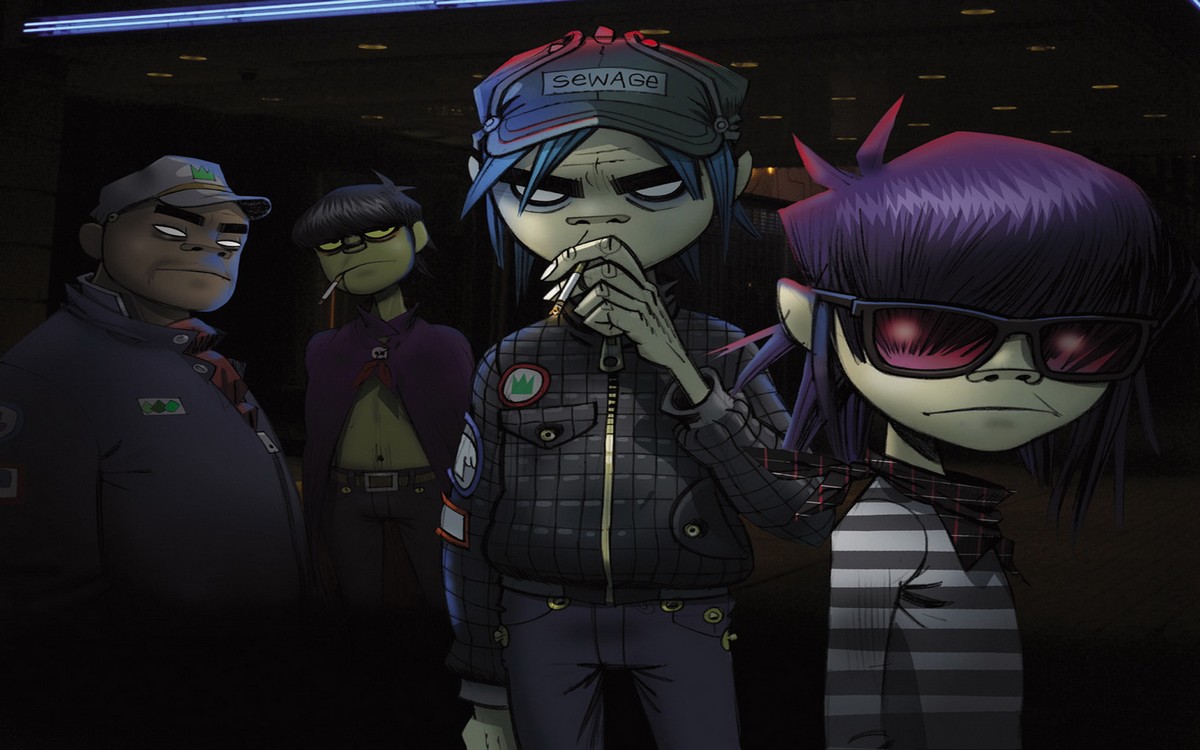
A cartoon that hired a real ghost
A melodica, or something that wants to be one, draws a line out of a spaghetti western and then refuses the duel. The beat is lazy on purpose, a dub sway, and the chorus sounds like a man half asleep at the end of the world, promising sunshine in a suitcase. Then the rap arrives, alert, almost annoyed at the melancholy, and the song becomes an argument between a drawing and a voice from Oakland. Clint Eastwood is named for the actor because the melody remembers Ennio Morricone’s deserts. The actor is not in the room. A phantom is.
Gorillaz, the project of Damon Albarn and Jamie Hewlett, released the single on 5 March 2001, ahead of the album on 26 March. Dan the Automator produced it while he was also finishing Deltron 3030 with Del the Funky Homosapien. The rap had first been tried by Phi Life Cypher. Automator did not want it. On the drive, he asked Del to write something quickly. Del, who had just been reading a book on how to write a hit, did the verses in about half an hour and went back to his own record. He did not know the song had become a hit until strangers told him they had heard his voice on the radio. Albarn sings the chorus. Kid Koala scratches. The track was built in London around Albarn’s studio world and Automator’s hand. The cartoon, Hewlett’s four delinquents, was the face. The Oakland verse was the accident that made the face speak.
Del did not want to perform it at first. If they were a cartoon band, he asked, why were real people doing this. The question is the best review the song ever got. On stage Albarn stood in front of screens, and the rapper’s absence, or his later presence, kept the fiction honest. You were watching drawings. You were hearing a man who had tried to go home.
If they a cartoon band, why you motherfuckers doing this shit?
(Del the Funky Homosapien, Spin, 2023)
The single taught a decade of pop that a band did not have to be photographable to be a band, which was Hewlett’s revenge on the manufactured groups of the moment and also a very old show-business trick: give the audience a mask and they will project a life onto it. What is not a trick is Del’s writing, done fast and then forgotten, the way session work is forgotten until the cheque, or in this case the plaque he gave his mother because she had bought him the songwriting book as a joke.
What remains is the sway. Clint Eastwood still sounds like late afternoon, a parking lot, a film you have not seen. The sunshine in the suitcase never arrives, which is why the chorus is sadder than its bounce. A virtual group, it turned out, could carry a real regret. The drawings aged into a brand. The verse did not. It still sounds like a man who had somewhere else to be.