A tour-bus joke that found a piano
The piano does not knock. It arrives in even steps, courteous and faintly menacing, as if someone official had entered a quiet room. Thom Yorke’s voice stays small against it, almost apologetic, until the harmony tilts and the apology curdles. Karma Police, from OK Computer in 1997, has the manners of a ballad and the instincts of a threat. Nothing shouts until the end, and then the end will not stop buzzing.
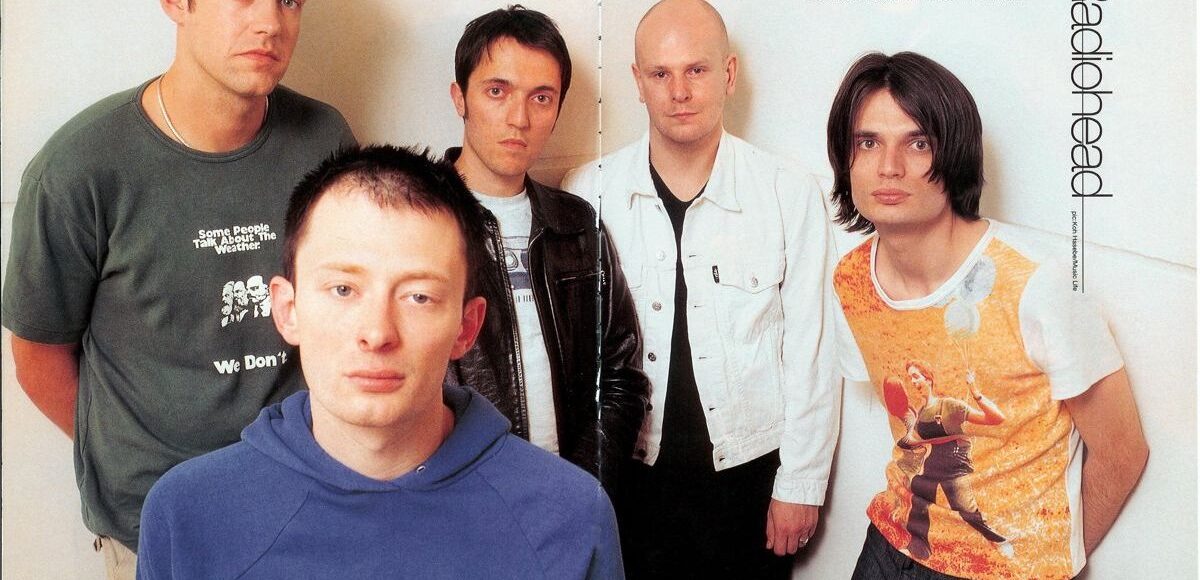
The title was a private joke before it was a song. On the road, when someone in the band’s orbit behaved badly, the others would mutter that the karma police would catch up with him. Jonny Greenwood has told that story without dressing it up. The music came later, during the OK Computer sessions with producer Nigel Godrich, between the band’s own Canned Applause setup and the stone rooms of St Catherine’s Court in Bath. Greenwood’s piano figure is the whole plot. The drums and bass, Phil Selway and Colin Greenwood, keep a straight face. Ed O’Brien’s guitar waits. Yorke sings as if the joke had turned in his hand.
Halfway through, the personality changes, which is how he once described it. The polite piano gives way to a smear of distortion, a coda that sounds like a machine left on after the staff have gone home. The lyric names the unborn, the weird, the people who buzz like a fridge, and then asks for this to stop. It is funny until it is not. The single followed the album in the summer of 1997, and crowds learned the piano faster than they learned the irony.
It was a band catchphrase for a while on tour. Whenever someone was behaving in a particularly shitty way, we’d say the karma police will catch up with him sooner or later.
(Jonny Greenwood, Melody Maker)
Radio took it as melancholy and missed the office comedy. Yorke has also called it a song against bosses, dedicated to anyone employed by a large firm. Both readings fit, because the joke was always about power and the fantasy that power gets punished. On stage the coda grows longer, a feedback hymn. In the studio it is shorter and meaner, a burn mark at the edge of an otherwise tidy arrangement. OK Computer made the group enormous. This track is the one that still sounds like five people in a too-large house, amusing themselves until the amusement sticks.
What remains is the evenness of those piano steps. Karma, in the lyric, is not mysticism. It is the hope that a petty cruelty will be invoiced. The record never proves the hope. It only plays the walk down the corridor, then lets the lights fail. Some protest songs raise a fist. This one fills in a form, and then sets the form on fire.