The last British nights of the four
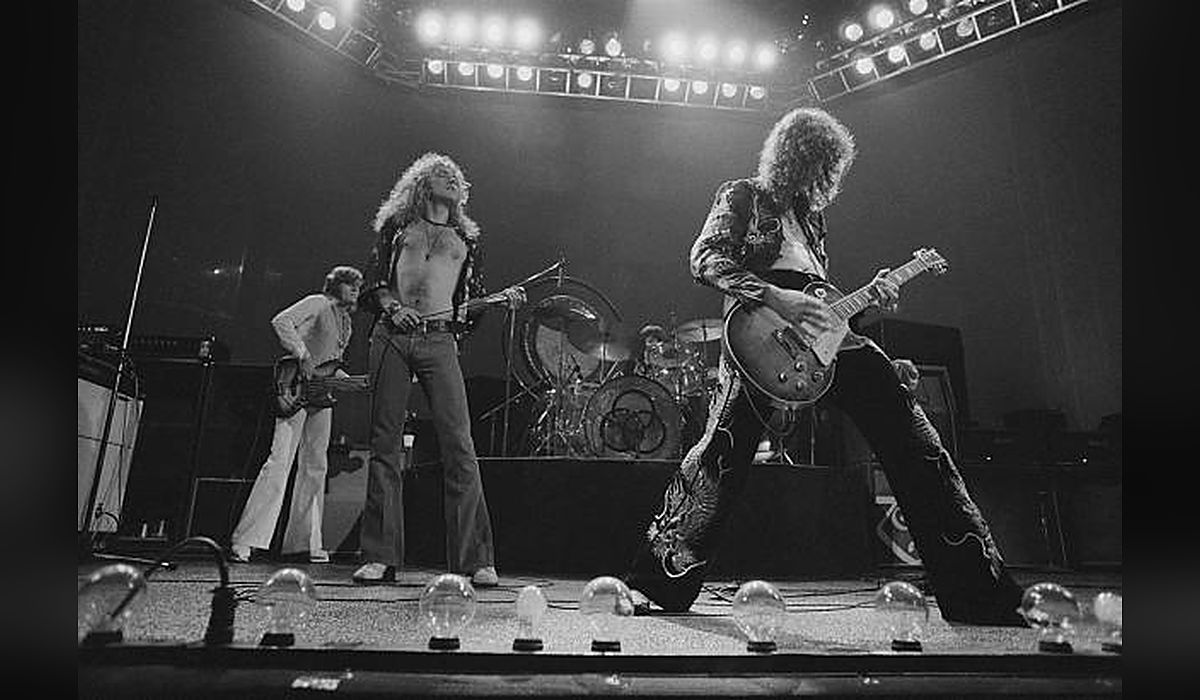
Knebworth Park, twenty-five miles north of London, held two Saturdays for Led Zeppelin in August 1979: the 4th and the 11th. Britain had not had them since 1975. The bill was a festival, Fairport Convention one week and Ronnie Wood’s New Barbarians the next, but the field was there for Jimmy Page, Robert Plant, John Paul Jones and John Bonham. Promoter Frederick Bannister built the days around a capacity the press put at about 100,000. Peter Grant, the band’s manager, liked larger numbers. The photographs simply show a Hertfordshire slope with no easy edge.
They were not a band in weekly practice. A long American tour in 1977 had ended badly, and the four had been mostly apart. In Through the Out Door was days from release, and the set carried two of its songs into the open air before the record shops did: Hot Dog and In the Evening. Around them sat the old cathedral pieces. Kashmir, No Quarter, Trampled Under Foot, Achilles Last Stand, and, late, Stairway to Heaven. Page’s violin bow came out under a laser that lit the hair of the bow red and threw a thin green line over the crowd. A video screen the size of a house tried to give the back of the field a face.
Variety, there for the second Saturday, found the first night roughly treated by local critics and the second in finer form. The band had come on after a long wait, arguments backstage about the cameras, darkness already down. Plant’s voice, the paper said, was strong. The contemplative songs struggled to carry. The physical ones did not. Stairway closed the main set and held. Two encores followed, Rock and Roll and Whole Lotta Love. A third, Heartbreaker, was on the sheet and then abandoned. It was one in the morning. The crowd had had enough, which at Knebworth still meant a great deal.
Stairway to Heaven, however, with which the band closed before two encores, was a notable success, ranging across several tempos and moods, and superbly sung by Plant, who ended up bathed in an effective rainbow backlight.
(Variety, August 1979)
What nobody in the field could know was the arithmetic of afterwards. These were the last Led Zeppelin concerts in Britain. Bonham died in September 1980, and the group chose not to continue under the name. The 2007 night at the O2, with his son on the drums, is another story, told by three survivors. Knebworth is the last time the four of them stood in front of a home crowd and let Kashmir do the walking.
The shows were not the tightest of their life. Page was uneven, the waits were long, and a band that had once seemed incapable of missing now occasionally did. That is why the nights matter. They are not a polished myth. They are a loud, slightly frayed homecoming, lasers on a bow, a new album not yet in the shops, and a singer in a rainbow backlight finishing the song everybody had waited four years to sing back.