
Four symbols and no name on the door
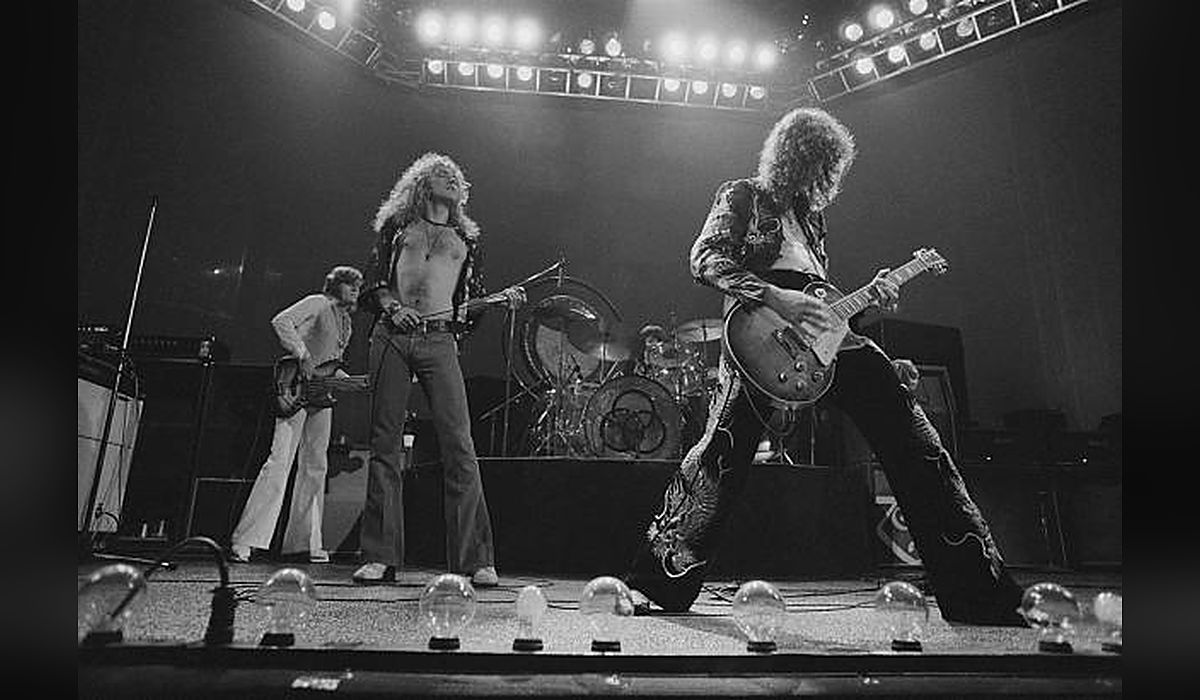
In November 1971, Led Zeppelin put out a record with no title on the cover and no band name on the sleeve, as if the music were tired of being introduced. What the world calls Led Zeppelin IV arrived on 8 November, on Atlantic, represented by four symbols and a framed photograph of a man bent under a load of sticks. Robert Plant had found that picture in a junk shop. Hung on the peeling wall of a house already coming down, it became the door. No logo. No smiling faces. You were invited to listen before you were invited to belong.
The music had been made in the winter before, mostly at Headley Grange, a cold country house in Hampshire, with the Rolling Stones’ mobile studio parked outside. Jimmy Page produced. The point of living where they recorded was time: arrangements could be tried, abandoned, tried again, without a studio clock coughing in the hallway. When the Levee Breaks found its drum sound in a stairwell, John Bonham hitting as if the house were the instrument. Black Dog turns a riff into a argument with the silence between phrases. Rock and Roll is the band reminding itself, and everyone else, that velocity is also a kind of joy. Sandy Denny steps into The Battle of Evermore and the song becomes a duet with the old ballad tradition, not a costume.
Then there is Stairway to Heaven, eight minutes that begin as a folk confidence and end as a procession. Page built it in sections. The solo, cut later at Island Studios, does not decorate the song so much as open the last door. Around it sit Going to California, Misty Mountain Hop, Four Sticks: acoustic air, a heavy shuffle, a drum part played with four sticks, two in each hand, which is how the song got its name. The fourth album is not one mood. It is a house with several rooms, and the band trusted you to walk through without a map printed on the outside.
After all we had accomplished, the press was still calling us a hype. So that is why the fourth album was untitled.
(Jimmy Page)
Atlantic thought a cover with no name was close to commercial suicide. Page wanted the opposite proof. After Led Zeppelin III, parts of the press were still treating the group as a loud rumor. An untitled sleeve forced the rumor to pass through the speakers. The record did the rest. It became one of the best-selling albums in the band’s history, and the symbols did not stay mysterious for long: fans named them, argued about them, and kept playing the songs. The protest worked because the music did not need the protest. It would have walked into the room anyway.
Play side one at the volume the house can bear, then turn it down for the acoustic songs and notice that the same four people are in both weathers. That is the cult of this record, more than the mythology. Loud and quiet are not two careers. They are two doors in one hallway. The old man on the cover keeps walking under his sticks. The band, somewhere behind the wallpaper, is doing the same thing with a different weight.